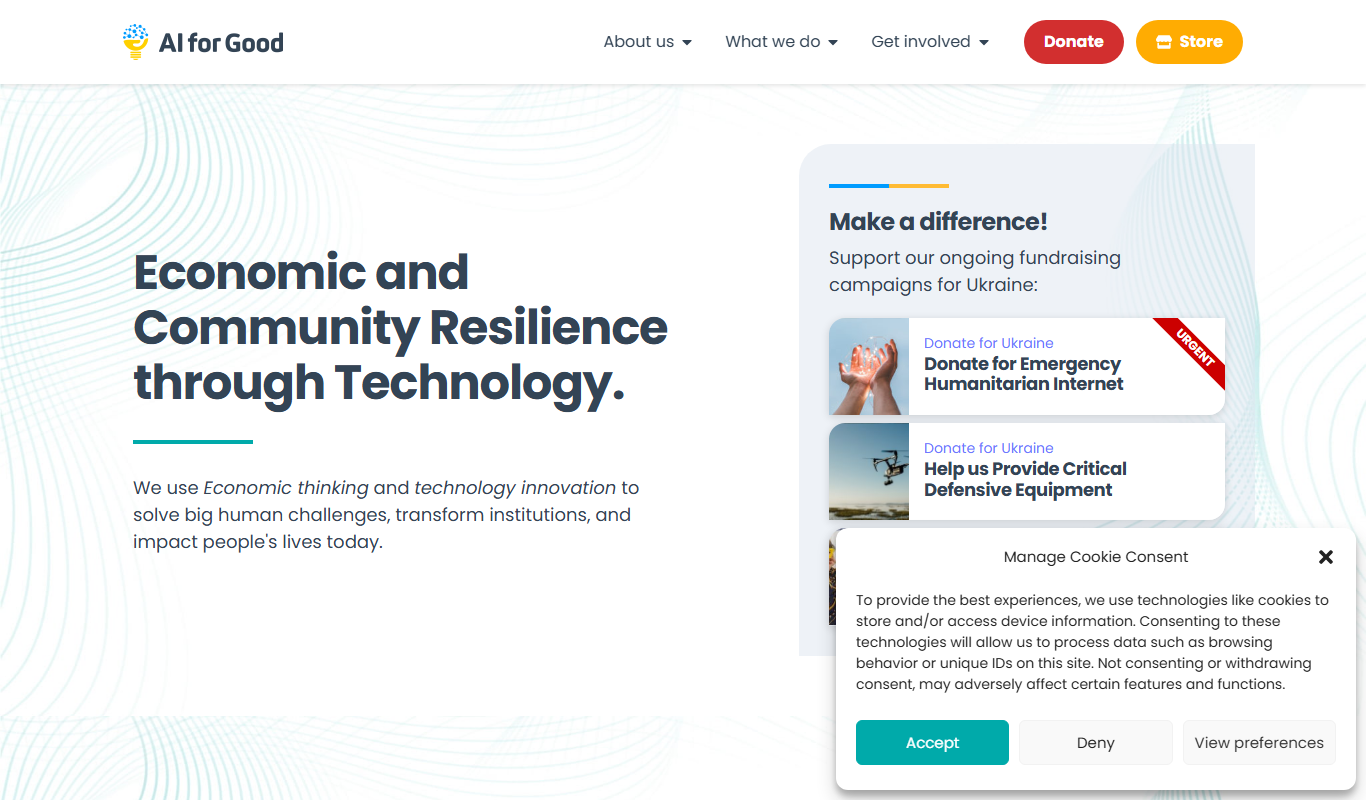
What Is AI for Good?
AI for Good refers to the application of artificial intelligence systems and algorithms with the goal of solving real-world problems that benefit society. This includes initiatives aimed at improving healthcare, fighting climate change, enhancing education, promoting equality, and supporting disaster response. The concept emphasizes ethical AI development and deployment to create sustainable, inclusive, and responsible solutions that improve quality of life globally.
Why Is AI for Good Important?
Harnessing AI for good ensures that advanced technologies contribute positively rather than exacerbate existing issues. It drives innovation in sectors like public health and environmental protection while fostering trust in AI by aligning it with human values. Businesses and governments also gain from AI-driven insights that optimize resources and improve decision-making for society’s benefit.
- Promotes ethical and responsible AI development aligned with human welfare.
- Enables scalable solutions to complex problems like poverty and climate change.
- Enhances collaboration between technology, policy, and social sectors.
Key Characteristics of AI for Good
- Healthcare Diagnostics: AI-powered tools that assist doctors in detecting diseases early and improving treatment plans.
- Environmental Monitoring: Using AI to analyze satellite data for tracking deforestation and predicting natural disasters.
How AI for Good Works (Step-by-Step)
- Identify a pressing societal problem that can benefit from AI intervention.
- Design AI models and tools focused on measurable, positive impact while mitigating risks.
- Deploy AI solutions in partnership with stakeholders and monitor outcomes for continuous improvement.
Real-World Examples of AI for Good
- Healthcare Diagnostics: AI-powered tools that assist doctors in detecting diseases early and improving treatment plans.
- Environmental Monitoring: Using AI to analyze satellite data for tracking deforestation and predicting natural disasters.
AI for Good in SEO, Marketing, or Business Context
In business, AI for Good initiatives can enhance corporate social responsibility (CSR) and brand reputation by demonstrating a commitment to societal welfare. Marketers can leverage AI-driven insights to create campaigns that highlight ethical practices and sustainability efforts. SEO strategies benefit from aligning content with values-driven AI applications, attracting audiences interested in responsible technology use and social impact.
Common Mistakes or Misunderstandings About AI for Good
- Assuming AI solutions are always neutral without considering bias and ethical implications.
- Overlooking the need for cross-sector collaboration, which is essential for meaningful impact.
Related Terms
- Artificial Intelligence Ethics
- Social Innovation
- Technology for Sustainable Development
FAQs About AI for Good
It can tackle issues like healthcare access, environmental protection, disaster response, and educational inequality.
By integrating ethical AI practices, supporting social impact projects, and promoting transparency in AI use.
Summary
AI for Good represents a purposeful approach to artificial intelligence that prioritizes positive societal outcomes. By combining ethical principles with innovative technology, it offers scalable solutions to some of the world’s toughest challenges. For marketers, content creators, and businesses, embracing AI for Good not only drives impact but also builds trust and aligns with growing consumer demand for responsible innovation.