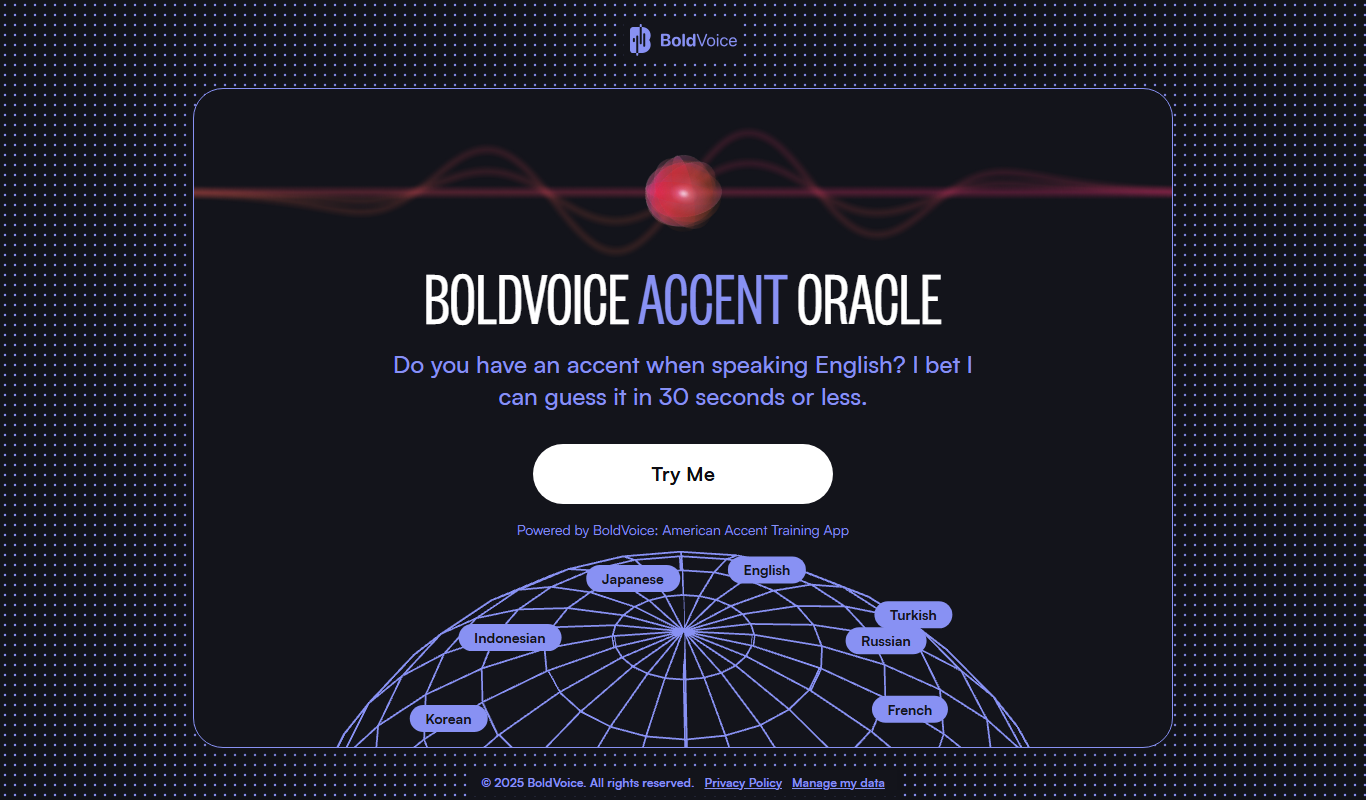
What Is Accent Detection?
Accent Detection refers to the capability of software or systems to recognize the unique pronunciation, intonation, and speech rhythms that characterize different accents. It involves analyzing audio input to classify the speaker’s accent, which can be regional, national, or related to a specific linguistic community. This technology uses machine learning, phonetic analysis, and speech recognition techniques to differentiate accents and adapt communication or processing accordingly.
Why Is Accent Detection Important?
Accent Detection plays a significant role in improving human-computer interaction by enabling systems to understand diverse speakers better. It enhances speech recognition accuracy, customer service automation, and language learning tools by catering to different speaking styles. Moreover, it supports inclusivity in global markets by recognizing and adapting to various accents, making technology accessible and user-friendly.
- Improves speech recognition accuracy across diverse user bases.
- Enables personalized user experiences in voice-activated systems.
- Supports multilingual and multicultural communication in global business.
Key Characteristics of Accent Detection
- Phonetic Analysis: Examines speech sounds and patterns unique to specific accents.
- Machine Learning Integration: Utilizes algorithms trained on diverse speech datasets to identify accents accurately.
- Real-Time Processing: Often processes speech input instantly for applications like voice assistants or call centers.
How Accent Detection Works (Step-by-Step)
- Audio input is captured from the speaker’s voice through a microphone or recording device.
- The system processes the audio using speech recognition and phonetic feature extraction to identify accent-specific traits.
- A machine learning model matches these traits against known accent profiles to classify the speaker’s accent.
Real-World Examples of Accent Detection
- Voice Assistants: Systems like Alexa or Google Assistant adjust their responses based on detected accents to improve understanding and interaction.
- Customer Support: Call centers use accent detection to route calls or provide tailored responses that match the caller’s speech patterns.
Accent Detection in SEO, Marketing, or Business Context
In marketing, Accent Detection helps tailor voice search optimization and customer engagement strategies by recognizing how different audiences speak. Businesses use it to enhance voice-based user interfaces, ensuring products and services are accessible globally. SEO professionals leverage accent insights to optimize content for voice search queries that vary by region, improving reach and relevance.
Common Mistakes or Misunderstandings About Accent Detection
- Assuming accent detection can perfectly identify every accent without error.
- Confusing accent detection with language identification; accents are variations within the same language.
Related Terms
- Speech Recognition
- Natural Language Processing (NLP)
- Voice Biometrics
FAQs About Accent Detection
By identifying accent-specific speech patterns, it allows voice recognition systems to better understand and transcribe spoken words accurately.
Advanced systems use noise reduction and filtering techniques, but accuracy may decrease in very noisy conditions.
Summary
Accent Detection is a crucial technology that enables devices and applications to recognize and respond to diverse speech patterns. It enhances communication, accessibility, and user experience by adapting to regional and cultural variations in language. As voice-driven interfaces continue to grow, accent detection remains essential for creating inclusive and effective digital interactions.