

OLOCR AI OCR Software for Accurate Text Recognition and Extraction
OLOCR is a web-based AI OCR tool that accurately extracts text from images and scanned documents, supporting multiple languages and offering both free and premium plans.
- Best for
- Document Digitization
- Key capability
- High Accuracy OCR
Save OLOCR, follow its updates and vote on it — everything stays in your account.
Sign in or create a free account
What is OLOCR?
OLOCR is an AI-powered Optical Character Recognition (OCR) software designed to accurately recognize and extract text from images and scanned documents. It supports multiple languages and offers a web-based platform for users to convert images into editable text quickly and efficiently.
Key features of OLOCR
OLOCR provides high-accuracy text recognition, supports a wide range of languages, and offers easy-to-use web interface for document digitization and data extraction tasks. It is suitable for individuals and businesses looking to automate text extraction from images.
High Accuracy OCR
Utilizes advanced AI models to deliver precise text recognition results.
Multilingual Support
Supports 100+ languages.
Web-Based Platform
Accessible from any device with internet access without software installation.
Fast Processing
Quickly converts images to text with minimal waiting time.
User-Friendly Interface
Simple and intuitive design for easy uploading and text extraction.
Pros and cons of OLOCR
Pros
- Supports multiple languages including Asian scripts
- Easy-to-use web interface with no installation required
- Accurate text extraction from images and PDFs
- Free tier available for casual users
Cons
- Limited batch processing capabilities
- Handwriting recognition is not highly reliable
- No dedicated mobile app available
Key use cases for OLOCR
Document Digitization
Convert scanned documents and images into editable and searchable text formats.
Data Extraction
Automatically extract text data from invoices, receipts, and forms for processing.
Multilingual Text Recognition
Recognize and convert text in multiple languages including Asian and European scripts.
Image to Text Conversion
Transform photos of text into editable documents for easier editing and sharing.
Accessibility Enhancement
Make printed content accessible by converting it into digital text for screen readers.
How OLOCR works
- 1
Upload Image or Document
Users add scanned images or photos containing text, and files are processed locally on the device.
- 2
Select Language
Choose the language of the text to improve recognition accuracy.
- 3
Start OCR Process
Initiate the OCR process where AI algorithms analyze and extract text.
- 4
Download or Edit Text
Review the extracted text, make edits if needed, and download in preferred format.
Who is using OLOCR
OLOCR pricing
Free
$0/month
Basic OCR functionality with daily usage limits.
Pro
$9.99/month
10,000 credits.
Member
$3.99/month
3,000 credits.
Plans and prices are as published by the vendor and can change. Check the official site before you buy. Open the pricing page (opens in a new tab)
Frequently asked questions about OLOCR
OLOCR supports common image formats such as JPG, PNG, BMP, and PDF files.
OLOCR primarily focuses on printed text; recognition accuracy for handwriting may vary.
Files stay on the user’s device and are not uploaded.
Currently, OLOCR supports single file processing per upload.
It depends on your specific needs and how you plan to use the tool. The official website and documentation are the best sources for the latest details.
Yes, it can help with that use case depending on how you configure it and what features are available. You’ll get the best results with clear inputs and a defined goal.
Some tools offer a free plan or trial with limited features. Availability can vary, so confirm on the official website.
Yes, it can help with that use case depending on how you configure it and what features are available. You’ll get the best results with clear inputs and a defined goal.
Conclusion
Processing happens locally: files stay on the user’s device and are not uploaded. Scanned images or photos containing text go in, the language can be chosen to improve recognition accuracy, and the extracted text can be reviewed, edited and downloaded. Recognition covers 100+ languages, and supported formats include JPG, PNG, BMP and PDF files. Printed text is the focus, and recognition accuracy for handwriting may vary.
It is designed for small businesses digitizing documents, as well as students and researchers needing text extraction. A free plan exists alongside a Member plan at $3.99/month with 3,000 credits and a Pro plan at $9.99/month with 10,000 credits.
Sources
Sign in to review this tool.
Sign In to ReviewNo reviews yet
Be the first to share how this tool worked for you.
Ask about pricing, limits, or how it compares — or answer someone else.
Sign In to AskNo questions yet
Have a question about using or paying for this tool? Be the first to ask.
Featured on TiorAI



Alternative Tools
Explore similar AI tools that might fit your needs

ABBYY FineReader
ABBYY FineReader is a desktop OCR and PDF editing software that converts scanned documents and images into editable and searchable formats, supporting over 190 languages and offering features like document comparison and batch processing.
More AI Ai Tools tools
Other tools in the same category, for when this one is not quite the fit.

Inbox Narrator
Inbox Narrator summarizes your new Gmail emails with AI and delivers the summary to Siri, Google Assistant or a daily podcast every morning.

flAI
Flai is an AI speaking coach app from Flalingo with live voice lessons, notes on what the learner said after every lesson and a free 3-minute speaking test.
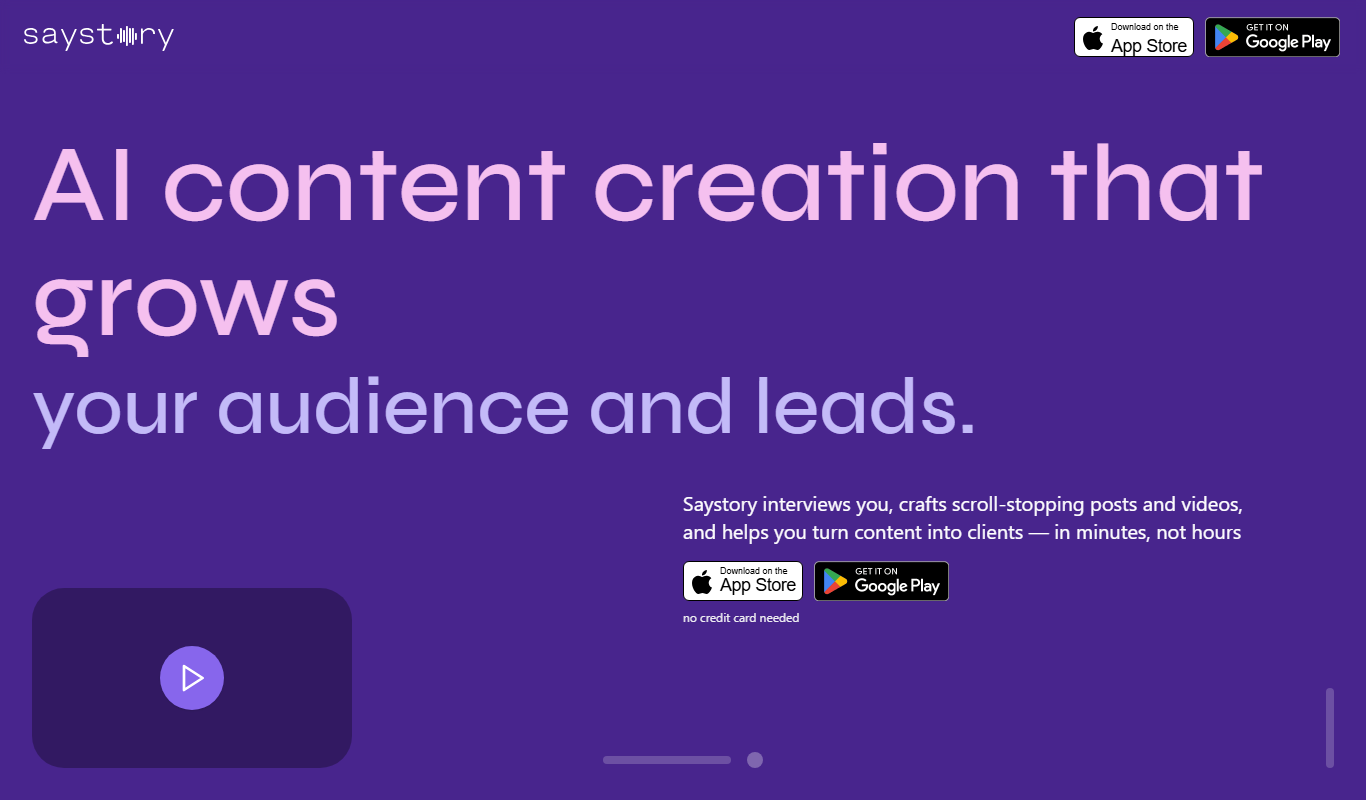
saystory
saystory is an AI-powered mobile app that turns your voice into ready-to-post content for LinkedIn, Instagram and more, with a built-in teleprompter.

Flowjin
Flowjin is an AI clip maker that turns long videos and audio into short captioned clips and writes platform-specific social posts.

LeadHunt AI
LeadHunt AI finds verified business email addresses by domain, job title and industry, and local business contact details by location and industry.

Reica
reica is an AI still life studio that turns product photos into validated, marketplace-ready catalog images across thousands of SKUs.

16x Prompt
16x Prompt is a desktop tool for AI coding that manages code context, customizes prompts and works with multiple LLM API integrations.

PageOn.ai
PageOn.AI is an AI presentation and infographic maker where AI agents research your topic, plan the structure and design interactive pages beyond static slides.