

Cardano Blockchain Platform for Secure Decentralized Applications and Smart Contracts
Cardano is a proof-of-stake blockchain platform designed for secure and scalable decentralized applications and smart contracts, featuring energy-efficient consensus and formal verification.
- Best for
- Decentralized Application Development
- Key capability
- Ouroboros Proof of Stake
Save Cardano, follow its updates and vote on it — everything stays in your account.
Sign in or create a free account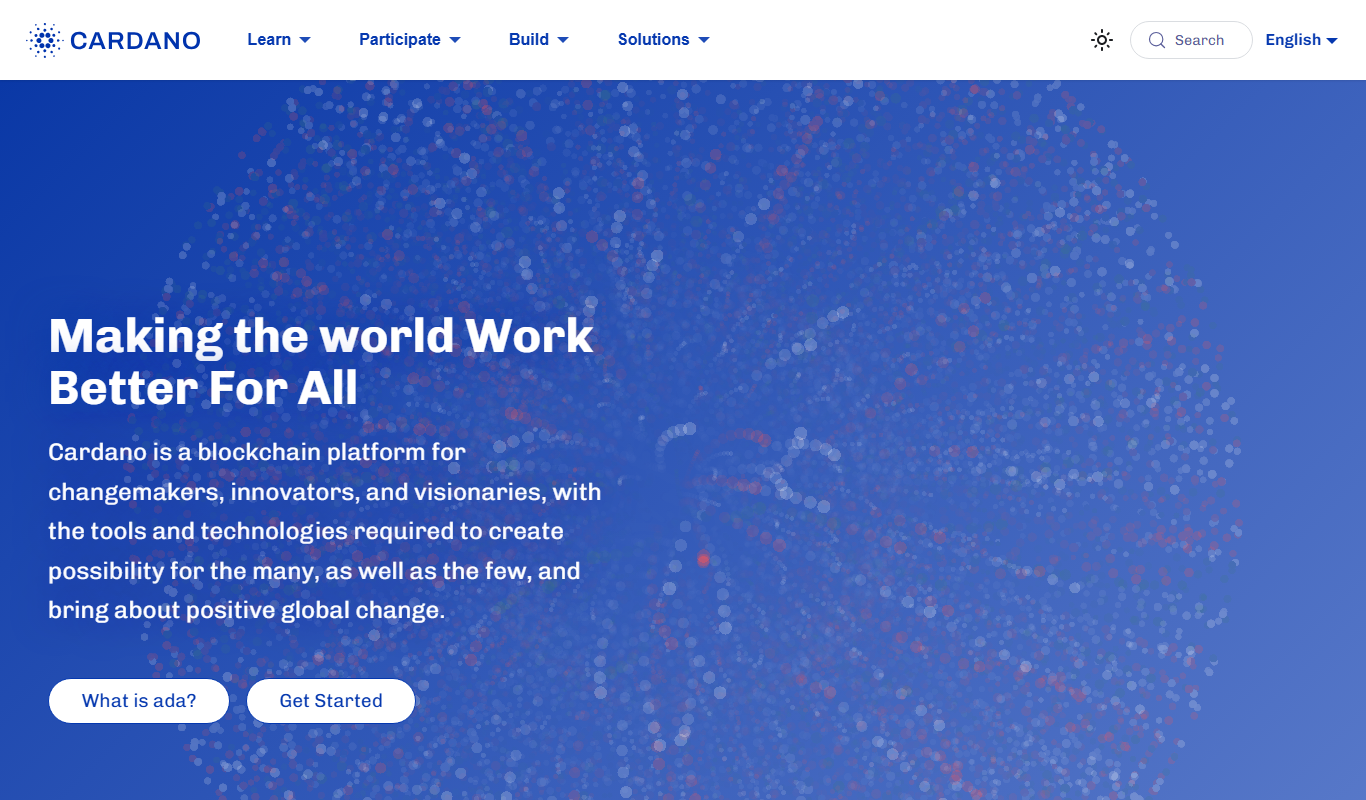
What is Cardano?
Cardano is an open-source blockchain platform designed for secure and scalable decentralized applications and smart contracts. It uses a proof-of-stake consensus mechanism called Ouroboros to achieve energy-efficient and secure transaction validation. The platform emphasizes formal methods and peer-reviewed research to ensure high assurance in its technology.
Key features of Cardano
Cardano offers a layered architecture separating the settlement and computation layers, supports smart contracts with formal verification, provides a native cryptocurrency called ADA, and enables decentralized governance and staking mechanisms.
Ouroboros Proof of Stake
A provably secure and energy-efficient consensus algorithm that secures the Cardano blockchain.
Layered Architecture
Separates transaction settlement from smart contract computation for enhanced scalability.
Formal Verification
Supports mathematically proven correctness of smart contracts to reduce bugs and vulnerabilities.
Native Cryptocurrency ADA
Used for transactions, staking, and governance within the Cardano ecosystem.
Decentralized Governance
Enables community-driven decision-making for protocol evolution and treasury management.
Pros and cons of Cardano
Pros
- Energy-efficient and secure proof-of-stake consensus
- Strong emphasis on formal methods and peer-reviewed research
- Supports scalable and flexible smart contract development
- Active community governance and treasury system
- Open-source and transparent development process
Cons
- Smart contract ecosystem is smaller compared to some competitors
- Development and adoption can be slower due to rigorous research approach
- Transaction fees vary and can increase during network congestion
Key use cases for Cardano
Decentralized Application Development
Developers can build scalable and secure decentralized applications (dApps) using Cardano's smart contract platform.
Smart Contract Execution
Cardano supports formal verification of smart contracts to ensure correctness and security.
Cryptocurrency Transactions
Users can send, receive, and stake ADA, Cardano's native cryptocurrency, for secure and efficient transactions.
Enterprise Blockchain Solutions
Businesses can leverage Cardano's blockchain for supply chain management, identity verification, and more.
Governance and Voting
Cardano enables decentralized governance through on-chain voting mechanisms for protocol upgrades.
How Cardano works
- 1
Blockchain Layering
Cardano separates the ledger of account values from the reason why values are moved, enabling flexibility and scalability.
- 2
Proof of Stake Consensus
The Ouroboros protocol secures the network by selecting validators proportionally to their stake in ADA.
- 3
Smart Contract Development
Developers write smart contracts using Plutus and Marlowe languages, which support formal verification.
- 4
Staking and Delegation
ADA holders can stake their tokens or delegate to stake pools to participate in network consensus and earn rewards.
- 5
Governance Participation
Community members vote on protocol updates and funding proposals through on-chain governance.
Who is using Cardano
Cardano pricing
Free
$0
Open-source platform with no fees to access the blockchain network; transaction fees apply for network usage.
Plans and prices are as published by the vendor and can change. Check the official site before you buy. Open the pricing page (opens in a new tab)
Frequently asked questions about Cardano
Cardano is a blockchain platform for building decentralized applications and smart contracts using a proof-of-stake consensus.
Cardano uses Ouroboros, which selects validators based on their ADA stake to secure the network efficiently.
Cardano supports Plutus and Marlowe for smart contract development, with Haskell used for core development.
Yes, ADA holders can stake or delegate their tokens to earn rewards and participate in network consensus.
It depends on your specific needs and how you plan to use the tool. The official website and documentation are the best sources for the latest details.
It depends on your specific needs and how you plan to use the tool. The official website and documentation are the best sources for the latest details.
It depends on your specific needs and how you plan to use the tool. The official website and documentation are the best sources for the latest details.
It depends on your specific needs and how you plan to use the tool. The official website and documentation are the best sources for the latest details.
Conclusion
Cardano’s layered architecture separates transaction settlement from smart contract computation for scalability. Network security comes from Ouroboros, a proof-of-stake protocol that selects validators in proportion to their stake in ADA. ADA holders can stake their tokens or delegate them to stake pools to take part in consensus and earn rewards. Smart contracts are written in Plutus and Marlowe, languages that support formal verification, while Haskell is used for core development.
This research-driven design is aimed at blockchain developers and decentralized application creators, as well as enterprises exploring supply chain management and identity verification. Community members also vote on protocol updates and funding proposals through on-chain governance. Accessing the open-source network carries no fee, but transaction fees apply for network usage and can increase during congestion. The same rigorous research approach is described as slowing development and adoption, and the smart contract ecosystem is smaller compared to some competitors.
Sources
Sign in to review this tool.
Sign In to ReviewNo reviews yet
Be the first to share how this tool worked for you.
Ask about pricing, limits, or how it compares — or answer someone else.
Sign In to AskNo questions yet
Have a question about using or paying for this tool? Be the first to ask.
Featured on TiorAI



Alternative Tools
Explore similar AI tools that might fit your needs

Polkadot
Polkadot is a blockchain platform that connects multiple specialized blockchains into one unified network, enabling scalability, interoperability, and shared security for decentralized applications.
More Business Management tools
Other tools in the same category, for when this one is not quite the fit.

Wren AI Cloud
Wren AI is one governed data agent for people and AI agents: ask your data in plain language with the GenBI agent, or call it from Claude, ChatGPT or your own agents over MCP.
BioBrain Insights MROps Platform
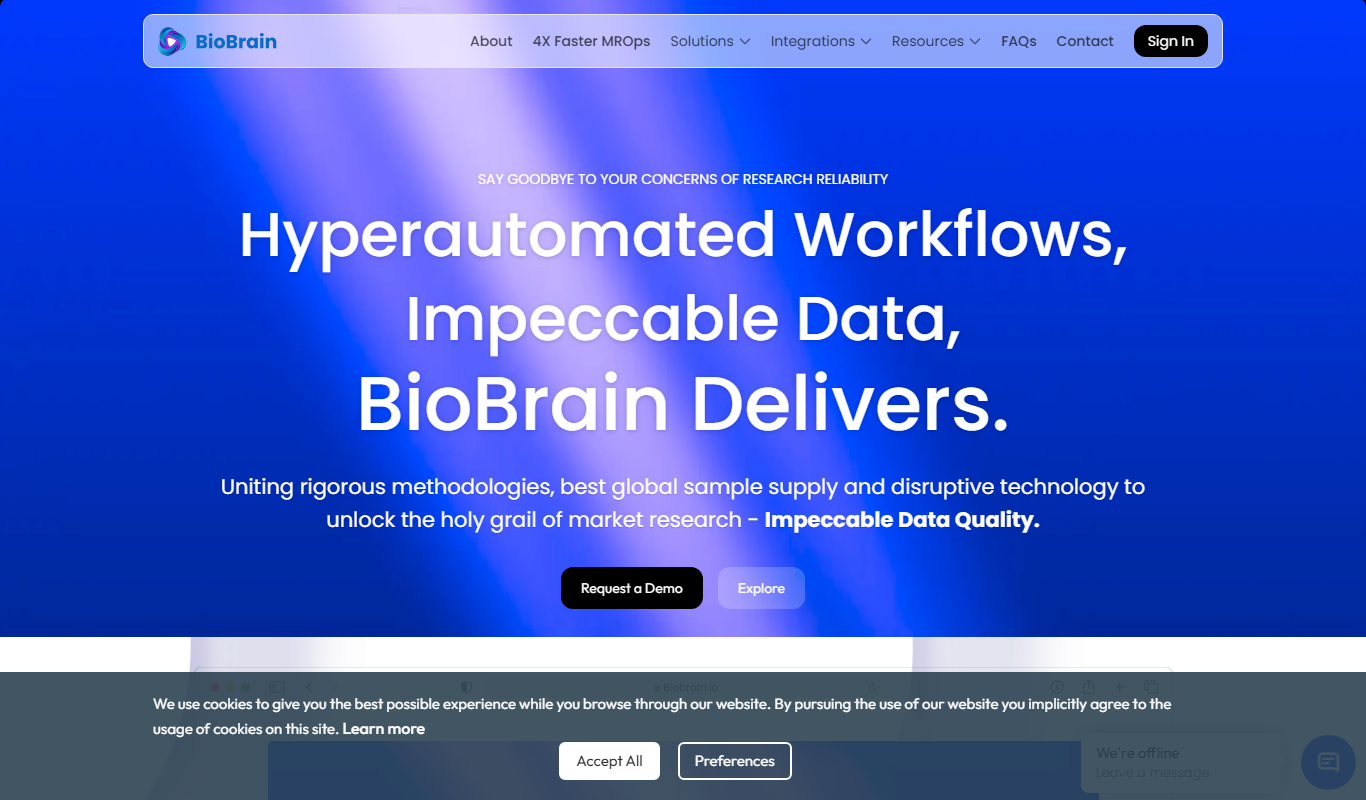
BioBrain Insights unifies all of market research operations in one platform powered by AI and automation, from automated survey programming to boardroom reports.

Justmatch
Justmatch is an AI-driven platform that provides personalized job matching, resume optimization, and career insights to help job seekers find relevant opportunities and grow professionally.

Storytide.io – Corporate Influencing
Storytide is a LinkedIn content workflow platform with strategy, writing with AI support, structured processes and analytics for ghostwriters, communications teams and corporate influencer programs.

TIL bot for Slack
TIL bot for Slack is an AI assistant that gets insights from conversations, summarizes threads, finds action items, sets one time and recurring reminders and gets answers with AI.

VenueLog
VenueLog is restaurant management software that connects POS, rostering and accounting systems for automated reporting, real-time insights and AI-powered tools.

Fiorino.AI
Fiorino.AI is an open-source tool that helps SaaS owners track per-user LLM usage and costs, set pricing tiers and automate usage-based billing.

Boxsy
Boxsy is an AI COO for early-stage founders: fundraising pipeline, investor database, data room, investor updates and runway tracking in one platform.