

From my experience with BugHerd, I found it excels at simplifying bug reporting by allowing users to pin issues directly on live websites, which provides clear visual context that reduces miscommunication. After spending time with the platform, I can say it’s particularly well-suited for web developers, designers, and project managers who need an intuitive way to collect client feedback and manage bugs collaboratively. However, there’s a trade-off: BugHerd currently supports only English and lacks a mobile app, which might limit flexibility for some teams. Overall, if you need a straightforward visual bug tracking and feedback tool integrated with your workflow, BugHerd delivers solid results.
BugHerd Bug Tracking Tool for Web Development and Team Collaboration
BugHerd is a visual bug tracking tool that allows teams to report, manage, and resolve website bugs by pinning issues directly on the webpage, streamlining communication and project management.
- Best for
- Bug Tracking
- Key capability
- Visual Bug Reporting
Your actions

Do you recommend this tool?
What is BugHerd?
BugHerd is a visual bug tracking and feedback tool designed for web developers, designers, and project managers. It simplifies the process of reporting bugs and collecting feedback by allowing users to pin issues directly on the webpage. This eliminates confusion by providing clear visual context and streamlines communication within teams and with clients.
Key features of BugHerd
BugHerd offers visual bug reporting, task management with Kanban boards, client feedback collection, integrations with popular project management tools, and a browser extension for easy issue capture.
Visual Bug Reporting
Pin bugs directly on the webpage with automatic screenshots and browser details.
Kanban Task Board
Manage and prioritize bugs and feedback using a drag-and-drop Kanban interface.
Client Feedback Portal
Enable clients to submit feedback easily without technical knowledge.
Integrations
Connect with tools like Jira, Trello, Slack, GitHub, and Asana for seamless workflow.
Browser Extension
Quickly capture bugs and feedback from any website with the BugHerd Chrome extension.
Pros and cons of BugHerd
Pros
- Easy visual bug reporting directly on websites
- Simplifies client feedback collection
- Integrates with popular project management tools
- User-friendly Kanban task management
- Browser extension for quick issue capture
Cons
- Limited language support (English only)
- Pricing may be high for very small teams
- No mobile app available
Key use cases for BugHerd
Bug Tracking
Capture, track, and manage bugs directly on websites with visual context.
Client Feedback Collection
Allow clients and stakeholders to leave feedback and bug reports easily on live sites.
Team Collaboration
Facilitate communication between developers, designers, and project managers through task assignments and comments.
Project Management
Organize and prioritize bugs and tasks with Kanban-style boards and status tracking.
Website Testing
Streamline website QA by enabling testers to report issues with screenshots and annotations.
How BugHerd works
- 1
Install BugHerd
Add the BugHerd JavaScript snippet to your website or install the browser extension.
- 2
Report Issues Visually
Click on any element on the webpage to pin a bug or feedback with screenshots and notes.
- 3
Manage Tasks
Organize reported issues in a Kanban board, assign team members, and track progress.
- 4
Collaborate and Resolve
Communicate with team members and clients through comments and status updates until issues are resolved.
Who is using BugHerd
Web developers
UX/UI designers
Project managers
QA testers
Digital agencies
Freelance web professionals
BugHerd pricing
Starter
$39/month
Suitable for small teams with up to 3 users and 1 active project.
Pro
$79/month
For growing teams with up to 10 users and multiple projects.
Business
Custom pricing
Tailored plans for larger teams with advanced features and priority support.
Plans and prices are as published by the vendor and can change. Check the official site before you buy. Open the pricing page (opens in a new tab)
Frequently asked questions about BugHerd
Yes, BugHerd can be installed on any website by adding a JavaScript snippet or using the browser extension.
Yes, BugHerd integrates with Jira, Trello, Slack, GitHub, Asana, and more.
Yes, BugHerd offers a 14-day free trial with access to all features.
Clients can submit feedback via a simple interface without needing a full BugHerd account.
It depends on your specific needs and how you plan to use the tool. The official website and documentation are the best sources for the latest details.
Integration support depends on the tool and its available connectors or API. Check the official documentation or integrations page to confirm what is supported.
It depends on your specific needs and how you plan to use the tool. The official website and documentation are the best sources for the latest details.
Yes, it can help with that use case depending on how you configure it and what features are available. You’ll get the best results with clear inputs and a defined goal.
Sign in to review this tool.
Sign In to ReviewNo reviews yet
Be the first to share how this tool worked for you.
Ask about pricing, limits, or how it compares — or answer someone else.
Sign In to AskNo questions yet
Have a question about using or paying for this tool? Be the first to ask.
Featured on TiorAI



Alternative Tools
Explore similar AI tools that might fit your needs

Enterprise
Jira
Jira is a project management and issue tracking software by Atlassian that supports agile methodologies like scrum and kanban, enabling teams to plan, track, and release software efficiently.

Free
Trello
Trello is a visual project management tool that helps teams organize tasks and workflows using boards, lists, and cards, with automation and integrations to enhance productivity.

Business
Asana
Asana is a cloud-based project management platform that enables teams to organize tasks, track progress, automate workflows, and collaborate effectively across projects.
Free
Bugzilla
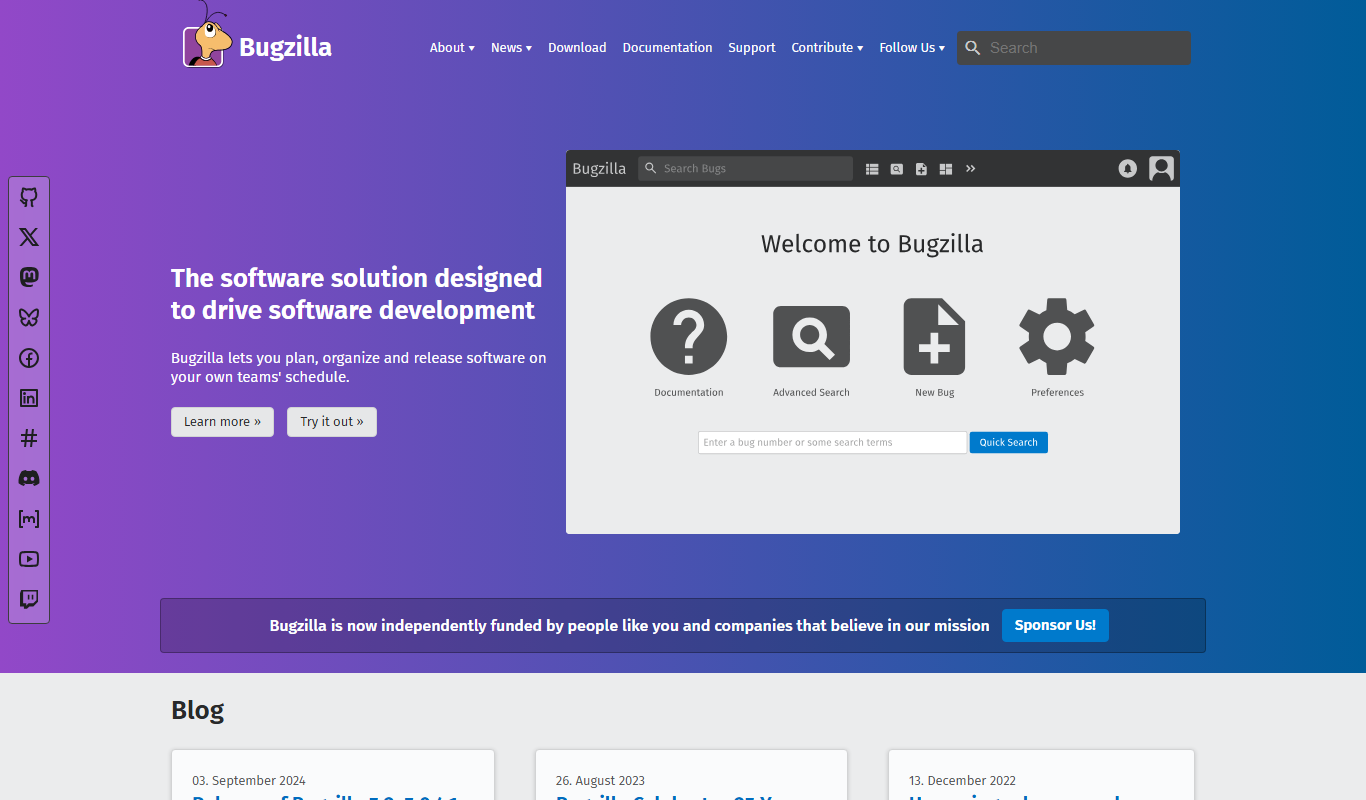
Bugzilla is an open-source bug tracking system developed by the Mozilla Foundation that helps software teams report, track, and manage bugs efficiently through a customizable web interface.
More Business Management tools
Other tools in the same category, for when this one is not quite the fit.

Free
Roadtrippers
Roadtrippers is a travel planning app that helps users create detailed road trip itineraries by mapping routes, discovering attractions, and optimizing travel plans.

Free
TripIt
TripIt is a travel app that automatically organizes your travel plans into a single itinerary by parsing confirmation emails, providing real-time flight alerts, and allowing itinerary sharing.

Free
FormSwift
FormSwift is an online platform that provides customizable legal and business document templates, PDF editing, and electronic signature capabilities to help users create and manage important documents easily.

Pay As You Go
TextMagic
TextMagic is a cloud-based SMS marketing platform that enables businesses to send bulk text messages, automate notifications, and engage customers with two-way messaging and API integration.

Free Trial
EZ Texting
EZ Texting is a cloud-based SMS marketing platform that enables businesses to send mass text messages, automate campaigns, and engage customers with two-way messaging.

Free Trial
SimpleTexting
SimpleTexting is a cloud-based SMS marketing platform that enables businesses to send mass text messages, automate SMS workflows, and engage customers with two-way messaging to improve communication and marketing effectiveness.

Free
Spocket
Spocket is a dropshipping platform that helps ecommerce entrepreneurs source products from vetted US and EU suppliers, automate order fulfillment, and integrate with major online store platforms like Shopify and WooCommerce.

Free
Oberlo
Oberlo is a dropshipping app for Shopify that automates product importing, inventory management, and order fulfillment, enabling entrepreneurs to run ecommerce stores without holding inventory.