

From my experience with Spirit AI, I found it excels at bringing emotional depth to AI characters, which significantly enhances user engagement in interactive applications. The platform’s ability to model and express complex emotions makes AI interactions feel more natural and empathetic, especially in gaming and virtual assistant contexts. However, the lack of publicly available pricing and limited language support may require potential users to reach out directly for details and consider integration complexity. Overall, if your project demands emotionally intelligent AI characters, Spirit AI offers a robust and specialized solution.
Spirit AI Emotional Intelligence Platform for Realistic AI Characters
Spirit AI is a platform that enables developers to build AI characters with emotional intelligence, allowing for realistic and empathetic interactions in games, virtual assistants, and chatbots.
- Best for
- Video Game Character Interaction
- Key capability
- Emotion Recognition
Do you recommend this tool?
What is Spirit AI?
Spirit AI is a platform that provides emotional intelligence technology to power AI characters with realistic feelings and responses. It enables developers to create virtual agents and NPCs that can perceive, interpret, and express emotions, making interactions more natural and engaging.
Key features of Spirit AI
Spirit AI offers emotion recognition, emotional modeling, and expressive AI character frameworks. Its tools allow integration of emotional intelligence into dialogue systems, enabling AI to respond with empathy and nuanced emotional behavior.
Emotion Recognition
Detects user emotions through text and voice inputs to inform AI responses.
Emotional State Modeling
Simulates complex emotional states for AI characters to enable realistic reactions.
Expressive Dialogue
Generates emotionally nuanced dialogue tailored to the AI character’s mood.
SDK and API Access
Provides flexible integration options for various platforms and applications.
Cross-Platform Support
Compatible with games, virtual assistants, and chatbots across web and mobile.
Pros and cons of Spirit AI
Pros
- Enables emotionally rich AI character interactions
- Flexible SDK and API for diverse applications
- Enhances user engagement through empathy
- Supports complex emotional state modeling
Cons
- Pricing details not publicly available
- Limited language support currently
- Requires developer integration expertise
Key use cases for Spirit AI
Video Game Character Interaction
Enhance NPCs with realistic emotional responses to create immersive player experiences.
Virtual Assistants
Develop emotionally aware AI assistants that understand and respond to user feelings.
Customer Service Bots
Improve customer engagement by integrating emotional intelligence into chatbots.
Training Simulations
Use emotionally responsive AI characters for realistic training scenarios in healthcare, education, and more.
Interactive Storytelling
Create dynamic narratives where AI characters react emotionally to user choices.
How Spirit AI works
- 1
Integration
Developers integrate Spirit AI’s SDK or API into their applications or games.
- 2
Emotion Modeling
The platform models AI characters’ emotional states based on user input and context.
- 3
Emotion Expression
AI characters express emotions through dialogue, voice tone, and behavior.
- 4
Continuous Adaptation
Emotional states update dynamically to reflect ongoing interactions.
Who is using Spirit AI
Video game developers
Virtual assistant creators
Customer service chatbot teams
Training simulation designers
Interactive storytelling authors
Spirit AI pricing
Custom Pricing
Contact for pricing
Tailored plans based on project scope and usage requirements.
Plans and prices are as published by the vendor and can change. Check the official site before you buy. Open the pricing page (opens in a new tab)
Frequently asked questions about Spirit AI
Gaming, customer service, virtual assistants, training simulations, and interactive storytelling.
Currently, the platform primarily supports English.
By modeling and expressing emotions, AI characters respond more naturally and empathetically.
Spirit AI offers custom demos; contact their team for trial options.
This tool is designed to help users accomplish its core tasks more efficiently. It is typically used by individuals or teams looking to improve productivity and workflow.
It depends on your specific needs and how you plan to use the tool. The official website and documentation are the best sources for the latest details.
Yes, it can help with that use case depending on how you configure it and what features are available. You’ll get the best results with clear inputs and a defined goal.
It depends on your specific needs and how you plan to use the tool. The official website and documentation are the best sources for the latest details.
Sign in to review this tool.
Sign In to ReviewNo reviews yet
Be the first to share how this tool worked for you.
Ask about pricing, limits, or how it compares — or answer someone else.
Sign In to AskNo questions yet
Have a question about using or paying for this tool? Be the first to ask.
Featured on TiorAI



Alternative Tools
Explore similar AI tools that might fit your needs

Free
Replika
Replika is an AI chatbot designed to provide personalized emotional support and companionship through text and voice conversations, helping users manage loneliness and stress.
Free
Kuki AI
Kuki AI is a conversational chatbot platform that provides natural, human-like interactions using advanced AI and NLP technologies.
Custom Pricing
Soul Machines
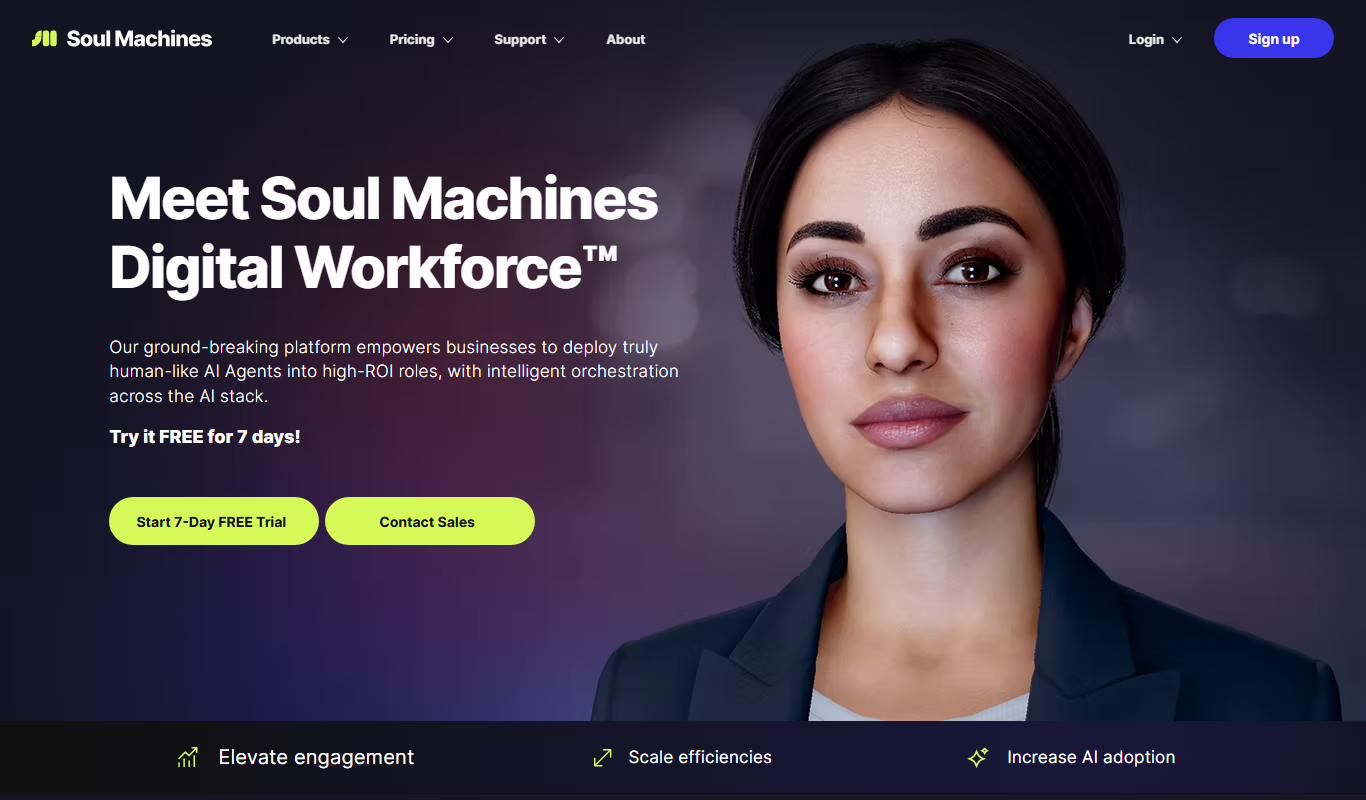
Soul Machines is an AI platform that creates autonomous digital humans capable of natural, emotionally aware interactions to automate customer service and enhance user engagement.
More AI Chat Generator tools
Other tools in the same category, for when this one is not quite the fit.

Free
Spike
Spike is an email and chat platform that converts traditional email into a conversational chat interface, integrating AI-powered collaboration tools to enhance productivity for teams and individuals.
Freemium
AskCleo
AskCleo is an AI chat generator that provides natural, multi-turn conversations for personal assistance and customer service automation.
Freemium
Youdao AI Search
Youdao AI Search is an AI-powered multilingual search engine that uses natural language processing and a knowledge graph to provide semantic search results and direct answers in Chinese, English, Japanese, and Korean.

Free Trial
Verse AI
Verse AI is a conversational AI platform that enables businesses to build customizable chatbots and voice assistants to automate customer interactions and improve engagement.

Free
Chatroulette
Chatroulette is a free web-based platform that pairs users randomly for live video chats with strangers worldwide, requiring no registration and supporting multiple languages.

Free Trial
CustomGPT
CustomGPT is a no-code AI chat generator platform that lets you build personalized AI chatbots trained on your own data, suitable for customer support, content generation, and internal knowledge assistance.
Free
Moodify
Moodify is an AI tool that analyzes text to detect sentiment and classify emotions, helping businesses understand customer feelings and optimize content.

Free
Genius
Genius is a free platform offering song lyrics and community-driven annotations that explain the meaning behind music, with artist participation and mobile app support.