

From my experience with ShipBob, I found it excels at simplifying complex e-commerce logistics by providing a robust network of warehouses and seamless integrations with popular sales platforms. The platform’s real-time inventory tracking and multi-channel fulfillment capabilities make it particularly well-suited for small to medium-sized online retailers looking to scale without managing their own warehouses. However, the pricing structure can be somewhat complex and may require careful analysis to optimize costs. Overall, if you need reliable, technology-driven order fulfillment and shipping solutions, ShipBob delivers solid results with strong operational support.
ShipBob Fulfillment Services for E-commerce Shipping and Inventory Management
ShipBob is a third-party logistics provider that offers e-commerce businesses technology-driven order fulfillment, inventory management, and shipping services to streamline operations and scale efficiently.
- Best for
- E-commerce Order Fulfillment
- Key capability
- Distributed Fulfillment Network

What is ShipBob?
ShipBob is a technology-driven third-party logistics (3PL) provider that offers end-to-end order fulfillment solutions for e-commerce businesses. It integrates with online stores to automate inventory management, order processing, and shipping, enabling merchants to scale efficiently without managing warehouses themselves.
Key features of ShipBob
ShipBob provides distributed warehousing, real-time inventory tracking, multi-channel order fulfillment, shipping rate optimization, and returns management through a centralized dashboard and API integrations.
Distributed Fulfillment Network
Multiple warehouse locations reduce shipping times and costs by fulfilling orders closer to customers.
Real-Time Inventory Sync
Automatic updates across sales channels prevent overselling and stockouts.
Multi-Channel Integration
Supports Shopify, Amazon, eBay, WooCommerce, BigCommerce, and custom platforms.
Shipping Rate Discounts
Access to discounted rates with major carriers like USPS, FedEx, and UPS.
Custom Packaging and Branding
Options for branded packaging to enhance customer unboxing experience.
Pros and cons of ShipBob
Pros
- Scalable fulfillment network with multiple warehouse locations
- Seamless integration with popular e-commerce platforms
- Real-time inventory and order tracking
- Access to discounted shipping rates
- Custom packaging options available
Cons
- Pricing can be complex depending on volume and services used
- Limited support for non-English languages
- No dedicated mobile app for order management
Key use cases for ShipBob
E-commerce Order Fulfillment
ShipBob handles storage, packing, and shipping of online orders to customers globally.
Inventory Management
Real-time inventory tracking and management across multiple warehouses to optimize stock levels.
Multi-Channel Fulfillment
Supports order fulfillment from various sales channels including Shopify, Amazon, WooCommerce, and more.
Shipping Optimization
Provides discounted shipping rates and optimizes shipping routes to reduce delivery times and costs.
Returns Management
Facilitates streamlined returns processing to improve customer experience and operational efficiency.
How ShipBob works
-
1
Connect Your Store
Integrate your e-commerce platform with ShipBob to sync orders and inventory automatically.
-
2
Send Inventory to Warehouses
Ship your products to ShipBob’s fulfillment centers located across the US and internationally.
-
3
Order Processing
When customers place orders, ShipBob picks, packs, and ships them directly to customers.
-
4
Track Shipments and Inventory
Monitor order status and inventory levels in real-time via the ShipBob dashboard or API.
-
5
Manage Returns
Handle customer returns efficiently with ShipBob’s returns management services.
Who is using ShipBob
Small to medium e-commerce businesses
Direct-to-consumer brands
Online retailers seeking outsourced fulfillment
Startups scaling order volume
Businesses needing multi-channel order management
ShipBob pricing
Pay-as-you-go
Varies based on usage
No monthly fees; pay for storage, fulfillment, and shipping as you use the service.
Plans and prices are as published by the vendor and can change. Check the official site before you buy. Open the pricing page (opens in a new tab)
Frequently asked questions about ShipBob
Yes, ShipBob offers international fulfillment and shipping services through select warehouse locations.
Yes, ShipBob has a native integration with Shopify and many other e-commerce platforms.
ShipBob provides returns management services that allow you to process and restock returned items efficiently.
ShipBob typically does not charge setup fees, but pricing may vary based on business needs.
It depends on your specific needs and how you plan to use the tool. The official website and documentation are the best sources for the latest details.
Integration support depends on the tool and its available connectors or API. Check the official documentation or integrations page to confirm what is supported.
It depends on your specific needs and how you plan to use the tool. The official website and documentation are the best sources for the latest details.
It depends on your specific needs and how you plan to use the tool. The official website and documentation are the best sources for the latest details.
Sign in to review this tool.
No reviews yet
Be the first to share how this tool worked for you.
Ask about pricing, limits, or how it compares — or answer someone else.
No questions yet
Have a question about using or paying for this tool? Be the first to ask.
Featured on TiorAI



Alternative Tools
Explore similar AI tools that might fit your needs

Free Trial
ShipStation
ShipStation is a cloud-based shipping and order management software that helps e-commerce businesses automate shipping label creation, manage orders from multiple sales channels, and track shipments with multiple carriers.

Freemium
Easyship
Easyship is a cloud-based shipping platform that helps e-commerce businesses automate shipping label creation, compare courier rates, generate customs forms, and track shipments globally.
More AI Workflow tools
Other tools in the same category, for when this one is not quite the fit.

Free
Furkot
Furkot is a web-based trip planner that helps users create multi-stop routes, optimize travel paths, schedule accommodations and activities, and share itineraries for efficient road trip planning.

Free
EcoCart
EcoCart is a plugin that integrates with e-commerce platforms to calculate and offset the carbon footprint of online purchases, allowing customers to contribute to verified climate projects during checkout.

Contact for pricing
Trials.ai
Trials.ai is an AI-driven platform that helps medical researchers design optimized clinical trial protocols, improve patient recruitment, and ensure regulatory compliance to accelerate trial success.

Free
ZipBooks
ZipBooks is a cloud-based accounting software designed for small businesses and freelancers to manage invoicing, expenses, payments, and financial reporting with ease.

Free Trial
Lookeen
Lookeen is a Windows desktop search software that enables fast and comprehensive searching of emails, files, and documents, integrating deeply with Microsoft Outlook and supporting network drives.
Custom Pricing
Ataccama
Ataccama is an AI-driven data management platform that integrates data governance, master data management, and data quality automation to help enterprises manage and improve their data assets efficiently.
Enterprise
FloQast
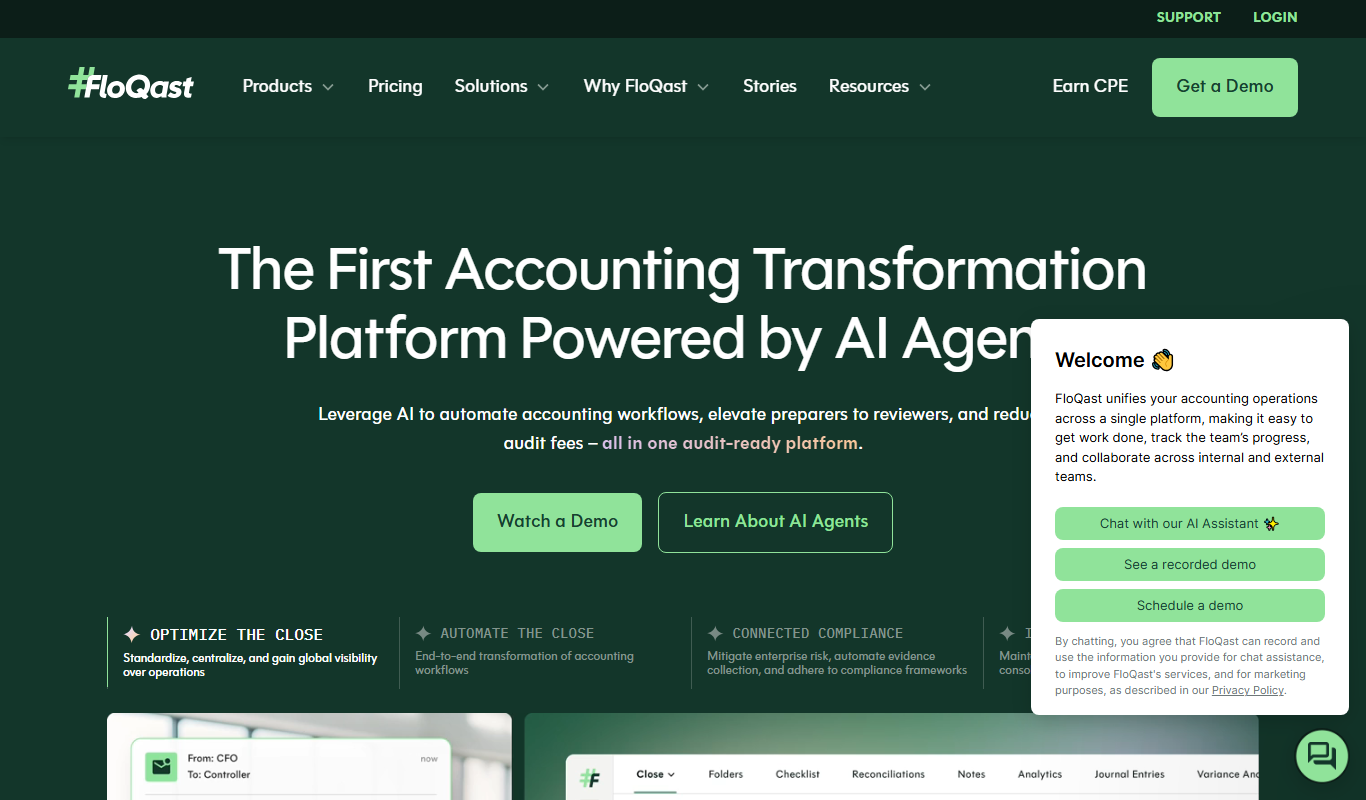
FloQast is a cloud software designed to streamline and automate the accounting month-end close process, improving accuracy and collaboration for finance teams.

Custom Pricing
Talentsoft
Talentsoft is a cloud-based talent management software that integrates recruitment, learning, performance management, and succession planning to help organizations manage their workforce effectively.