

From my experience with Movesense, I found it excels at providing a flexible and open platform for capturing precise motion and physiological data. The combination of hardware sensors and developer-friendly APIs makes it particularly well-suited for sports scientists, healthcare researchers, and wearable device developers who need accurate and customizable data streams. However, there is a trade-off: fully leveraging Movesense requires technical expertise and investment in hardware, which may not suit casual users. Overall, if you need a professional-grade sensor platform for fitness, health, or biomechanical applications, Movesense delivers reliable and extensible solutions.
Movesense Wearable Sensor Platform for Sports and Health Data Tracking
Movesense is a wearable sensor platform by Suunto that captures motion, heart rate, and audio data for sports, health, and research applications using an open API and Bluetooth connectivity.
- Best for
- Sports Performance Analysis
- Key capability
- Multi-Sensor Integration
Your actions
Save Movesense, follow its updates and vote on it — everything stays in your account.
Sign in or create a free account
What is Movesense?
Movesense is a versatile wearable sensor platform developed by Suunto Oy, designed for capturing precise motion, physiological, and audio data. It combines hardware sensors with an open software ecosystem, enabling developers, researchers, and professionals to build custom applications for sports, health, and biomechanical analysis. The platform supports real-time data streaming, logging, and Bluetooth connectivity, making it suitable for a wide range of use cases from athletic performance monitoring to clinical research.
Key features of Movesense
Movesense offers compact, multi-sensor wearable devices with high-precision inertial measurement units (IMUs), heart rate monitoring, and audio sensors. It provides an open API and SDKs for easy integration, real-time data access, and customizable firmware. The platform supports Bluetooth Low Energy for wireless communication and includes tools for data visualization and analysis.
Multi-Sensor Integration
Combines IMU, heart rate, and audio sensors in a compact wearable device.
Open API and SDK
Provides developers with tools to access sensor data and customize firmware.
Bluetooth Low Energy Connectivity
Enables wireless real-time data streaming to mobile and desktop applications.
High Precision Data Capture
Delivers accurate motion and physiological measurements suitable for professional use.
Flexible Firmware
Allows customization and extension of sensor capabilities to fit specific use cases.
Pros and cons of Movesense
Pros
- Open and flexible platform for custom development
- High accuracy sensors suitable for professional use
- Supports multiple sensor types including audio
- Wireless Bluetooth connectivity for real-time data
- Strong community and developer resources
Cons
- Requires technical knowledge to fully utilize SDK and APIs
- Hardware cost may be a barrier for casual users
- Limited language support beyond English
Key use cases for Movesense
Sports Performance Analysis
Athletes and coaches use Movesense sensors to capture detailed motion and physiological data for optimizing training and technique.
Health Monitoring
Healthcare professionals and researchers leverage Movesense to monitor vital signs and movement patterns for patient assessment.
Biomechanical Research
Researchers utilize Movesense sensors to collect accurate biomechanical data for studies in movement science and ergonomics.
Wearable Device Development
Developers integrate Movesense sensors into custom wearable devices and applications for diverse IoT and fitness solutions.
Audio Signal Processing
Movesense includes audio sensing capabilities that can be used for voice and environmental sound analysis in fitness and health contexts.
How Movesense works
- 1
Acquire Movesense Sensor
Purchase or obtain a Movesense sensor device compatible with your application needs.
- 2
Connect via Bluetooth
Pair the sensor with your mobile or desktop application using Bluetooth Low Energy.
- 3
Access Data through API/SDK
Use Movesense’s open API and SDKs to stream or log sensor data such as motion, heart rate, and audio.
- 4
Analyze and Visualize
Process the collected data using your software tools or Movesense’s visualization applications.
- 5
Develop Custom Applications
Leverage the open platform to create tailored solutions for fitness tracking, health monitoring, or research.
Who is using Movesense
Sports scientists and coaches
Healthcare professionals and researchers
Biomechanics and movement researchers
Wearable device developers
Fitness technology companies
Movesense pricing
Freemium
$0/month
Access to Movesense SDK, API, and basic developer tools with limited sensor hardware purchase.
Enterprise
Custom pricing
Tailored solutions including bulk sensor procurement, advanced support, and integration services.
Plans and prices are as published by the vendor and can change. Check the official site before you buy. Open the pricing page (opens in a new tab)
Frequently asked questions about Movesense
Movesense sensors capture motion data via IMUs, heart rate, and audio signals.
Yes, its high-precision sensors and open platform make it suitable for various health and biomechanical studies.
Absolutely, Movesense provides open APIs and SDKs for custom application development.
Movesense supports Web, mobile SDKs, APIs, and embedded systems.
This tool is designed to help users accomplish its core tasks more efficiently. It is typically used by individuals or teams looking to improve productivity and workflow.
Yes, it can help with that use case depending on how you configure it and what features are available. You’ll get the best results with clear inputs and a defined goal.
It depends on your specific needs and how you plan to use the tool. The official website and documentation are the best sources for the latest details.
Data handling and security practices vary by provider. Review the official privacy policy to understand how your data is stored and used.
Sign in to review this tool.
Sign In to ReviewNo reviews yet
Be the first to share how this tool worked for you.
Ask about pricing, limits, or how it compares — or answer someone else.
Sign In to AskNo questions yet
Have a question about using or paying for this tool? Be the first to ask.
Featured on TiorAI



Alternative Tools
Explore similar AI tools that might fit your needs
Subscription
Whoop
Whoop is a subscription-based wearable fitness tracker that monitors heart rate variability, sleep, strain, and recovery to provide personalized health and performance insights.
More AI Audio Enhancer tools
Other tools in the same category, for when this one is not quite the fit.

One-time purchase
Vienna Symphonic Library
Vienna Symphonic Library is a professional orchestral sample library and virtual instrument platform used by composers and producers to create realistic symphonic music within digital audio workstations.

One-time purchase
Garritan Personal Orchestra
Garritan Personal Orchestra is a virtual instrument software that provides a comprehensive collection of realistic orchestral instrument samples for music composition, film scoring, and game audio production.

Free
Sfxr
Sfxr is a free web-based tool that generates retro-style sound effects for games and music by allowing users to customize synthesis parameters and export WAV files.

Free
Freesound
Freesound is a free online platform offering a large collection of Creative Commons licensed sound effects and audio samples for use in creative and educational projects.

Free Trial
Alitu
Alitu is a web-based podcast maker that automates audio editing, cleanup, and episode assembly to help podcasters produce professional-quality episodes quickly and easily.
Free Trial
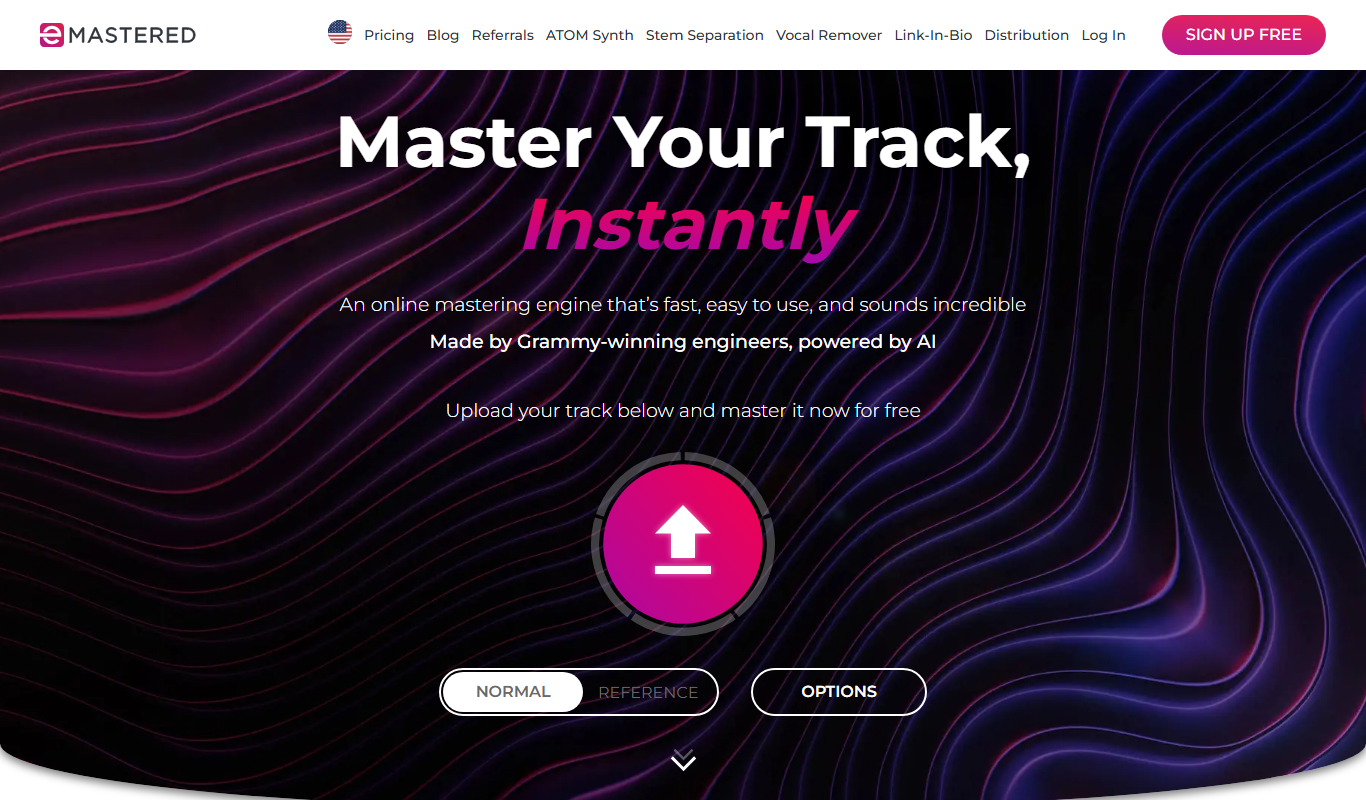
eMastered
eMastered is an AI-driven online audio mastering platform that automates professional mastering processes, enabling musicians and podcasters to enhance audio quality easily through a web interface.

Free Trial
Reaper
Reaper is a professional digital audio workstation software used for recording, editing, mixing, and producing audio and MIDI projects across Windows, macOS, and Linux platforms.

Free
Audacity
Audacity is a free, open-source audio editing software that supports multi-track recording, editing, and effects processing for music and podcast production.