
From my experience with LM-Kit.NET, I found it excels at providing a flexible environment for training and deploying custom language models tailored to specific datasets. The platform’s support for popular AI frameworks like TensorFlow and PyTorch makes it versatile for developers and researchers alike. Its API deployment capabilities simplify integrating AI models into applications. However, the platform currently supports a limited set of languages and is web-only, which might restrict some users. Overall, LM-Kit.NET is a solid choice for organizations and individuals looking to build and deploy specialized NLP models efficiently.
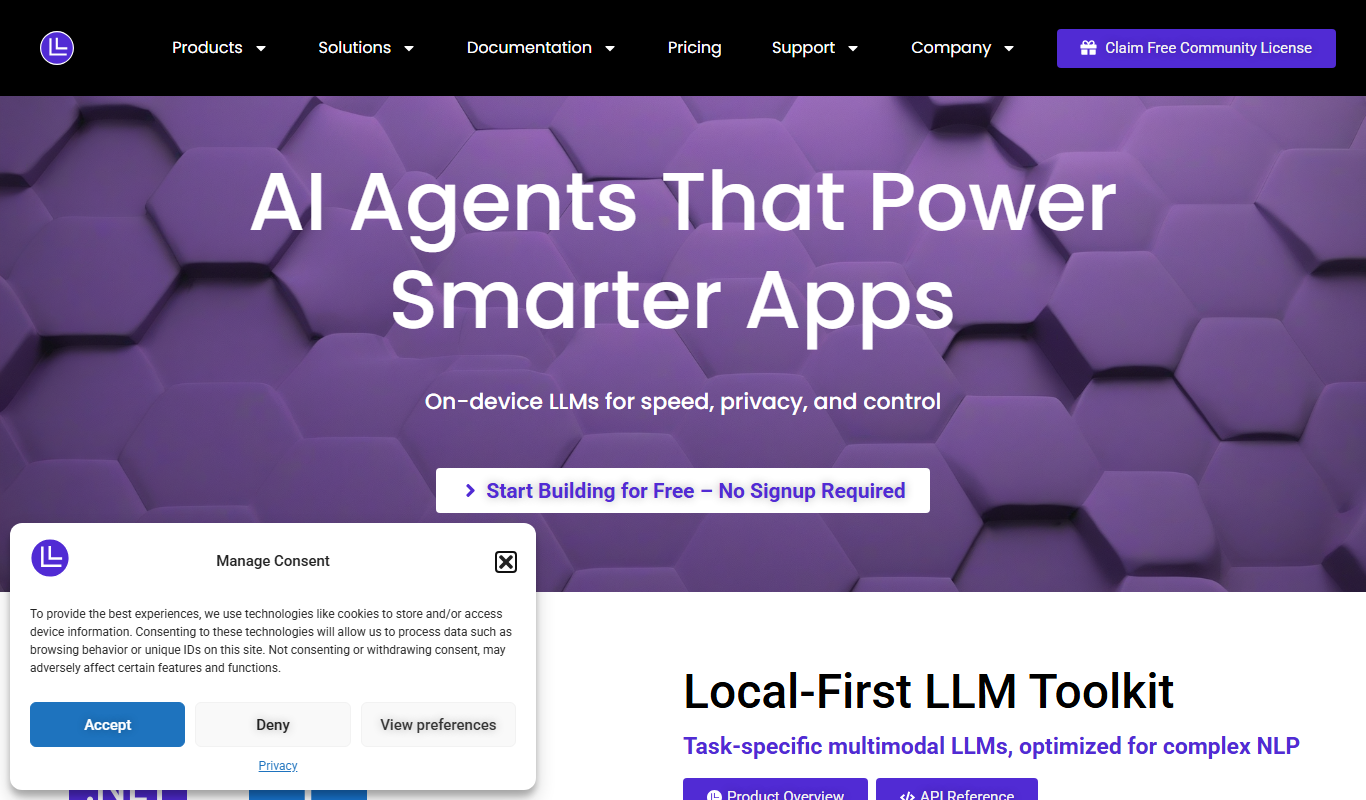
LM-Kit.NET AI Platform for Custom Language Model Development and Deployment
LM-Kit.NET is a cloud-based platform that allows users to train, fine-tune, and deploy custom language models using their own datasets, supporting frameworks like TensorFlow and PyTorch, with API access for integration.
Tech Stack:
JavaScript
Python
PyTorch
TensorFlow
What is LM-Kit.NET?
LM-Kit.NET is a cloud-based AI platform designed to facilitate the training, fine-tuning, and deployment of custom language models. It provides users with tools to build specialized natural language processing models tailored to their unique datasets and use cases. The platform supports various AI frameworks and offers API access for seamless integration.
Key Features of LM-Kit.NET
Custom Model Training
Train language models on your own datasets with flexible configuration options.
Multi-Framework Support
Supports popular AI frameworks like TensorFlow and PyTorch for diverse development needs.
API Deployment
Easily deploy models and access them via RESTful APIs for integration.
Scalable Cloud Infrastructure
Leverages cloud resources to handle training workloads efficiently.
Pre-built NLP Templates
Includes templates for common NLP tasks to accelerate development.
Pros and Cons of LM-Kit.NET
Pros
- Flexible custom model training with user datasets
- Supports major AI frameworks for diverse needs
- Easy deployment via API for seamless integration
- Scalable cloud infrastructure for efficient training
- Pre-built templates speed up NLP development
Cons
- Limited language support beyond English, Japanese, and Chinese
- Pricing may be high for small-scale users on Pro plan
- No dedicated desktop application; web-based only
Key Use Cases for LM-Kit.NET
Custom Language Model Training
Users can train their own language models tailored to specific domains or tasks using their own datasets.
AI Model Deployment
Deploy trained models via API endpoints for integration into applications and services.
Natural Language Processing Tasks
Perform tasks such as text generation, summarization, and classification with custom or pre-trained models.
Research and Experimentation
Researchers can experiment with different model architectures and training parameters in a flexible environment.
How LM-Kit.NET Works
-
1
Create an Account
Sign up on the LM-Kit.NET platform to access the dashboard and tools.
-
2
Upload Dataset
Import your text data to be used for training or fine-tuning language models.
-
3
Configure Model
Select model architecture, set training parameters, and customize according to your needs.
-
4
Train Model
Start the training process and monitor progress through the platform’s interface.
-
5
Deploy and Integrate
Deploy the trained model and use API endpoints to integrate it into your applications.
Who's Using LM-Kit.NET
AI researchers and developers
Enterprises needing custom NLP solutions
Startups building AI-powered applications
Data scientists experimenting with language models
Educational institutions teaching AI and NLP
LM-Kit.NET Pricing
Free
$0/month
Basic access with limited training hours and API calls.
Pro
$49/month
Increased training capacity, priority support, and higher API limits.
Enterprise
Custom pricing
Tailored solutions with dedicated resources and advanced features.
Frequently Asked Questions About LM-Kit.NET
Yes, LM-Kit.NET allows you to upload and use your own datasets for custom model training.
The platform supports TensorFlow and PyTorch frameworks for model development.
Yes, once your model is trained, you can deploy it and access it via RESTful API endpoints.
Currently, the platform supports English, Japanese, and Chinese languages.
This tool is designed to help users accomplish its core tasks more efficiently. It is typically used by individuals or teams looking to improve productivity and workflow.
It depends on your specific needs and how you plan to use the tool. The official website and documentation are the best sources for the latest details.
Integration support depends on the tool and its available connectors or API. Check the official documentation or integrations page to confirm what is supported.
Yes, it can help with that use case depending on how you configure it and what features are available. You’ll get the best results with clear inputs and a defined goal.
Share your review
Reviews are limited to one per logged-in user and are published after moderation.
You need an account to review this tool.
0.0
★
★
★
★
★
0 reviews
5 star
0
4 star
0
3 star
0
2 star
0
1 star
0
No reviews yet
Be the first to share how this tool worked for you.
Questions from the community
Read questions and answers about this tool, or ask your own.
No questions yet
Start the conversation by asking the first question about this tool.
Is this tool helpful?

Contact for pricing
NBULA – AI As A Service
NBULA is a cloud-based AI as a Service platform by CNTXT Technologies that allows businesses to deploy, manage, and scale custom AI models through APIs and web interfaces without handling infrastructure.

Custom Pricing
Aux Machina
Aux Machina is a web platform for annotating images, videos, text, and audio to create high-quality datasets for machine learning, featuring collaboration and quality control tools.

Free
debate AI
Debate AI is an AI-powered web platform that helps users analyze and improve their arguments through structured mapping and feedback, designed for debate training and critical thinking development.
Free
AI Power
AI Power is an open source artificial intelligence platform that enables users to build, train, and deploy machine learning models with automation and API integration.
Freemium
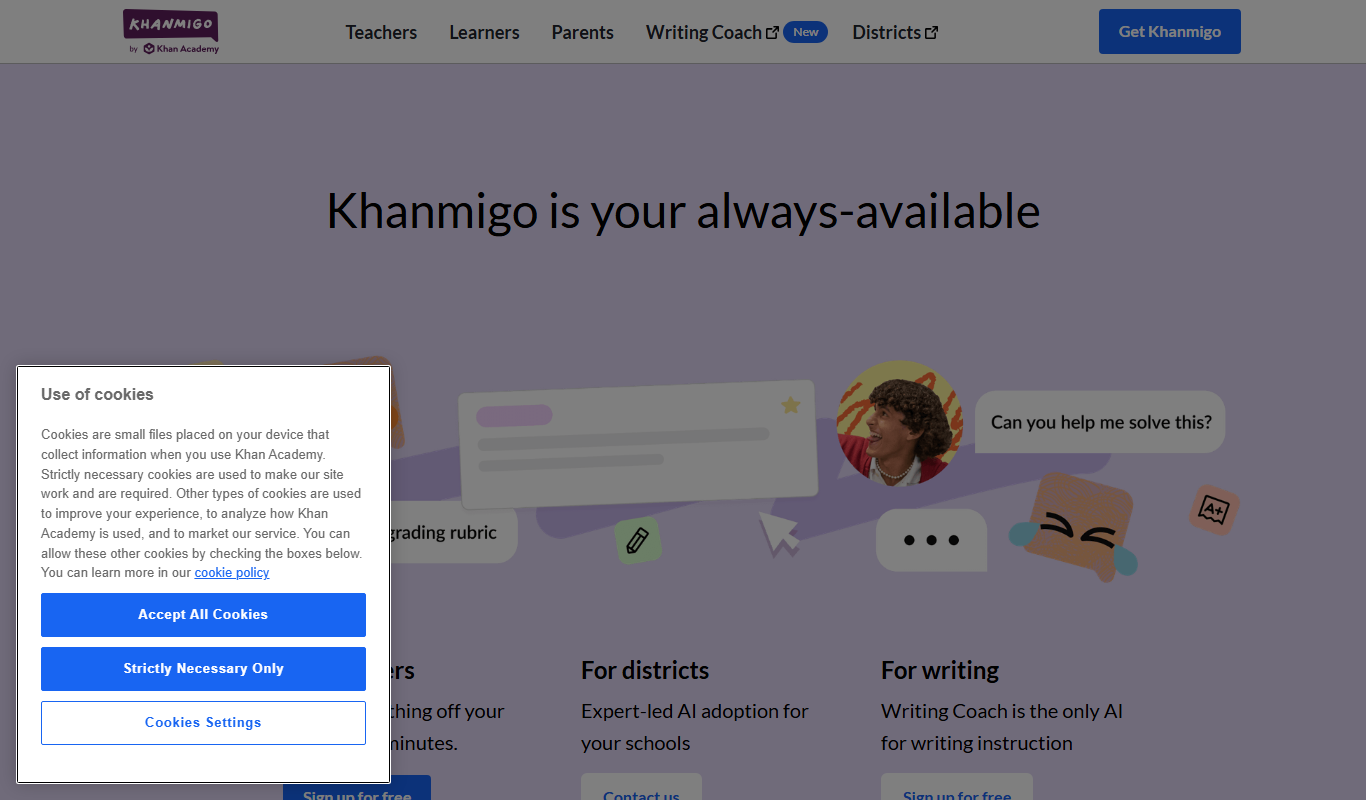
khanmigo.ai
Khanmigo is an AI-powered educational assistant by Khan Academy that provides personalized tutoring, homework help, and creative writing support through conversational AI.

Free
HomeworkAI ai
HomeworkAI AI is an online platform that uses artificial intelligence to help students solve homework problems, understand concepts, and get essay writing assistance across multiple subjects.

Enterprise
Algorithmia
Algorithmia is a platform that enables data scientists and developers to deploy, manage, and scale machine learning models as APIs with automated MLOps features and access to a marketplace of AI algorithms.

Custom Pricing
Roll
Roll AI is a data annotation platform that automates labeling workflows to accelerate machine learning model training with high-quality annotated datasets.