

From my experience exploring inDomain, it stands out for its comprehensive support of multiple data types and the blend of AI automation with human review, which ensures high-quality annotations. The platform’s project management features make it practical for coordinating complex labeling tasks, especially in enterprise settings. However, the lack of publicly available pricing and mobile apps may pose challenges for smaller teams or those seeking quick onboarding. Overall, inDomain is a solid choice if you require scalable, accurate data labeling for machine learning projects across industries like autonomous vehicles or healthcare.
inDomain AI Platform for Automated Data Labeling and Annotation Services
inDomain is an AI-driven data labeling platform that supports multi-modal annotation with automation and human-in-the-loop workflows to produce high-quality training data for machine learning.
- Best for
- Computer Vision Data Annotation
- Key capability
- Multi-Modal Annotation Support

Do you recommend this tool?
What is inDomain?
inDomain is an AI-powered data labeling and annotation platform designed to help organizations prepare high-quality training data for machine learning and artificial intelligence applications. It supports a wide range of annotation types including image, video, text, and audio labeling. The platform combines automation with human-in-the-loop workflows to ensure accuracy and scalability.
Key features of inDomain
inDomain offers comprehensive annotation tools for various data types, quality assurance mechanisms, project management dashboards, and integration capabilities to streamline AI data preparation workflows.
Multi-Modal Annotation Support
Supports image, video, text, and audio annotation for diverse AI training needs.
Automated Pre-Labeling
Leverages AI models to pre-label data, reducing manual effort and speeding up annotation.
Human-in-the-Loop Workflow
Combines automation with human review to maintain high annotation quality.
Quality Control Tools
Includes consensus scoring, review cycles, and error detection to ensure data reliability.
Project Management Dashboard
Provides real-time tracking of annotation progress, team performance, and deadlines.
Customizable Annotation Interfaces
Allows tailoring of annotation tools to specific project requirements and data types.
Pros and cons of inDomain
Pros
- Supports multiple data types for versatile AI projects
- Combines automation with human review for quality
- Robust project management and quality assurance tools
Cons
- Pricing details are not publicly available
- Primarily web-based with no dedicated mobile apps
- May require onboarding for complex annotation workflows
Key use cases for inDomain
Computer Vision Data Annotation
Label images and videos for object detection, segmentation, and classification to train computer vision models.
Natural Language Processing Annotation
Annotate text data for sentiment analysis, entity recognition, and intent classification.
Autonomous Vehicle Training Data
Generate high-quality labeled datasets for autonomous driving systems including lane marking and obstacle detection.
Healthcare Data Labeling
Annotate medical images and records to support AI applications in diagnostics and treatment.
Custom AI Model Training
Create tailored datasets for specific AI model training needs across industries.
How inDomain works
- 1
Project Setup
Create a new annotation project by uploading raw data and defining labeling requirements.
- 2
Annotation Process
Use inDomain’s annotation tools or leverage automated pre-labeling to start labeling data.
- 3
Quality Assurance
Review annotations through built-in QA workflows and human validation to ensure accuracy.
- 4
Data Export
Export labeled datasets in formats compatible with popular machine learning frameworks.
Who is using inDomain
AI and machine learning teams
Enterprises developing computer vision applications
Data scientists needing high-quality labeled data
Autonomous vehicle developers
Healthcare AI researchers
inDomain pricing
Custom Enterprise Plan
Contact for pricing
Tailored pricing based on project scope, data volume, and service level.
Plans and prices are as published by the vendor and can change. Check the official site before you buy. Open the pricing page (opens in a new tab)
Frequently asked questions about inDomain
inDomain supports annotation for images, videos, text, and audio data.
Yes, it provides AI-powered pre-labeling to accelerate the annotation process.
Yes, the platform includes project management dashboards to track progress and team activities.
inDomain primarily targets enterprises but can accommodate various project sizes through custom plans.
This tool is designed to help users accomplish its core tasks more efficiently. It is typically used by individuals or teams looking to improve productivity and workflow.
Data handling and security practices vary by provider. Review the official privacy policy to understand how your data is stored and used.
Yes, it can help with that use case depending on how you configure it and what features are available. You’ll get the best results with clear inputs and a defined goal.
It depends on your specific needs and how you plan to use the tool. The official website and documentation are the best sources for the latest details.
Sign in to review this tool.
Sign In to ReviewNo reviews yet
Be the first to share how this tool worked for you.
Ask about pricing, limits, or how it compares — or answer someone else.
Sign In to AskNo questions yet
Have a question about using or paying for this tool? Be the first to ask.
Featured on TiorAI



More AI Artificial Intelligence Tools tools
Other tools in the same category, for when this one is not quite the fit.
Freemium
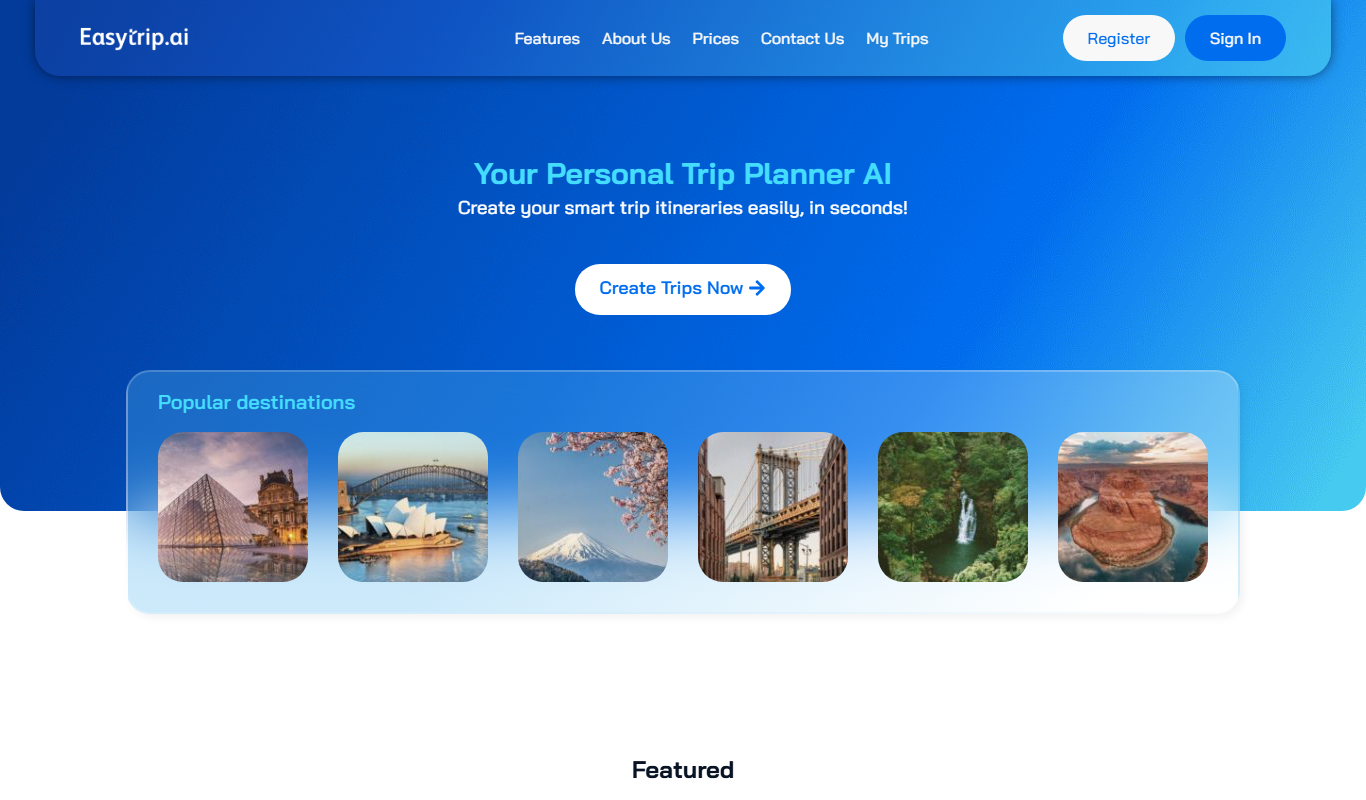
EasyTrip AI
EasyTrip AI is an AI-driven travel planner that generates customized trip itineraries based on your travel dates, destinations, and preferences, helping you organize your trip efficiently.

Freemium
Travel Itinerary AI
Travel Itinerary AI is an AI-powered web tool that creates personalized travel itineraries based on your preferences, helping you plan and manage trips efficiently.

Free
NilgAI Travel
NilgAI Travel is an AI-driven travel planning tool that creates personalized itineraries based on your preferences, travel dates, and budget, helping you efficiently plan trips worldwide.

Custom Pricing
sentiance.com
Sentiance is an AI-powered platform that transforms sensor and contextual data into actionable behavioral insights, enabling businesses to understand user behavior and deliver personalized experiences in real-time.

Contact for pricing
ODESIS
ODESIS is an AI-driven analytics platform that helps businesses transform data into actionable insights through machine learning, visualization, and predictive analytics.

Contact for pricing
QUINETICS
Quinetics is an AI platform that provides businesses with advanced data analytics, workflow automation, and custom machine learning model development to optimize operations and decision-making.

Free
aigclist
AIGCList is a free online directory that aggregates and categorizes AI tools, providing detailed information, user reviews, and AI industry news to help users discover and compare AI solutions.

Free
AI Tool Center
AI Tool Center is a free online directory that helps users discover, compare, and review AI tools across various categories and industries.