

HuggingChat AI Chat Generator by Hugging Face for Conversational AI
HuggingChat is an open-source AI chat platform by Hugging Face that enables users to interact with transformer-based language models for conversational AI applications via a free web interface.
- Best for
- Conversational AI
- Key capability
- Open-Source Transformer Models
Save HuggingChat, follow its updates and vote on it — everything stays in your account.
Sign in or create a free account
What is HuggingChat?
HuggingChat is an open-source AI chat interface developed by Hugging Face that allows users to interact with large language models in a conversational format. It leverages advanced transformer models to generate human-like responses, enabling a variety of applications such as chatbots, virtual assistants, and AI research. The platform is accessible via web and integrates with Hugging Face’s extensive model hub, promoting transparency and customization.
Key features of HuggingChat
HuggingChat offers real-time conversational AI powered by open-source transformer models, customizable chat experiences, and seamless integration with Hugging Face’s ecosystem. It supports multi-turn dialogue, context retention, and provides a developer-friendly environment for experimentation and deployment.
Open-Source Transformer Models
Built on Hugging Face’s transformer library, enabling transparency and customization.
Contextual Multi-Turn Chat
Maintains conversation context for more natural and coherent interactions.
Web-Based Interface
Accessible through any modern web browser without installation.
Integration with Hugging Face Hub
Easily switch between different language models hosted on Hugging Face.
Pros and cons of HuggingChat
Pros
- Open-source and transparent AI chat platform
- Free usage with limited inference credits
- Supports multi-turn conversational context
- Integration with a vast model hub
- Developer-friendly and customizable
Cons
- Limited language support primarily English
- Web-only platform without mobile apps
- Performance depends on selected models
- Lacks advanced enterprise features out-of-the-box
Key use cases for HuggingChat
Conversational AI
Engage users with natural language conversations powered by state-of-the-art transformer models.
AI Research and Development
Experiment with and deploy open-source large language models for research or product development.
Customer Support Automation
Automate responses and assist customers with AI-driven chat interactions.
Educational Tool
Use as a learning platform to understand and test transformer-based conversational AI.
How HuggingChat works
- 1
Access the Web Interface
Visit the HuggingChat web page to start interacting with the AI chat interface.
- 2
Enter Your Query
Type your message or question into the chat input box.
- 3
Receive AI Response
The underlying transformer model processes your input and generates a relevant, coherent reply.
- 4
Continue the Conversation
Engage in multi-turn dialogue by sending follow-up messages to maintain context.
Who is using HuggingChat
HuggingChat pricing
Free
$0 with limited inference credits
Free use limited to small inference credits.
PRO
$9/month
PRO gives 20x the inference credits of free use.
Plans and prices are as published by the vendor and can change. Check the official site before you buy. Open the pricing page (opens in a new tab)
Compare similar tools
How HuggingChat lines up against the tools people weigh it against.
 Poe
Poe vs HuggingChat: Speed, Output Quality & Value
Frequently asked questions about HuggingChat
HuggingChat can be used for free with limited inference credits, and PRO at $9/month gives 20x the credits.
HuggingChat primarily uses models hosted on Hugging Face’s model hub, but developers can integrate custom models using Hugging Face APIs.
Currently, HuggingChat primarily supports English, though some models on Hugging Face support other languages.
Yes, since it is open-source, it can be adapted for commercial applications, but users should review model licenses.
This tool is designed to help users accomplish its core tasks more efficiently. It is typically used by individuals or teams looking to improve productivity and workflow.
Some tools offer a free plan or trial with limited features. Availability can vary, so confirm on the official website.
Yes, it can help with that use case depending on how you configure it and what features are available. You’ll get the best results with clear inputs and a defined goal.
Yes, it can help with that use case depending on how you configure it and what features are available. You’ll get the best results with clear inputs and a defined goal.
Conclusion
Chat now runs on huggingface.co/chat with Omni on inference providers. A message typed into the chat box gets a generated reply, and follow-up messages keep the context of a multi-turn dialogue.
It is aimed at AI researchers and developers, educators and students in NLP, and businesses exploring conversational AI. Use cases range from experimenting with large language models for research to testing transformer-based conversational AI as a learning platform. Free use is limited to small inference credits, while the PRO plan at $9 per month gives 20x the credits.
Sources
Sign in to review this tool.
Sign In to ReviewNo reviews yet
Be the first to share how this tool worked for you.
Ask about pricing, limits, or how it compares — or answer someone else.
Sign In to AskNo questions yet
Have a question about using or paying for this tool? Be the first to ask.
Featured on TiorAI



More AI Chat Generator tools
Other tools in the same category, for when this one is not quite the fit.

Verse AI
Verse is an AI agent and AI texting platform for sales and marketing teams that replies to leads across channels, qualifies them through conversation and books appointments.

Quriobot
Quriobot is a no-code AI chatbot platform that helps businesses automate customer support, lead generation, and engagement through customizable chatbots supporting multiple languages.

ChatTTS
ChatTTS is a text-to-speech model built for conversational scenarios such as LLM assistant dialogue and conversational video introductions, supporting Chinese and English.
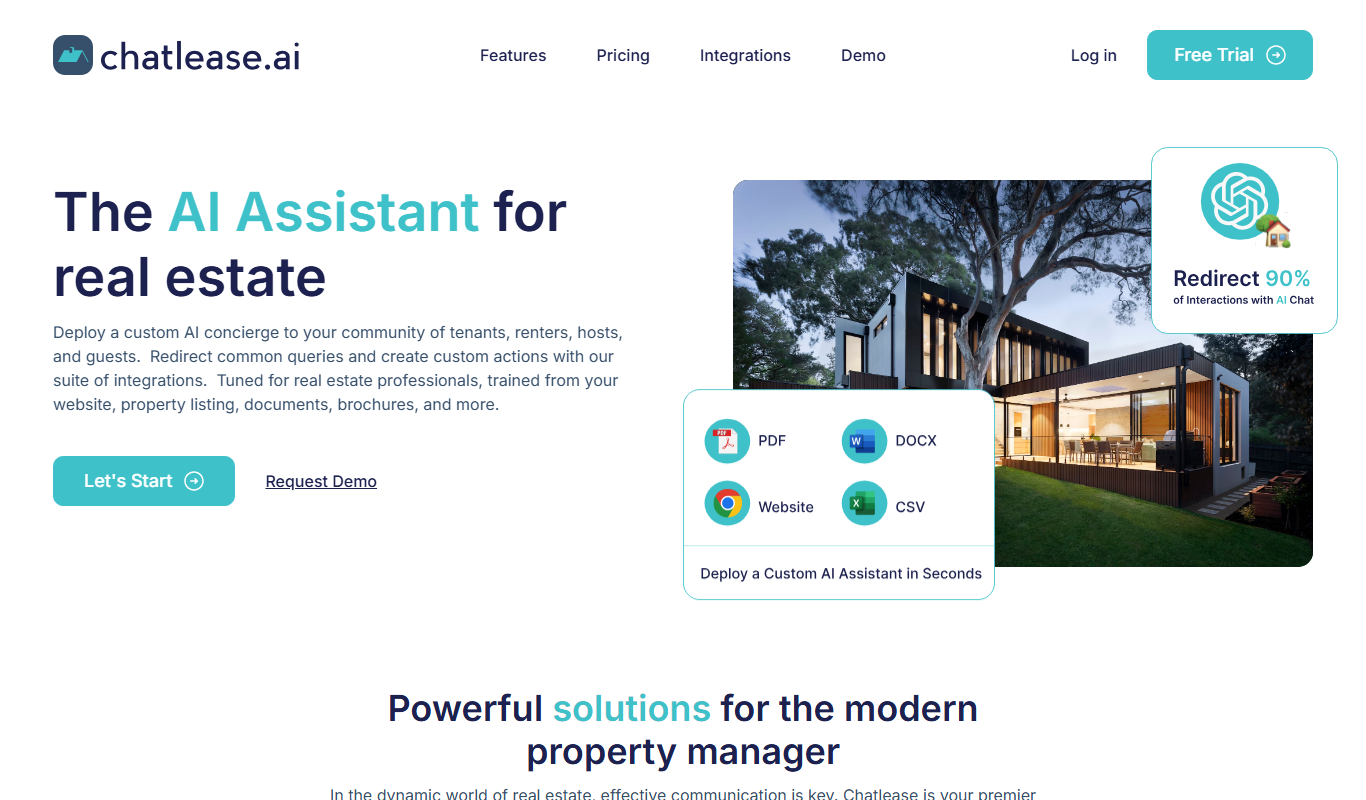
Chatlease
Chatlease is an AI chatbot platform tailored for real estate professionals to automate lead capture, qualification, and appointment scheduling through conversational AI on websites.

AI ChatDocs
AI ChatDocs is an AI chatbot platform that enables users to upload documents and interact with them conversationally to get instant, context-aware answers.

virtualspirits.com
Virtual Spirits is an AI chatbot platform that automates customer support and engagement by providing customizable virtual assistants for websites and messaging channels.

Mottle Bot
Mottle Bot is an AI-powered chatbot platform designed to automate customer support and engagement by providing conversational AI chatbots that integrate with CRM systems and offer customizable chat flows.

Yay! Forms
Yay! Forms is an easy-to-use online form builder that lets you create surveys, feedback forms, and data collection tools without coding, featuring drag-and-drop editing, customizable templates, and integrations.