

From my experience with Gyant, I found it excels at delivering AI-powered patient engagement that genuinely streamlines healthcare workflows. Its conversational chatbot effectively guides patients through symptom assessment and care navigation, reducing unnecessary clinical visits. After spending time with the platform, I can say it’s particularly well-suited for health systems and clinics aiming to enhance virtual care and improve patient communication. However, the lack of publicly available pricing and limited language support may pose challenges for smaller organizations or non-English speakers. Overall, if you need a scalable AI healthcare assistant to improve patient triage and engagement, Gyant delivers solid, clinically focused results.
Gyant AI Healthcare Chatbot for Patient Engagement and Virtual Care
Gyant is an AI healthcare chatbot that provides symptom assessment, patient engagement, and care navigation to improve virtual care and clinical workflows.
- Best for
- Patient Triage and Symptom Checking
- Key capability
- AI-Powered Symptom Checker
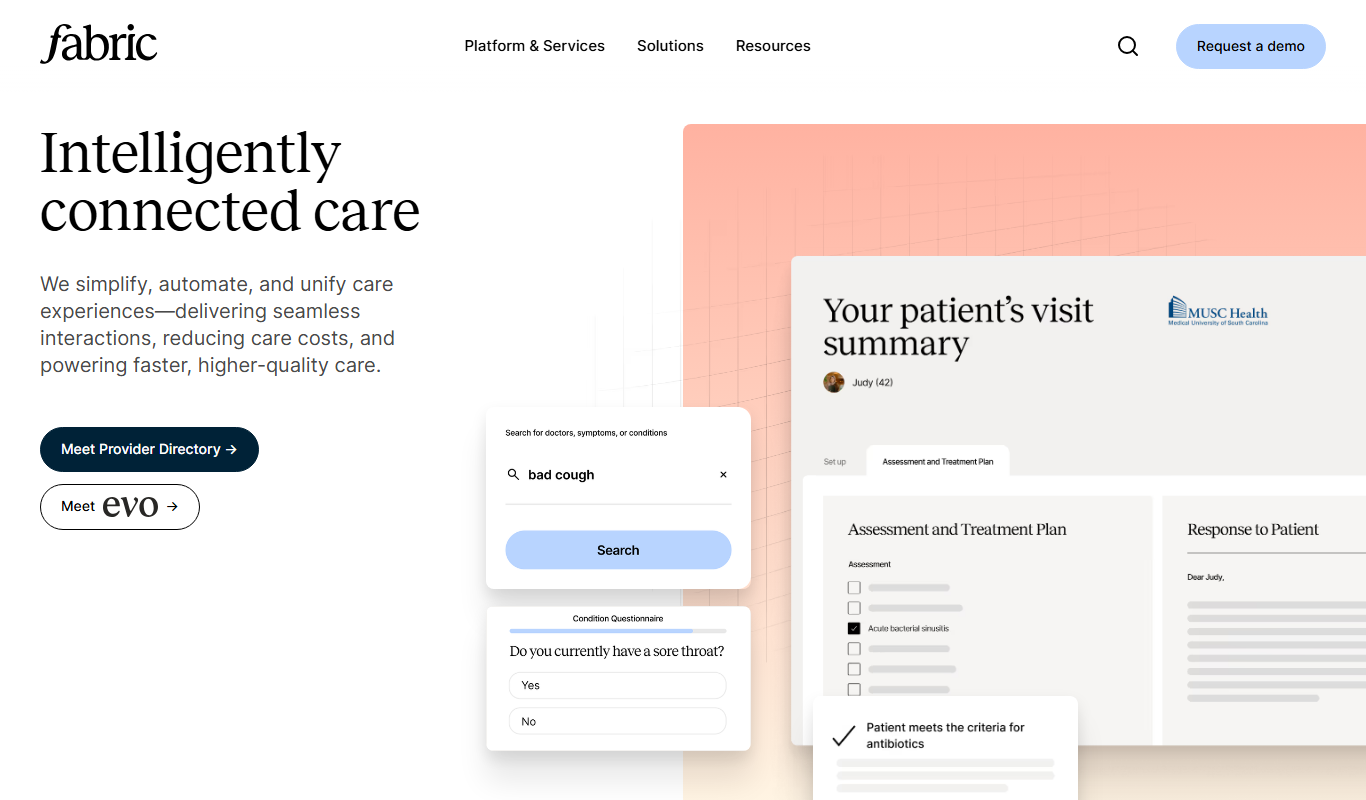
What is Gyant?
Gyant is an AI-powered healthcare chatbot platform designed to enhance patient engagement and streamline clinical workflows. It uses conversational AI to interact with patients, perform symptom assessments, guide care navigation, and facilitate virtual care delivery. Gyant aims to improve healthcare access, reduce provider burden, and optimize patient outcomes through intelligent automation.
Key features of Gyant
Gyant offers AI-driven symptom triage, virtual patient communication, appointment scheduling, data collection for clinicians, and post-visit follow-up automation. Its conversational interface integrates with healthcare systems to deliver personalized care experiences.
AI-Powered Symptom Checker
Provides accurate, evidence-based symptom assessments to triage patients effectively.
Conversational Patient Engagement
Natural language interface that personalizes interactions and improves patient satisfaction.
Care Coordination Automation
Automates appointment scheduling and care navigation to reduce administrative workload.
Clinical Data Integration
Seamlessly integrates with EHRs and clinical systems for streamlined workflows.
Post-Visit Monitoring
Enables automated follow-ups to track patient recovery and adherence.
Pros and cons of Gyant
Pros
- Improves patient access and engagement through AI-driven conversations
- Reduces provider workload by automating triage and scheduling
- Integrates with clinical systems for seamless data flow
Cons
- Pricing is not publicly available and requires direct contact
- Limited language support currently
- Implementation may require technical resources for integration
Key use cases for Gyant
Patient Triage and Symptom Checking
Gyant provides AI-powered symptom assessment to guide patients on next steps, helping reduce unnecessary ER visits.
Virtual Patient Engagement
The platform enables healthcare providers to engage patients remotely through conversational AI, improving communication and care adherence.
Care Navigation and Scheduling
Gyant assists patients in navigating care options and scheduling appointments efficiently via automated workflows.
Data Collection for Clinical Decision Support
It collects structured patient data during conversations to support clinical decision-making and streamline workflows.
Post-Visit Follow-Up
Gyant automates follow-up interactions to monitor patient progress and provide timely interventions.
How Gyant works
- 1
Integration Setup
Healthcare organizations integrate Gyant’s chatbot into their digital channels or EHR systems.
- 2
Patient Interaction
Patients engage with the chatbot via web or mobile to report symptoms or ask health questions.
- 3
AI Symptom Assessment
Gyant’s AI analyzes patient input to assess symptoms and recommend appropriate care pathways.
- 4
Care Navigation
The chatbot guides patients to schedule appointments, access resources, or escalate to providers as needed.
- 5
Data Sharing
Collected patient data is securely shared with clinicians to support informed decision-making.
Who is using Gyant
Gyant pricing
Custom Pricing
Contact for pricing
Pricing tailored based on organization size, usage, and integration needs.
Plans and prices are as published by the vendor and can change. Check the official site before you buy. Open the pricing page (opens in a new tab)
Frequently asked questions about Gyant
Yes, Gyant adheres to HIPAA regulations to ensure patient data privacy and security.
Gyant offers integration capabilities with major EHR platforms to streamline clinical workflows.
Currently, Gyant primarily supports English, with plans to expand language options.
Gyant’s solutions are scalable and can be customized for organizations of various sizes.
This tool is designed to help users accomplish its core tasks more efficiently. It is typically used by individuals or teams looking to improve productivity and workflow.
It depends on your specific needs and how you plan to use the tool. The official website and documentation are the best sources for the latest details.
Integration support depends on the tool and its available connectors or API. Check the official documentation or integrations page to confirm what is supported.
Sign in to review this tool.
Sign In to ReviewNo reviews yet
Be the first to share how this tool worked for you.
Ask about pricing, limits, or how it compares — or answer someone else.
Sign In to AskNo questions yet
Have a question about using or paying for this tool? Be the first to ask.
Featured on TiorAI



Alternative Tools
Explore similar AI tools that might fit your needs

Buoy Health
Buoy Health is an AI-driven digital health assistant that helps users assess symptoms and receive personalized care recommendations through an interactive symptom checker.

Sensely
Sensely is an AI-powered virtual health assistant platform that uses conversational avatars to help patients with symptom checking, triage, chronic disease management, and telehealth support.
More AI Customer Service tools
Other tools in the same category, for when this one is not quite the fit.

MobileMonkey
MobileMonkey is an AI-powered chatbot platform that enables businesses to automate marketing, lead generation, and customer support conversations across multiple messaging channels including Facebook Messenger, Instagram, SMS, and web chat.

TextMagic
TextMagic is a cloud-based SMS marketing platform that enables businesses to send bulk text messages, automate notifications, and engage customers with two-way messaging and API integration.

EZ Texting
EZ Texting is a cloud-based SMS marketing platform that enables businesses to send mass text messages, automate campaigns, and engage customers with two-way messaging.

SimpleTexting
SimpleTexting is a cloud-based SMS marketing platform that enables businesses to send mass text messages, automate SMS workflows, and engage customers with two-way messaging to improve communication and marketing effectiveness.

Komoot
Komoot is an outdoor navigation app that helps users plan and follow hiking, cycling, and other adventure routes with detailed maps, offline access, and voice guidance.

Cambridge Mobile Telematics
Cambridge Mobile Telematics provides a mobile telematics platform that uses smartphone sensors and AI to analyze driver behavior, enabling insurers and fleet managers to assess risk, improve safety, and reduce accidents.

Pathrise
Pathrise is a career coaching platform that provides personalized mentorship, interview preparation, resume reviews, and salary negotiation guidance to help job seekers, especially in tech, secure employment. It operates on a commission-based payment model where users pay only after getting hired.

MyHammer
MyHammer is a UK-based online platform connecting customers with local tradesmen and builders by allowing job posting, offer comparison, and secure communication.