

From my experience exploring Flave AI, I found it excels at providing data-driven flavor predictions that significantly speed up food product development. The platform’s ability to simulate ingredient interactions helps reduce the need for extensive physical testing, which can save time and resources. It’s particularly well-suited for food scientists, R&D teams, and culinary innovators aiming to create unique and optimized recipes. However, the tool’s enterprise focus and lack of publicly available pricing may limit accessibility for smaller businesses. Overall, Flave AI is a powerful asset for anyone serious about leveraging AI in food innovation.
Flave AI Review: AI-Powered Flavor Prediction and Food Innovation Platform
Flave AI is an AI platform that predicts flavor profiles by analyzing ingredient interactions, helping food developers innovate and optimize recipes efficiently.
- Best for
- Flavor Prediction
- Key capability
- AI-Driven Flavor Prediction


Do you recommend this tool?
What is Flave AI?
Flave AI is an artificial intelligence platform designed to predict and analyze flavor profiles in food products. It uses machine learning models trained on extensive flavor compound data to simulate how ingredients will interact and taste together. This allows food scientists, product developers, and culinary innovators to accelerate product development cycles, reduce costly trial-and-error testing, and create novel flavor combinations with confidence.
Key features of Flave AI
Flave AI offers predictive flavor modeling, ingredient interaction analysis, recipe optimization tools, and data visualization to help food professionals innovate efficiently. Its AI-driven insights enable users to understand complex flavor chemistry and sensory outcomes without extensive physical testing.
AI-Driven Flavor Prediction
Predicts how ingredients will taste together using advanced machine learning models.
Ingredient Interaction Analysis
Analyzes chemical and sensory interactions between flavor compounds.
Recipe Optimization Tools
Suggests ingredient adjustments to improve flavor balance and sensory appeal.
Data Visualization
Provides intuitive visual representations of flavor profiles and compound interactions.
Support for Food Innovation
Enables exploration of novel ingredient combinations to create unique products.
Pros and cons of Flave AI
Pros
- Accelerates food product development
- Reduces costly trial-and-error testing
- Provides deep insights into flavor chemistry
- Supports innovation with novel combinations
- User-friendly data visualization
Cons
- Pricing not publicly available
- Primarily designed for enterprise users
- Requires some expertise in flavor science to maximize benefits
Key use cases for Flave AI
Flavor Prediction
Use AI to predict how different ingredients and combinations will taste before physical testing.
Food Product Development
Accelerate the creation of new food products by simulating flavor profiles and optimizing recipes.
Recipe Optimization
Refine existing recipes by analyzing flavor interactions and suggesting ingredient adjustments.
Sensory Analysis Support
Support sensory scientists with data-driven insights into flavor compounds and their interactions.
Innovation in Food Science
Leverage AI to explore novel ingredient combinations and create unique taste experiences.
How Flave AI works
- 1
Input Ingredients
Users enter the ingredients or flavor compounds they want to analyze or combine.
- 2
AI Flavor Prediction
The platform uses machine learning to predict the resulting flavor profile and sensory characteristics.
- 3
Analyze Results
Users review detailed flavor interaction data and sensory predictions to evaluate the combination.
- 4
Optimize Recipe
Based on insights, users adjust ingredient ratios or swap components to refine the flavor.
- 5
Iterate and Innovate
Repeat the process to explore new combinations and accelerate product development.
Who is using Flave AI
Food and beverage R&D teams
Flavor chemists and sensory scientists
Culinary innovators and chefs
Food product developers
Flavor houses and ingredient suppliers
Flave AI pricing
Custom Pricing
Contact for Pricing
Pricing tailored to enterprise needs and project scope.
Plans and prices are as published by the vendor and can change. Check the official site before you buy. Open the pricing page (opens in a new tab)
Frequently asked questions about Flave AI
Food and beverage companies, culinary innovators, flavor houses, and food scientists can all leverage Flave AI for product development.
No, it complements physical testing by reducing the number of trials needed and guiding formulation decisions.
Flave AI primarily targets enterprises and R&D teams; interested small businesses should contact the company for options.
Predictions are based on extensive data and validated models but should be used alongside sensory evaluation.
It depends on your specific needs and how you plan to use the tool. The official website and documentation are the best sources for the latest details.
Yes, it can help with that use case depending on how you configure it and what features are available. You’ll get the best results with clear inputs and a defined goal.
It depends on your specific needs and how you plan to use the tool. The official website and documentation are the best sources for the latest details.
Pricing depends on the plan and included features. For the most accurate and up-to-date details, check the official pricing page.
Sign in to review this tool.
Sign In to ReviewNo reviews yet
Be the first to share how this tool worked for you.
Ask about pricing, limits, or how it compares — or answer someone else.
Sign In to AskNo questions yet
Have a question about using or paying for this tool? Be the first to ask.
Featured on TiorAI



Alternative Tools
Explore similar AI tools that might fit your needs
Freemium
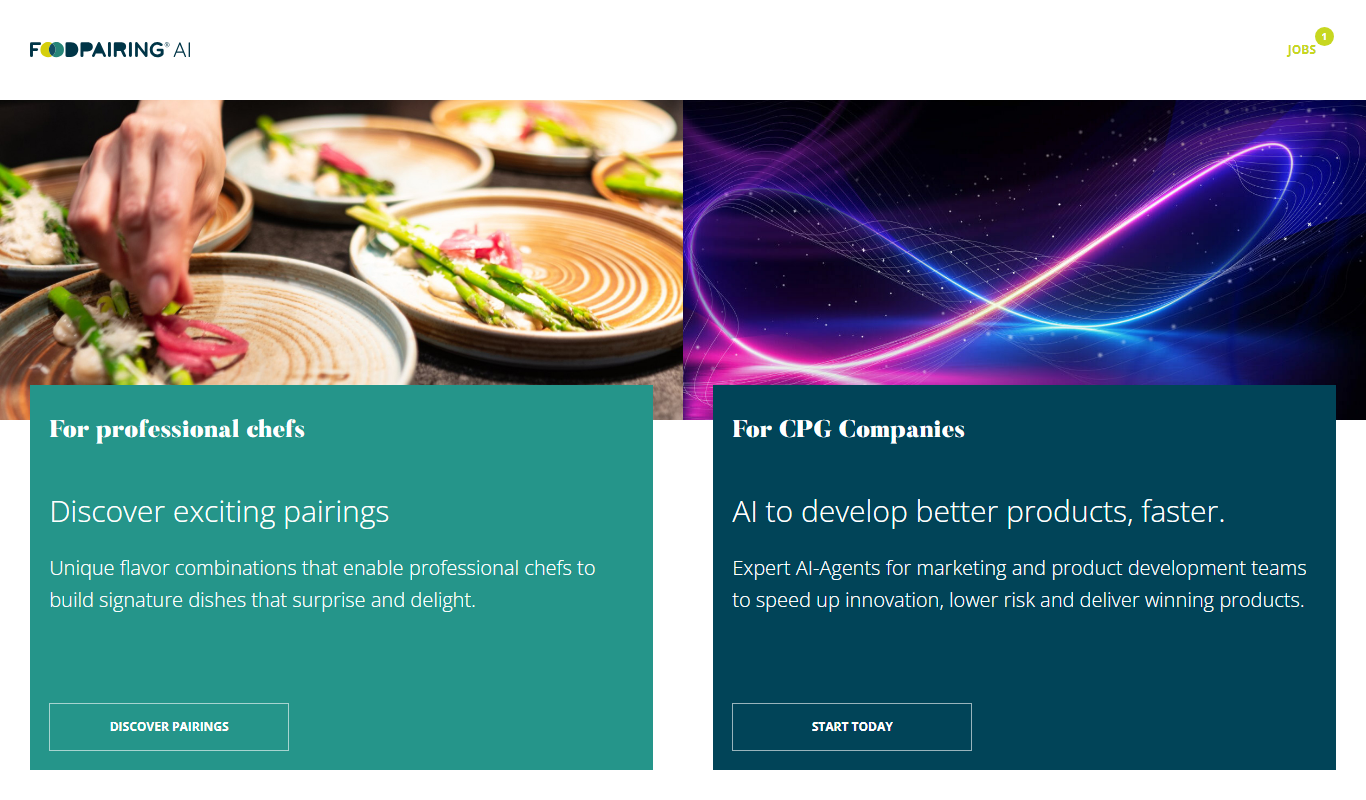
Foodpairing
Foodpairing is a platform that uses chemical analysis to suggest compatible ingredient combinations for recipe development and food innovation.

Custom Pricing
Tastewise
Tastewise is an AI-powered platform that provides real-time food trend tracking, consumer segmentation, and market intelligence to help food brands and marketers make data-driven decisions.
More AI Artificial Intelligence Tools tools
Other tools in the same category, for when this one is not quite the fit.

Freemium
EasyTrip AI
EasyTrip AI is an AI-driven travel planner that generates customized trip itineraries based on your travel dates, destinations, and preferences, helping you organize your trip efficiently.

Freemium
Travel Itinerary AI
Travel Itinerary AI is an AI-powered web tool that creates personalized travel itineraries based on your preferences, helping you plan and manage trips efficiently.

Free
NilgAI Travel
NilgAI Travel is an AI-driven travel planning tool that creates personalized itineraries based on your preferences, travel dates, and budget, helping you efficiently plan trips worldwide.

Custom Pricing
sentiance.com
Sentiance is an AI-powered platform that transforms sensor and contextual data into actionable behavioral insights, enabling businesses to understand user behavior and deliver personalized experiences in real-time.

Contact for pricing
ODESIS
ODESIS is an AI-driven analytics platform that helps businesses transform data into actionable insights through machine learning, visualization, and predictive analytics.

Contact for pricing
QUINETICS
Quinetics is an AI platform that provides businesses with advanced data analytics, workflow automation, and custom machine learning model development to optimize operations and decision-making.

Free
aigclist
AIGCList is a free online directory that aggregates and categorizes AI tools, providing detailed information, user reviews, and AI industry news to help users discover and compare AI solutions.

Free
AI Tool Center
AI Tool Center is a free online directory that helps users discover, compare, and review AI tools across various categories and industries.