

E2open Supply Chain Management Software for AI-Driven Logistics Solutions
E2open is a cloud-based supply chain management platform that uses AI to provide real-time visibility, demand forecasting, and global trade compliance solutions for businesses.
- Best for
- Supply Chain Visibility
- Key capability
- End-to-End Supply Chain Visibility
Save E2open, follow its updates and vote on it — everything stays in your account.
Sign in or create a free account
What is E2open?
E2open is a cloud-based supply chain management platform that leverages AI and advanced analytics to help businesses optimize their supply chain operations. It integrates data from multiple sources to provide real-time visibility, improve demand forecasting, automate workflows, and manage global trade compliance.
Key features of E2open
The platform offers comprehensive modules including demand planning, inventory optimization, order management, transportation management, and supplier collaboration, all powered by AI to enhance decision-making and operational efficiency.
End-to-End Supply Chain Visibility
Real-time tracking of inventory, shipments, and supplier performance across the entire supply chain.
AI-Powered Demand Forecasting
Advanced machine learning models generate accurate forecasts to reduce excess inventory and stockouts.
Global Trade Compliance
Tools to manage customs documentation, tariffs, and regulatory compliance for international shipments.
Supplier Network Collaboration
Facilitates seamless communication and data sharing with suppliers to improve responsiveness.
Order and Transportation Management
Automates order processing and optimizes transportation routes to reduce costs and improve delivery times.
Pros and cons of E2open
Pros
- Comprehensive end-to-end supply chain visibility
- Strong AI-driven forecasting and analytics capabilities
- Robust global trade and compliance management
- Facilitates supplier collaboration and communication
- Cloud-based platform with scalable architecture
Cons
- Pricing is not transparent and requires direct consultation
- May require significant onboarding and integration effort
- Primarily suited for medium to large enterprises
Key use cases for E2open
Supply Chain Visibility
Provides end-to-end visibility across the supply chain to monitor inventory, shipments, and supplier performance in real time.
Demand Planning and Forecasting
Uses AI and machine learning to generate accurate demand forecasts, helping businesses optimize inventory and reduce stockouts.
Order Management
Automates order processing and fulfillment workflows to improve order accuracy and speed.
Global Trade Management
Manages compliance, customs, and trade regulations to streamline international shipping and reduce delays.
Supplier Collaboration
Facilitates communication and collaboration with suppliers to improve responsiveness and supply chain agility.
How E2open works
- 1
Integration
Connect your existing ERP, CRM, and logistics systems to E2open to centralize supply chain data.
- 2
Data Aggregation
E2open aggregates and normalizes data from suppliers, logistics providers, and internal systems.
- 3
AI-Driven Analytics
The platform applies AI algorithms to forecast demand, optimize inventory, and identify supply chain risks.
- 4
Collaboration
Users collaborate with suppliers and partners through shared dashboards and communication tools.
- 5
Execution
Automate order fulfillment, transportation planning, and compliance management based on insights.
Who is using E2open
E2open pricing
Custom Pricing
Contact Sales
Pricing tailored based on company size, modules selected, and deployment requirements.
Plans and prices are as published by the vendor and can change. Check the official site before you buy. Open the pricing page (opens in a new tab)
Frequently asked questions about E2open
E2open serves a wide range of industries including manufacturing, retail, consumer goods, electronics, and pharmaceuticals.
Yes, E2open integrates with major ERP, CRM, and logistics platforms to centralize supply chain data.
E2open is a cloud-based platform, providing scalability and accessibility from anywhere.
Yes, it offers tools to manage customs, tariffs, and regulatory compliance for international shipments.
This tool is designed to help users accomplish its core tasks more efficiently. It is typically used by individuals or teams looking to improve productivity and workflow.
It depends on your specific needs and how you plan to use the tool. The official website and documentation are the best sources for the latest details.
It depends on your specific needs and how you plan to use the tool. The official website and documentation are the best sources for the latest details.
Yes, it can help with that use case depending on how you configure it and what features are available. You’ll get the best results with clear inputs and a defined goal.
Conclusion
E2open sits on top of systems a business already runs, connecting existing ERP, CRM and logistics platforms to centralize supply chain data. The platform aggregates and normalizes data from suppliers, logistics providers and internal systems, and AI algorithms forecast demand, optimize inventory and identify supply chain risks. Users collaborate with suppliers and partners through shared dashboards and communication tools.
Global trade is a distinct strand, with tools to manage customs documentation, tariffs and regulatory compliance for international shipments. Supply chain managers, logistics coordinators and global trade compliance officers use it, as do manufacturing companies and retail and consumer goods businesses. It is a cloud-based platform primarily suited for medium to large enterprises. Onboarding and integration may require significant effort, and pricing is tailored to company size, modules selected and deployment requirements.
Sources
Sign in to review this tool.
Sign In to ReviewNo reviews yet
Be the first to share how this tool worked for you.
Ask about pricing, limits, or how it compares — or answer someone else.
Sign In to AskNo questions yet
Have a question about using or paying for this tool? Be the first to ask.
Featured on TiorAI



More AI Analytics Assistant tools
Other tools in the same category, for when this one is not quite the fit.

Octolens AI
Octolens is an AI social listening tool that tracks brand mentions across Reddit, X, LinkedIn and 10+ platforms, with API, MCP and webhooks on every plan.

Insight7
Insight7 analyzes customer calls, scores every conversation, coaches reps and deploys AI voice and chat agents for customer teams.

neuronsinc.com
Neurons is a neuromarketing AI that predicts attention, engagement and memorability of ad creatives before they go live, with heatmaps and behavioral scores.
LangWatch
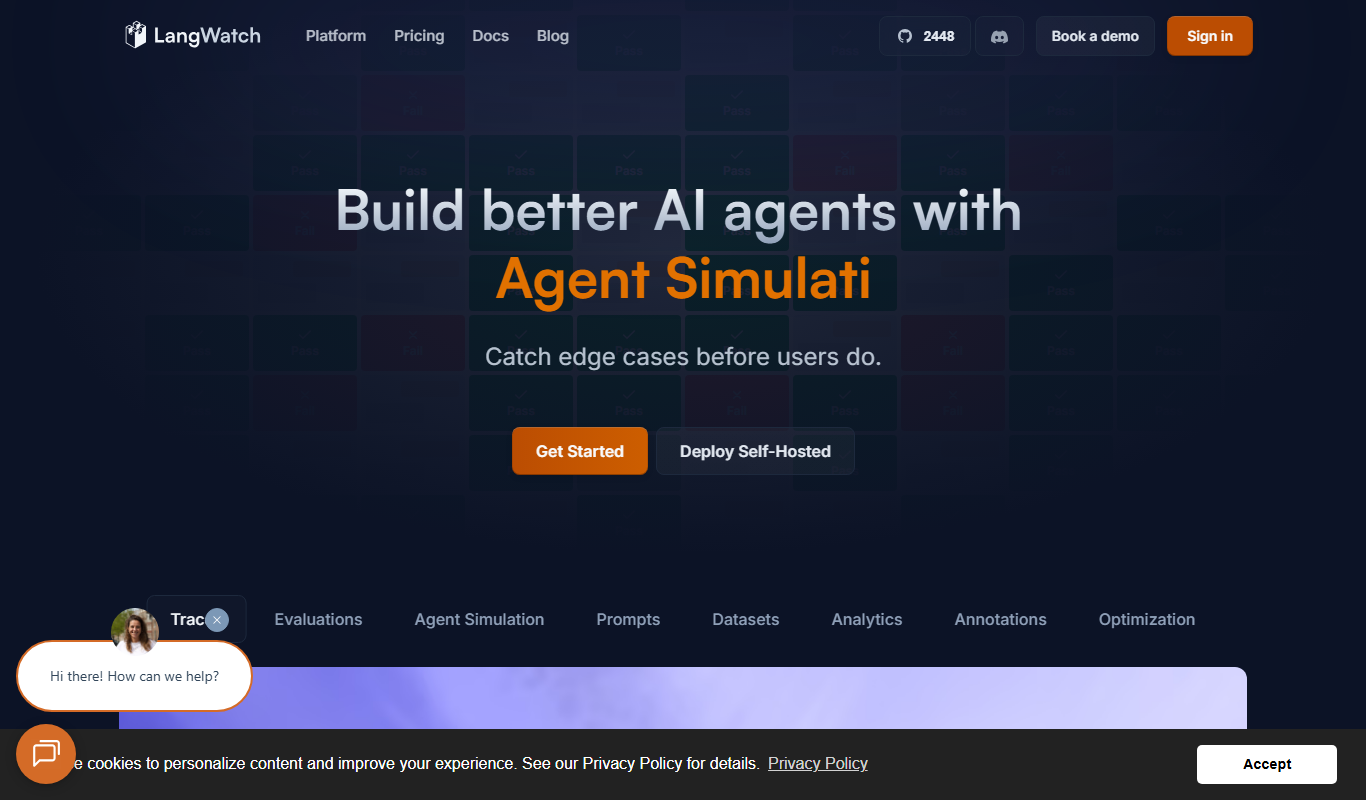
LangWatch is an AI agent testing and evaluation platform with simulations, evals, observability and prompt management, available in the cloud or self-hosted.

5-Out
5-Out helps restaurants boost profits with AI-powered sales forecasting, automated scheduling and purchasing based on predicted demand.

MUSICDATAK
MusicDatak is a music research platform that helps radio stations and brands track music trends, optimize playlists and grow radio audience share with tools like StationRadar.

ReviewHawk
ReviewHawk analyzes app store reviews with AI to show why users leave and what they want, so app makers can reduce churn.

StrongArm Technologies PPE AI
StrongArm Technologies offers the SafeWork Sensor, a wearable device that provides real-time haptic feedback and collects movement data, and SafeWork Training, a personalized safety training program.