

From my experience with DataLang, I found it excels at simplifying complex data analysis through its natural language interface. It allows users without technical backgrounds to ask data questions and get instant visual insights, which is a significant advantage for business teams. However, the platform currently supports only English and is limited to web access, which might restrict some users. Overall, if you want to empower non-technical stakeholders to explore and understand data quickly, DataLang offers a practical and user-friendly solution.
DataLang AI Platform for Data Analysis and Natural Language Queries
DataLang is an AI-driven platform that lets users analyze data and generate reports using natural language queries without needing SQL skills.
- Best for
- Natural Language Data Queries
- Key capability
- Natural Language Query Interface


Do you recommend this tool?
What is DataLang?
DataLang is an AI-powered data analytics platform that enables users to interact with their data using natural language queries. It removes the complexity of traditional data analysis by allowing users to ask questions in plain English and receive instant, actionable insights. Designed for business users and analysts alike, DataLang bridges the gap between raw data and meaningful interpretation without requiring coding or SQL expertise.
Key features of DataLang
DataLang offers natural language processing to translate user queries into data operations, automated report generation, interactive visualizations, and seamless integration with various data sources. Its AI engine understands context and intent to deliver precise answers and insights.
Natural Language Query Interface
Allows users to query data using conversational English, eliminating the need for SQL.
Automated Data Visualization
Generates charts and dashboards dynamically based on user queries.
Multi-Source Data Integration
Supports connecting to various databases and data formats for comprehensive analysis.
Context-Aware AI Engine
Understands the intent behind queries to provide relevant and precise insights.
Pros and cons of DataLang
Pros
- User-friendly natural language interface
- Quick generation of visual reports
- Supports multiple data sources
- No coding required
- Good for non-technical users
Cons
- Limited language support (English only)
- Pricing details for enterprise plans are not publicly listed
- Web-only platform without mobile apps
Key use cases for DataLang
Natural Language Data Queries
Users can ask questions about their datasets in plain English and receive instant, accurate answers without needing SQL knowledge.
Business Intelligence Reporting
Generate visual reports and dashboards automatically from data using AI-powered insights.
Data Exploration and Insights
Explore complex datasets interactively to uncover trends, anomalies, and key metrics quickly.
Data-Driven Decision Making
Empower non-technical stakeholders to make informed decisions by simplifying data access and interpretation.
How DataLang works
- 1
Connect Your Data
Link your databases or upload datasets to the DataLang platform securely.
- 2
Ask Questions in Natural Language
Type or speak your data questions in plain English without needing technical syntax.
- 3
Receive Instant Insights
Get accurate answers, charts, and reports generated automatically by the AI engine.
- 4
Explore and Share
Interact with visualizations, drill down into data, and share findings with your team.
Who is using DataLang
Business analysts
Marketing teams
Small to medium enterprises
Data-driven decision makers
Non-technical professionals
DataLang pricing
Free Trial
$0 for 14 days
Full feature access for two weeks to evaluate the platform.
Professional
$49/month
Access for individual users with standard data limits and support.
Enterprise
Custom pricing
Tailored solutions with advanced features, integrations, and dedicated support.
Plans and prices are as published by the vendor and can change. Check the official site before you buy. Open the pricing page (opens in a new tab)
Frequently asked questions about DataLang
No, DataLang allows you to query data using natural language without any SQL knowledge.
DataLang supports popular databases like MySQL, PostgreSQL, and CSV file uploads.
Yes, DataLang uses industry-standard encryption and security protocols to protect your data.
Yes, you can easily share interactive reports and dashboards with team members.
Data handling and security practices vary by provider. Review the official privacy policy to understand how your data is stored and used.
Data handling and security practices vary by provider. Review the official privacy policy to understand how your data is stored and used.
Data handling and security practices vary by provider. Review the official privacy policy to understand how your data is stored and used.
Sign in to review this tool.
Sign In to ReviewNo reviews yet
Be the first to share how this tool worked for you.
Ask about pricing, limits, or how it compares — or answer someone else.
Sign In to AskNo questions yet
Have a question about using or paying for this tool? Be the first to ask.
Featured on TiorAI



More AI Artificial Intelligence Tools tools
Other tools in the same category, for when this one is not quite the fit.
Freemium
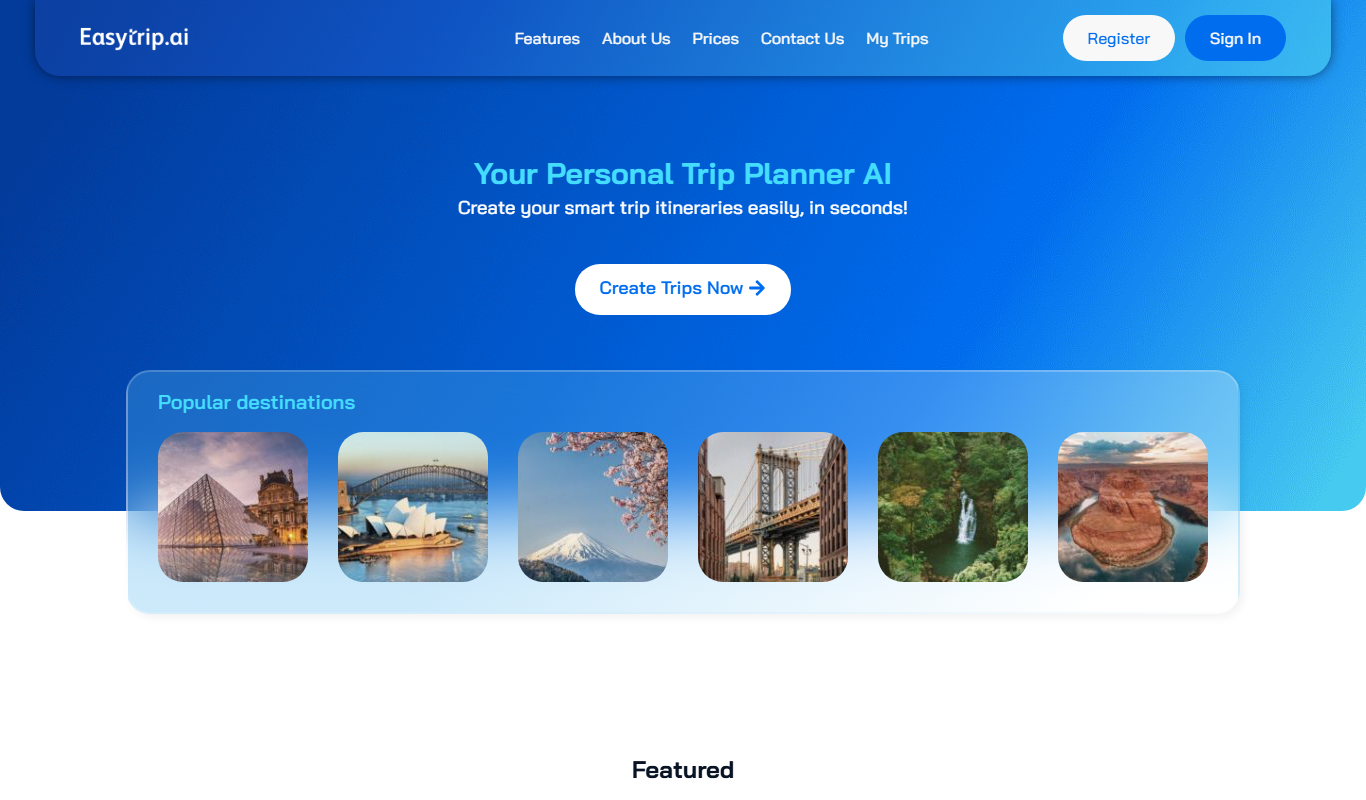
EasyTrip AI
EasyTrip AI is an AI-driven travel planner that generates customized trip itineraries based on your travel dates, destinations, and preferences, helping you organize your trip efficiently.

Freemium
Travel Itinerary AI
Travel Itinerary AI is an AI-powered web tool that creates personalized travel itineraries based on your preferences, helping you plan and manage trips efficiently.

Free
NilgAI Travel
NilgAI Travel is an AI-driven travel planning tool that creates personalized itineraries based on your preferences, travel dates, and budget, helping you efficiently plan trips worldwide.

Custom Pricing
sentiance.com
Sentiance is an AI-powered platform that transforms sensor and contextual data into actionable behavioral insights, enabling businesses to understand user behavior and deliver personalized experiences in real-time.

Contact for pricing
ODESIS
ODESIS is an AI-driven analytics platform that helps businesses transform data into actionable insights through machine learning, visualization, and predictive analytics.

Contact for pricing
QUINETICS
Quinetics is an AI platform that provides businesses with advanced data analytics, workflow automation, and custom machine learning model development to optimize operations and decision-making.

Free
aigclist
AIGCList is a free online directory that aggregates and categorizes AI tools, providing detailed information, user reviews, and AI industry news to help users discover and compare AI solutions.

Free
AI Tool Center
AI Tool Center is a free online directory that helps users discover, compare, and review AI tools across various categories and industries.