

From my experience with Dask SQL, it stands out as a powerful tool for running scalable SQL queries on large datasets within the Python ecosystem. Its tight integration with Dask and Python libraries like Pandas makes it particularly well-suited for data scientists and engineers who want to leverage distributed computing without moving to heavyweight database systems. However, it requires some familiarity with Dask and Python setup, and it does not support all advanced SQL features or real-time streaming data. Overall, for batch and interactive big data analytics using SQL in Python, Dask SQL delivers efficient and flexible performance.
Dask SQL: Scalable SQL Query Engine for Big Data Analytics with Python
Dask SQL is an open-source distributed SQL query engine built on Dask that enables scalable SQL querying on large datasets within the Python ecosystem.
- Best for
- Big Data SQL Querying
- Key capability
- Distributed SQL Query Engine

Do you recommend this tool?
What is Dask SQL?
Dask SQL is an open-source project that extends the Dask parallel computing framework by providing a SQL interface to query large datasets. It allows users to write SQL queries that are executed in a distributed manner across clusters, enabling scalable and efficient big data analytics within the Python ecosystem. By bridging SQL with Dask’s parallelism, it simplifies complex data processing tasks without requiring a traditional database.
Key features of Dask SQL
Dask SQL offers scalable SQL query execution on distributed datasets, seamless integration with Python data libraries, support for standard SQL syntax, and the ability to handle large data volumes efficiently. It provides an API for embedding SQL queries in Python applications and supports interactive data exploration.
Distributed SQL Query Engine
Executes SQL queries in parallel across multiple nodes for scalable data processing.
Full SQL Syntax Support
Supports a wide range of SQL commands and functions familiar to data analysts.
Python Ecosystem Integration
Works seamlessly with Python libraries like Pandas, NumPy, and Dask DataFrames.
Open Source and Extensible
Free to use and modify, allowing customization and integration into various data workflows.
Interactive Querying
Enables real-time data exploration on large datasets without traditional database overhead.
Pros and cons of Dask SQL
Pros
- Scalable SQL querying on big data without a traditional database
- Seamless integration with Python data science libraries
- Open source with active community support
- Supports distributed computing for faster processing
- Enables interactive data exploration on large datasets
Cons
- Limited support for some advanced SQL features
- Not designed for real-time streaming data processing
- Requires familiarity with Dask and Python environment setup
Key use cases for Dask SQL
Big Data SQL Querying
Run scalable SQL queries on large datasets distributed across clusters using familiar SQL syntax.
Data Analytics and Processing
Perform complex data transformations and analytics on big data leveraging Dask's parallel computing capabilities.
Integration with Python Data Ecosystem
Seamlessly integrate SQL queries with Python libraries like Pandas and NumPy for enhanced data science workflows.
Interactive Data Exploration
Enable interactive querying and exploration of large datasets without the need for traditional database systems.
Distributed Computing for Data Engineering
Use Dask SQL to distribute data processing tasks efficiently across multiple nodes for faster computation.
How Dask SQL works
-
1
Setup Dask Cluster
Initialize a Dask cluster locally or on a distributed environment to manage computation resources.
-
2
Load Data into Dask DataFrames
Import large datasets into Dask DataFrames which can be partitioned and processed in parallel.
-
3
Write SQL Queries
Use Dask SQL’s interface to write standard SQL queries targeting the Dask DataFrames.
-
4
Execute Queries
Run the SQL queries which are compiled into Dask task graphs and executed across the cluster.
-
5
Retrieve and Analyze Results
Collect query results as Dask or Pandas DataFrames for further analysis or visualization.
Who is using Dask SQL
Data scientists working with large datasets
Data engineers building scalable data pipelines
Python developers needing SQL querying capabilities
Analysts requiring distributed data processing
Researchers handling big data analytics
Dask SQL pricing
Open Source
$0
Free access to all features under an open-source license.
Plans and prices are as published by the vendor and can change. Check the official site before you buy. Open the pricing page (opens in a new tab)
Frequently asked questions about Dask SQL
Dask SQL is used to run scalable SQL queries on large datasets distributed across clusters, integrating SQL querying with Python’s data tools.
Yes, Dask SQL is an open-source project available for free under the Apache 2.0 license.
Dask SQL is designed for batch and interactive querying but is not optimized for real-time streaming data.
Dask SQL supports a subset of standard SQL syntax compatible with Apache Calcite, focusing on common analytical queries.
The best alternative depends on your workflow, features you need, and budget. Compare plans, integrations, and output quality to choose the closest fit.
Yes, it can help with that use case depending on how you configure it and what features are available. You’ll get the best results with clear inputs and a defined goal.
It depends on your specific needs and how you plan to use the tool. The official website and documentation are the best sources for the latest details.
Yes, it can help with that use case depending on how you configure it and what features are available. You’ll get the best results with clear inputs and a defined goal.
Sign in to review this tool.
Sign In to ReviewNo reviews yet
Be the first to share how this tool worked for you.
Ask about pricing, limits, or how it compares — or answer someone else.
Sign In to AskNo questions yet
Have a question about using or paying for this tool? Be the first to ask.
Featured on TiorAI



Alternative Tools
Explore similar AI tools that might fit your needs
Free
Presto
Presto is an open-source distributed SQL query engine designed for fast, interactive analytics on large datasets across multiple heterogeneous data sources without data movement.
Free
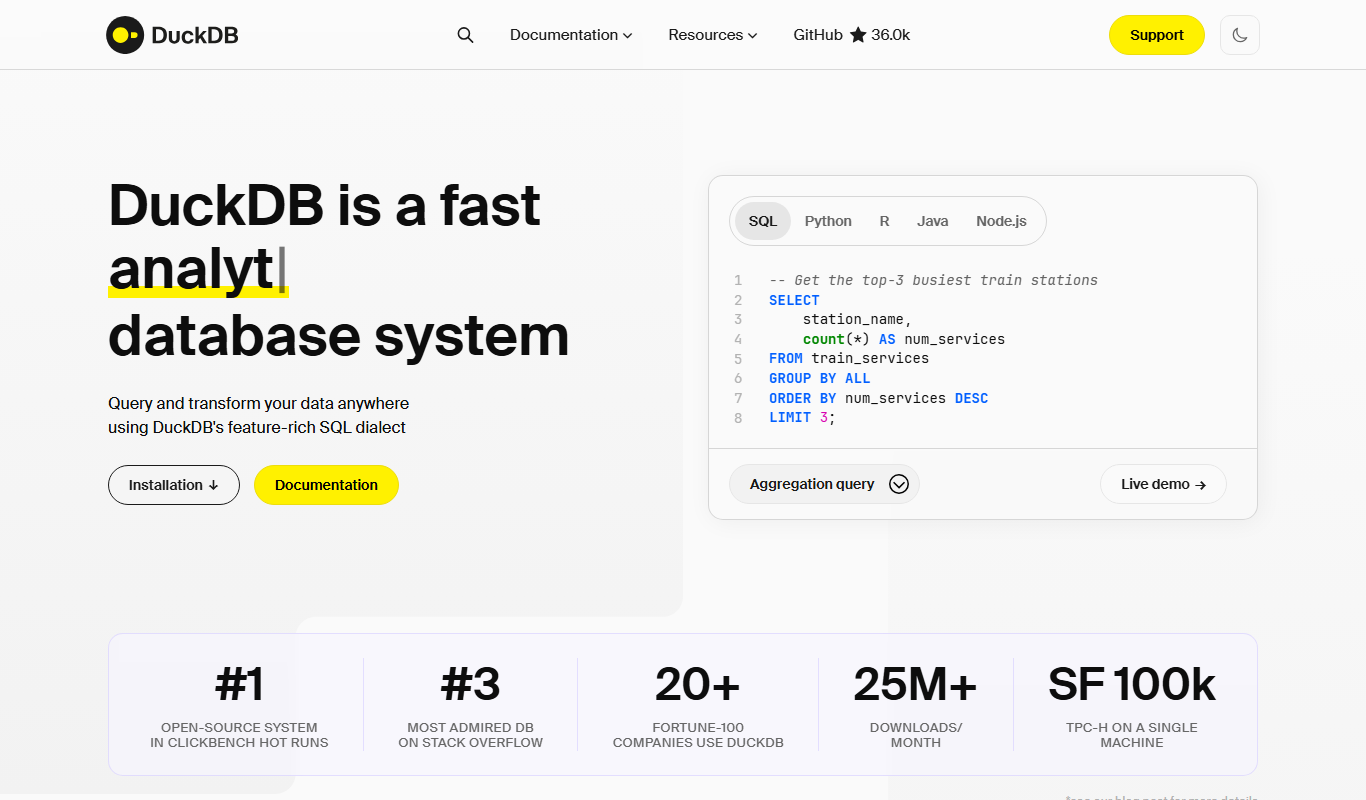
DuckDB
DuckDB is an open-source, embedded SQL OLAP database optimized for fast analytical queries within applications and data science environments.
More AI Analytics Assistant tools
Other tools in the same category, for when this one is not quite the fit.

Custom Pricing
Veraset
Veraset provides privacy-compliant, high-quality location data via API and web platform to support marketing, retail, and urban planning analytics.
Custom Pricing
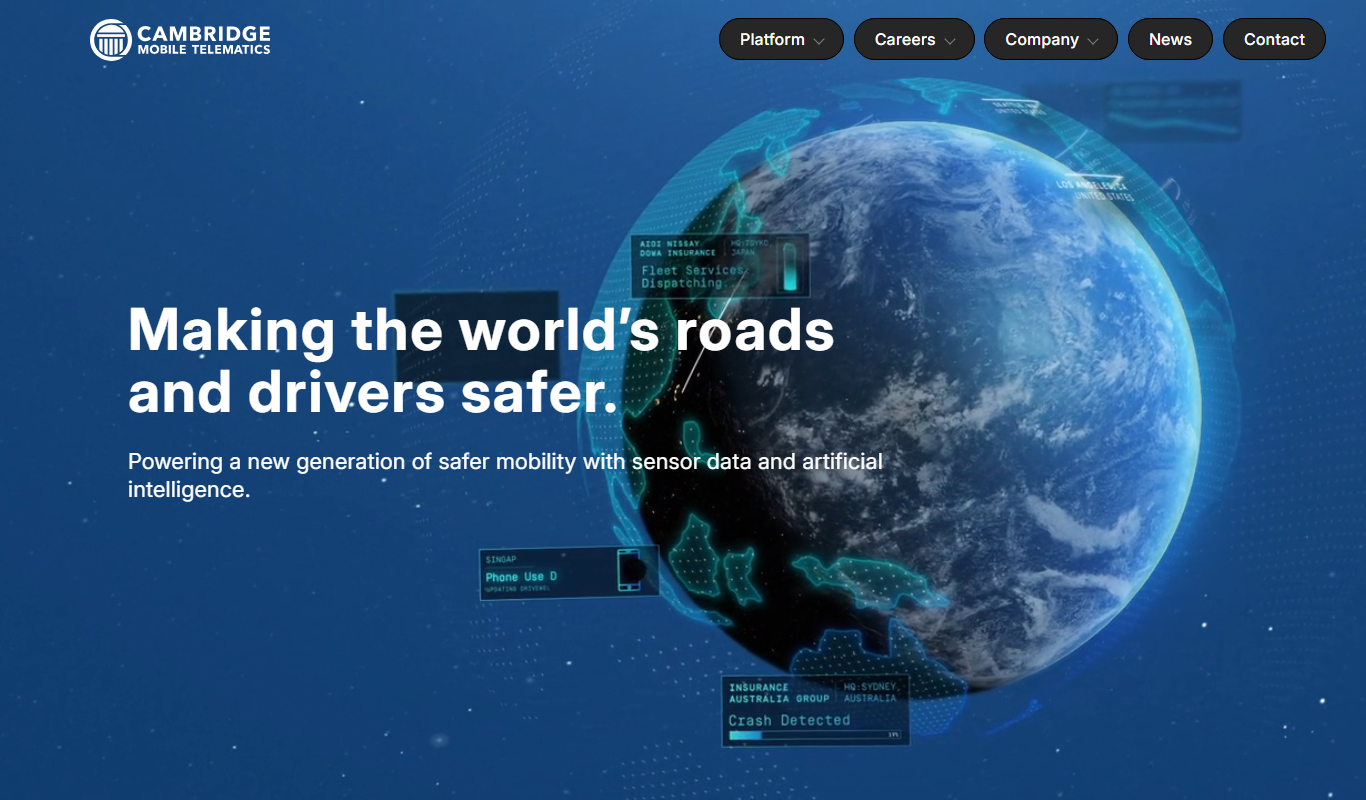
Cambridge Mobile Telematics
Cambridge Mobile Telematics provides a mobile telematics platform that uses smartphone sensors and AI to analyze driver behavior, enabling insurers and fleet managers to assess risk, improve safety, and reduce accidents.
Free
RadarBox
RadarBox is a real-time flight tracking platform offering live aircraft positions, flight history, and aviation data accessible via web and mobile apps.

Free
DeFiChain
DeFiChain is a blockchain platform focused on decentralized finance, enabling fast, secure, and low-cost DeFi applications integrated with Bitcoin.
Custom Pricing
Liquidnet
Liquidnet is a global institutional trading platform that connects asset managers and brokers to execute large block equity trades anonymously via a dark pool, providing liquidity and advanced analytics to optimize trade execution.

Free
Yearn Finance
Yearn Finance is a decentralized finance platform that automates yield farming strategies using smart contracts to maximize returns on Ethereum-based crypto assets.
Free
Stock Rover
Stock Rover is an investment research platform that provides advanced stock screening, portfolio analytics, and comprehensive financial data to help investors analyze and manage their investments effectively.
Free
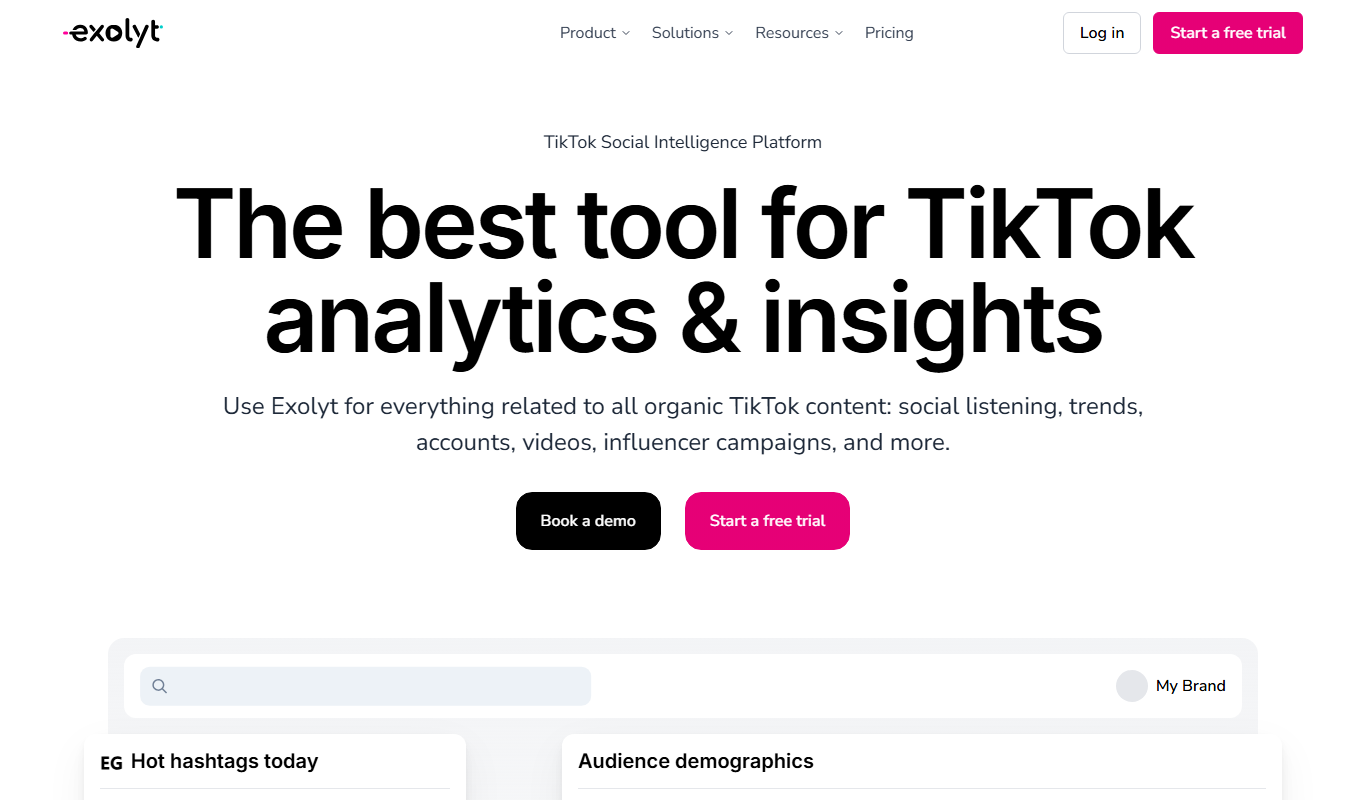
Exolyt
Exolyt is a TikTok analytics tool that helps marketers and influencers track video performance, analyze competitors, and monitor follower growth to optimize TikTok marketing strategies.