

From my experience with AutoFlow, I found it excels at simplifying complex business process automation through its intuitive no-code visual builder. The AI-driven optimization features provide valuable insights to improve workflows, which is a significant advantage for operations teams. After spending time with the platform, I can say it’s particularly well-suited for enterprises looking to integrate multiple systems without heavy coding. However, the pricing model requires direct contact, which may slow decision-making for smaller businesses. Overall, if you need a scalable, AI-enhanced workflow automation solution, AutoFlow delivers solid capabilities.
AutoFlow AI Workflow Automation Platform for Business Process Optimization
AutoFlow is an AI-driven workflow automation platform by PingCAP that enables businesses to automate and optimize processes using a no-code visual builder and multi-system integration.
- Best for
- Automate Repetitive Tasks
- Key capability
- Visual Workflow Builder
Your actions

Do you recommend this tool?
What is AutoFlow?
AutoFlow is an AI-powered workflow automation platform developed by PingCAP, designed to help enterprises automate and optimize their business processes. It leverages artificial intelligence to enable seamless integration across systems, automate repetitive tasks, and provide actionable insights for process improvement. The platform supports no-code workflow design, making it accessible to users without programming skills.
Key features of AutoFlow
AutoFlow offers visual workflow design, AI-driven process optimization, multi-system integration, real-time monitoring, and scalable deployment options. It supports API connectivity and provides analytics to track automation performance.
Visual Workflow Builder
Drag-and-drop interface to create complex workflows without coding.
AI-Driven Optimization
Leverages AI to analyze workflows and suggest improvements.
Multi-System Integration
Supports integration with various enterprise software and databases.
Real-Time Monitoring
Track workflow execution and performance metrics live.
Scalable Architecture
Built on Kubernetes for scalable and reliable deployment.
Pros and cons of AutoFlow
Pros
- User-friendly no-code workflow design
- Strong AI-driven process optimization
- Supports multi-system integration
- Real-time monitoring and analytics
- Scalable and reliable infrastructure
Cons
- Pricing details require direct contact
- Limited language support beyond English and Chinese
Key use cases for AutoFlow
Automate Repetitive Tasks
AutoFlow enables businesses to automate routine workflows, reducing manual effort and increasing efficiency.
Integrate Multiple Systems
It connects various enterprise applications and databases to streamline data flow and operations.
Optimize Business Processes
AutoFlow helps analyze and optimize complex business processes using AI-driven insights.
No-Code Workflow Design
Users can design workflows visually without coding, making automation accessible to non-technical staff.
How AutoFlow works
- 1
Sign Up
Create an account on the AutoFlow platform to access the dashboard.
- 2
Design Workflow
Use the visual editor to build workflows by dragging and dropping components.
- 3
Integrate Systems
Connect your enterprise applications and databases via built-in connectors or APIs.
- 4
Deploy and Monitor
Launch the automated workflows and monitor their performance in real-time.
Who is using AutoFlow
Enterprise IT teams
Business process managers
Operations departments
Small and medium businesses seeking automation
System integrators
AutoFlow pricing
Free Trial
$0 for 14 days
Full access to features for evaluation purposes.
Professional
Contact for pricing
Customized plans with advanced features and support.
Plans and prices are as published by the vendor and can change. Check the official site before you buy. Open the pricing page (opens in a new tab)
Frequently asked questions about AutoFlow
No, AutoFlow provides a no-code visual workflow builder suitable for users without coding experience.
Yes, it supports integration through APIs and built-in connectors for various applications.
Yes, AutoFlow offers a 14-day free trial with full feature access.
This tool is designed to help users accomplish its core tasks more efficiently. It is typically used by individuals or teams looking to improve productivity and workflow.
Yes, it can help with that use case depending on how you configure it and what features are available. You’ll get the best results with clear inputs and a defined goal.
Integration support depends on the tool and its available connectors or API. Check the official documentation or integrations page to confirm what is supported.
Sign in to review this tool.
Sign In to ReviewNo reviews yet
Be the first to share how this tool worked for you.
Ask about pricing, limits, or how it compares — or answer someone else.
Sign In to AskNo questions yet
Have a question about using or paying for this tool? Be the first to ask.
Featured on TiorAI



More AI Artificial Intelligence Tools tools
Other tools in the same category, for when this one is not quite the fit.
Freemium
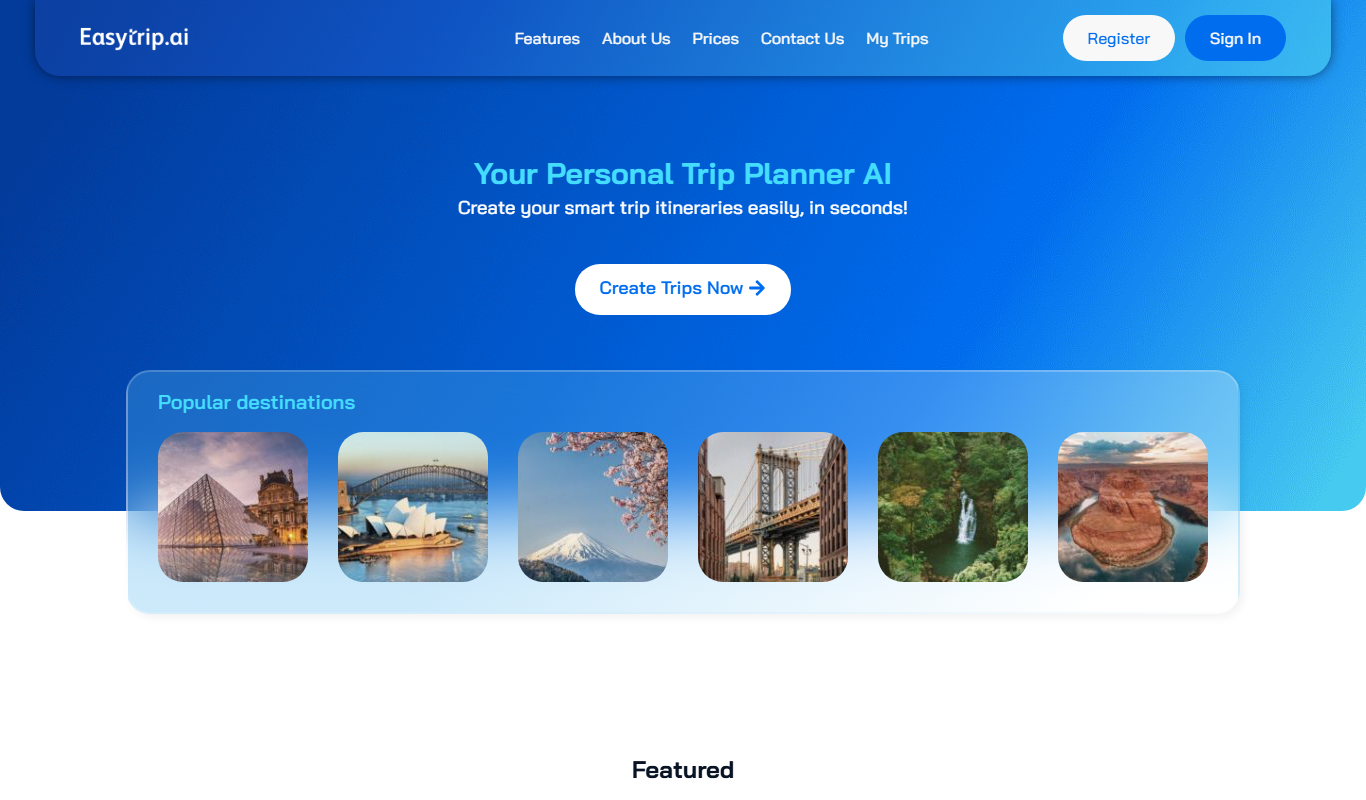
EasyTrip AI
EasyTrip AI is an AI-driven travel planner that generates customized trip itineraries based on your travel dates, destinations, and preferences, helping you organize your trip efficiently.

Freemium
Travel Itinerary AI
Travel Itinerary AI is an AI-powered web tool that creates personalized travel itineraries based on your preferences, helping you plan and manage trips efficiently.

Free
NilgAI Travel
NilgAI Travel is an AI-driven travel planning tool that creates personalized itineraries based on your preferences, travel dates, and budget, helping you efficiently plan trips worldwide.

Custom Pricing
sentiance.com
Sentiance is an AI-powered platform that transforms sensor and contextual data into actionable behavioral insights, enabling businesses to understand user behavior and deliver personalized experiences in real-time.

Contact for pricing
ODESIS
ODESIS is an AI-driven analytics platform that helps businesses transform data into actionable insights through machine learning, visualization, and predictive analytics.

Contact for pricing
QUINETICS
Quinetics is an AI platform that provides businesses with advanced data analytics, workflow automation, and custom machine learning model development to optimize operations and decision-making.

Free
aigclist
AIGCList is a free online directory that aggregates and categorizes AI tools, providing detailed information, user reviews, and AI industry news to help users discover and compare AI solutions.

Free
AI Tool Center
AI Tool Center is a free online directory that helps users discover, compare, and review AI tools across various categories and industries.