
From my experience with Auphonic, I found it excels at automating complex audio post-production tasks like loudness normalization and noise reduction, which are often tedious and technical for podcasters and broadcasters. The platform’s ease of use and API integration make it a strong choice for content creators seeking consistent, professional audio quality without deep audio engineering knowledge. However, it does not support live audio processing and offers limited customization for advanced users, which may be a drawback for some. Overall, if you need reliable, automated audio mastering for podcasts or broadcasts, Auphonic delivers efficient and high-quality results.
Auphonic Audio Processing Tool for Podcasting and Broadcast Automation
Auphonic is an AI-driven audio post-production tool that automates leveling, noise reduction, loudness normalization, and metadata tagging to produce professional-quality audio for podcasts and broadcasts.
What is Auphonic?
Auphonic is an AI-powered audio post-production web service and software designed to automate and simplify the process of audio mastering, leveling, noise reduction, and encoding. It caters primarily to podcasters, broadcasters, and audio producers who want to improve audio quality with minimal manual effort.
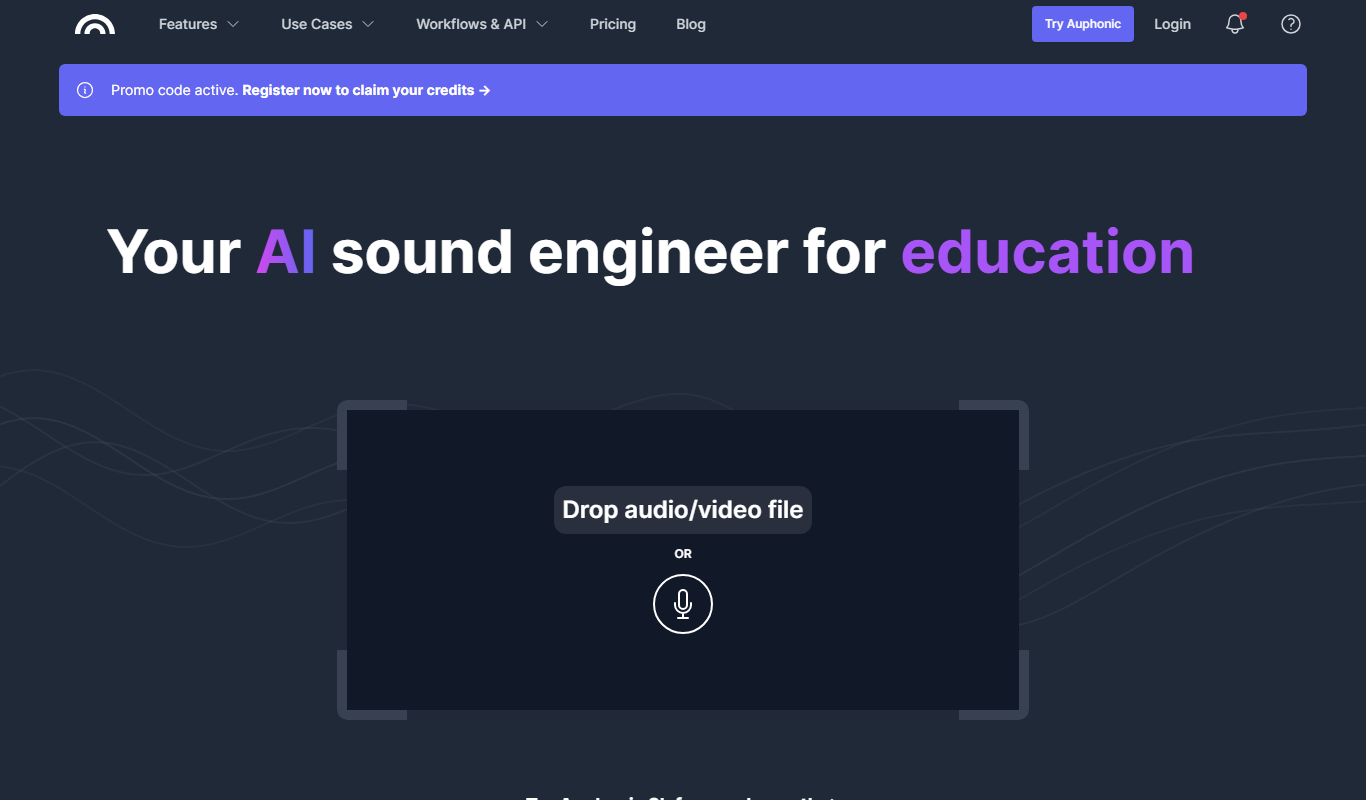
Key Features of Auphonic
Automatic Loudness Normalization
Ensures consistent volume levels across episodes and complies with EBU R128 and ITU-R BS.1770 standards.
Noise and Hum Reduction
Removes background noise and electrical hum to improve clarity without manual editing.
Multi-track Audio Processing
Supports separate processing of multiple audio tracks with individual leveling and mixing.
Metadata and Chapter Marking
Automatically generates and embeds metadata and chapter marks for enhanced listener navigation.
API Access
Allows integration into custom workflows and automation pipelines.
Pros and Cons of Auphonic
Pros
- Automates complex audio post-production tasks
- Supports multi-track processing and metadata tagging
- Complies with industry loudness standards
- Offers flexible pricing plans including free tier
- API enables workflow automation
Cons
- No live audio processing capabilities
- Limited customization for advanced audio engineers
- Free tier has low monthly processing limits
Key Use Cases for Auphonic
Podcast Production
Automate audio post-production tasks such as leveling, noise reduction, and encoding to produce professional-sounding podcasts.
Broadcast Automation
Streamline audio processing workflows for radio and broadcast stations with automatic loudness normalization and metadata tagging.
Audio Mastering
Enhance audio quality for music tracks or spoken word recordings with AI-driven mastering and audio restoration.
Transcoding and Encoding
Convert audio files into multiple formats and bitrates optimized for different platforms and devices.
Audio File Metadata Management
Automatically generate and embed metadata such as chapter marks, titles, and descriptions into audio files.
How Auphonic Works
-
1
Upload Audio
Users upload their raw audio files to the Auphonic platform via web interface or API.
-
2
Configure Processing
Select desired processing options such as loudness targets, noise reduction, and output formats.
-
3
Automatic Processing
Auphonic applies AI-driven algorithms to level audio, remove noise, and encode files automatically.
-
4
Download or Publish
Processed audio files can be downloaded or directly published to podcast platforms or storage.
Who's Using Auphonic
Podcasters
Radio broadcasters
Audio producers
Content creators
Small to medium media companies
Auphonic Pricing
Free
$0/month
Includes 2 hours of audio processing per month with access to core features.
Basic
$11/month
Offers 9 hours of audio processing monthly plus priority support.
Pro
$29/month
Includes 20 hours of audio processing per month with advanced features and API access.
Premium
$99/month
Provides 60 hours of audio processing monthly and full feature access for professional users.
Frequently Asked Questions About Auphonic
Auphonic supports common audio formats including WAV, MP3, AIFF, FLAC, and AAC.
Auphonic is designed for post-production and does not currently support live audio processing.
Yes, Auphonic provides an API that allows integration with custom workflows and automated processing.
Yes, it normalizes audio to comply with EBU R128 and ITU-R BS.1770 loudness standards.
It depends on your specific needs and how you plan to use the tool. The official website and documentation are the best sources for the latest details.
Yes, it can help with that use case depending on how you configure it and what features are available. You’ll get the best results with clear inputs and a defined goal.
Pricing depends on the plan and included features. For the most accurate and up-to-date details, check the official pricing page.
Integration support depends on the tool and its available connectors or API. Check the official documentation or integrations page to confirm what is supported.
Share your review
Reviews are limited to one per logged-in user and are published after moderation.
You need an account to review this tool.
0.0
★
★
★
★
★
0 reviews
5 star
0
4 star
0
3 star
0
2 star
0
1 star
0
No reviews yet
Be the first to share how this tool worked for you.
Questions from the community
Read questions and answers about this tool, or ask your own.
No questions yet
Start the conversation by asking the first question about this tool.
Is this tool helpful?
Alternative Tools
Explore similar AI tools that might fit your needs

Free Trial
Alitu
Alitu is a web-based podcast maker that automates audio editing, cleanup, and episode assembly to help podcasters produce professional-quality episodes quickly and easily.

Free
WavTool
WavTool is a web-based AI music production platform offering beat generation, multi-track audio editing, and collaboration tools accessible directly in your browser.

Free
Bandicam
Bandicam is a Windows-based screen recording software that captures high-quality video from your screen, games, and external devices with features like real-time drawing and webcam overlay.

Free
ClipGrab
ClipGrab is a free, open-source video downloader and converter that lets you download videos from popular sites like YouTube and convert them into various formats including MP4 and MP3.

Free
Audiotool
Audiotool is a web-based digital audio workstation that lets users create, mix, and collaborate on music projects online using virtual instruments and effects without software installation.

Free
Magenta Studio
Magenta Studio is a free, open-source AI music generation tool by Google that helps musicians create melodies, beats, and harmonies using machine learning models integrated with DAWs like Ableton Live.

Freemium
Splice
Splice is a cloud-based music production platform that provides royalty-free samples, cloud backup, collaboration tools, and plugin rentals to streamline music creation.
Free
Acapella Extractor
Acapella Extractor is an AI-based web tool that isolates vocals and instrumentals from audio tracks, enabling users to create acapellas, instrumentals, and karaoke versions quickly and easily.

Free Trial
End Boost
End Boost is an AI-powered web tool that improves audio by reducing noise and enhancing voice clarity for podcasts, voiceovers, and online content.