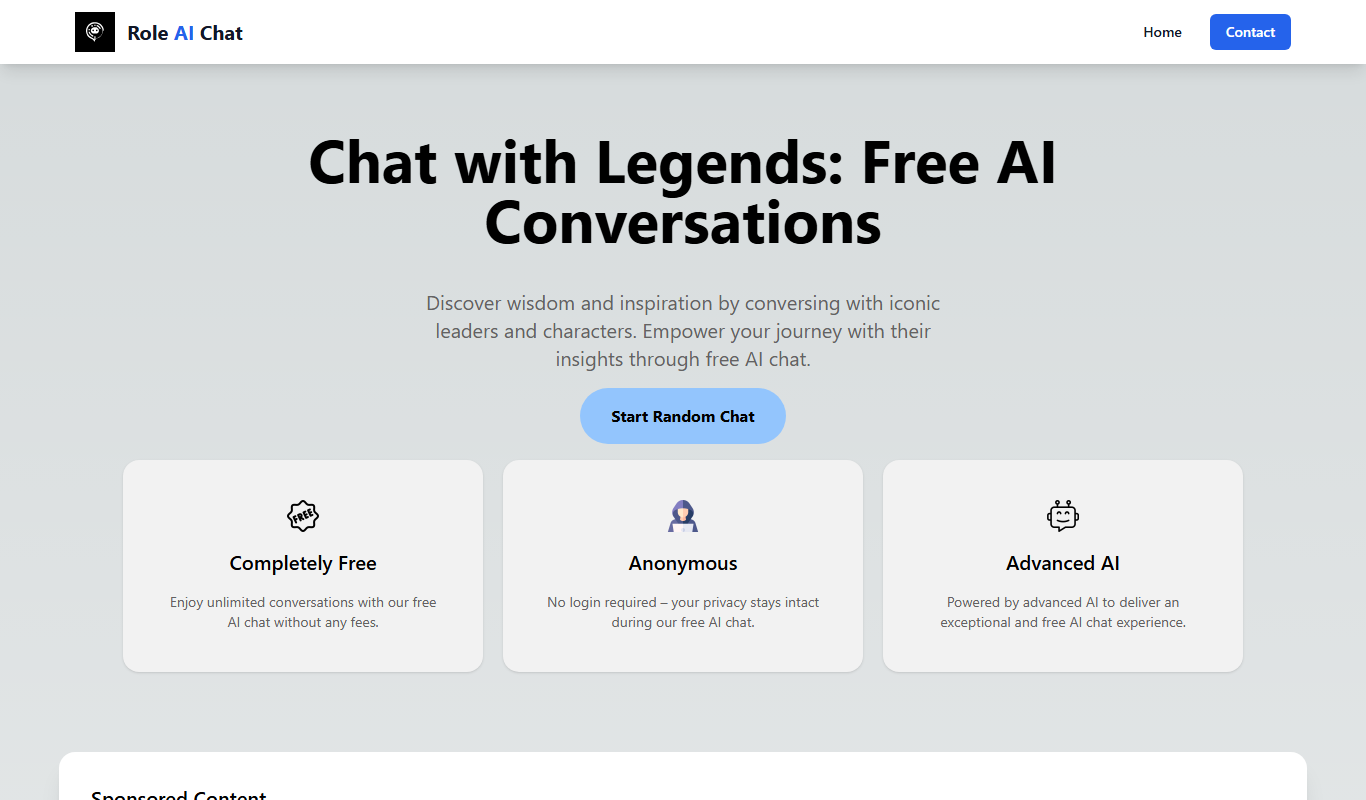
What Is Roleplay AI?
Roleplay AI refers to specialized AI systems programmed to engage users in simulated interactions by adopting specific roles, personalities, or narratives. Unlike general chatbots, these AIs can take on characters from fiction, historical figures, or customized personas, making conversations dynamic and context-rich. This technology leverages natural language processing and contextual understanding to create believable and engaging roleplay scenarios, often used in gaming, education, and creative writing.
Why Is Roleplay AI Important?
Roleplay AI enhances user engagement by providing immersive, personalized interactions that go beyond simple question-answer exchanges. It enables creative exploration, learning, and entertainment in ways traditional AI cannot. For businesses and content creators, it offers innovative tools for customer interaction, training simulations, and storytelling, broadening the scope of AI applications.
- Improves user engagement through dynamic, interactive storytelling.
- Supports creative and educational applications by simulating real-life or fictional scenarios.
- Enables personalized experiences that adapt to user input and preferences.
Key Characteristics of Roleplay AI
- Contextual Awareness: Understands and remembers conversation context to maintain consistent character behavior.
- Personality Simulation: Adopts distinct traits, speech patterns, and knowledge aligned with assigned roles.
- Adaptive Dialogue: Responds flexibly to user inputs, enabling natural, unscripted interactions.
How Roleplay AI Works (Step-by-Step)
- Initialization: The AI is assigned a role with defined personality traits and background information.
- Interaction: The AI processes user inputs, interpreting intent and context to generate appropriate responses.
- Adaptation: The AI adjusts its dialogue dynamically to stay true to the role while responding naturally to new inputs.
Real-World Examples of Roleplay AI
- Virtual Game Characters: AI-driven NPCs in games that adapt conversations based on player choices.
- Educational Tutors: AI personas that simulate historical figures or experts to teach subjects interactively.
Roleplay AI in SEO, Marketing, or Business Context
In marketing and business, Roleplay AI can create engaging brand personas for customer service or interactive campaigns, enhancing user experience and loyalty. SEO professionals leverage it to generate unique content around conversational topics, improving keyword diversity and dwell time. Additionally, businesses use roleplay AI for training simulations, preparing employees through realistic scenario-based learning.
Common Mistakes or Misunderstandings About Roleplay AI
- Assuming roleplay AI can replace human creativity entirely instead of augmenting it.
- Expecting roleplay AI to maintain perfect character consistency without ongoing tuning and context updates.
Related Terms
FAQs About Roleplay AI
Roleplay AI is used for gaming, education, customer engagement, creative writing, and training simulations.
Roleplay AI adopts specific characters or roles and maintains contextual consistency, whereas regular chatbots focus on task-based or informational responses.
Summary
Roleplay AI is a powerful form of artificial intelligence that brings characters and scenarios to life through adaptive, context-aware interactions. It plays a vital role in enhancing engagement across entertainment, education, and business applications, offering a creative and immersive way to communicate and learn. Understanding its unique capabilities and limitations helps marketers, educators, and developers harness its full potential effectively.