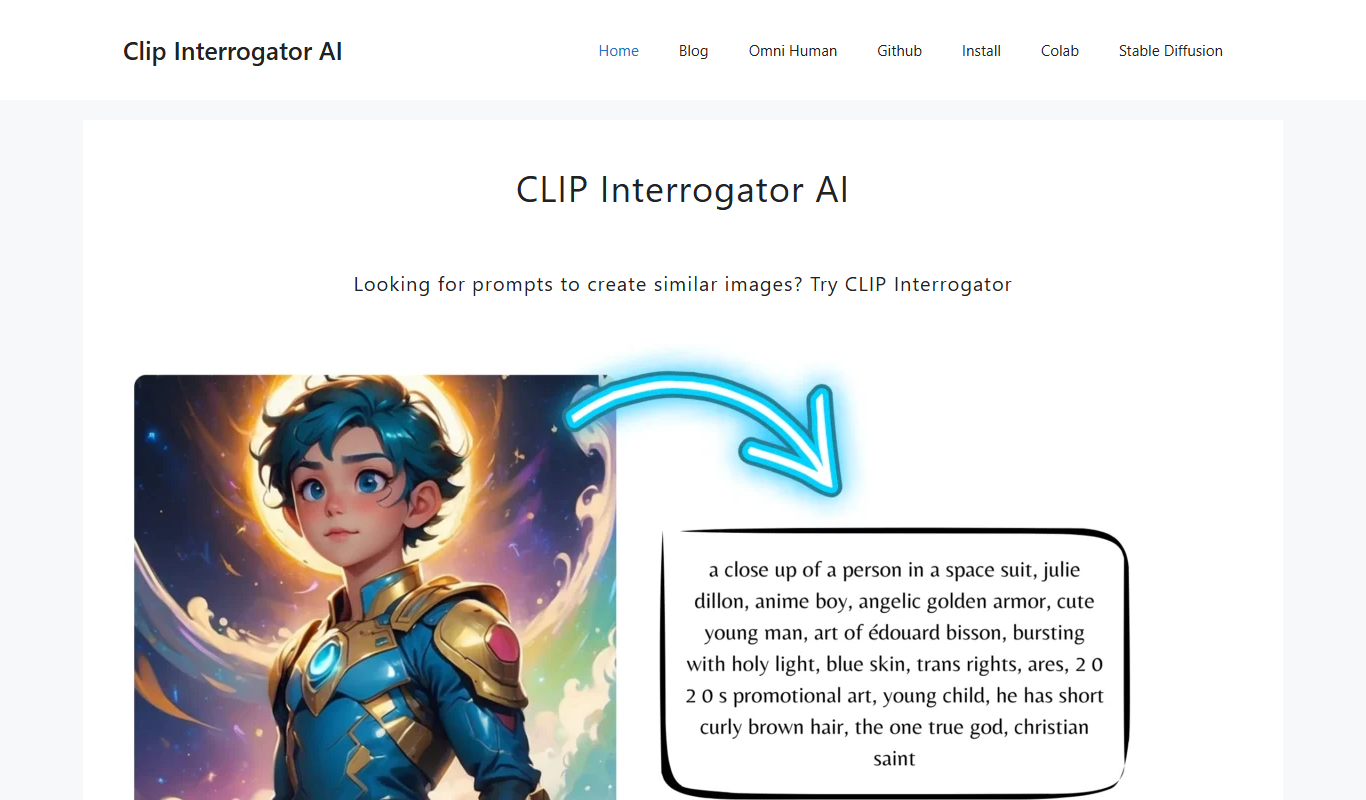
What Is CLIP?
CLIP, which stands for Contrastive Language–Image Pre-training, is an advanced AI model developed to interpret images and text together. It learns from a vast dataset of images and their corresponding captions, enabling it to recognize objects, scenes, and concepts described in natural language. Unlike traditional image recognition models, CLIP can generalize to new tasks without additional training by relating text prompts to images, making it highly flexible for various applications.
Why Is CLIP Important?
CLIP revolutionizes how machines understand visual and textual information by bridging the gap between images and language. This capability enhances image search, content categorization, and creative AI generation, allowing more intuitive and accurate interactions with multimedia content.
- Enables zero-shot learning where the model can identify images without task-specific training.
- Improves search engines by matching images to natural language queries.
- Supports creative tools that generate or edit content based on textual descriptions.
Key Characteristics of CLIP
- Multimodal Understanding: CLIP processes both text and images, linking them through learned semantic relationships.
- Contrastive Learning: It trains by contrasting matching image-text pairs against mismatched pairs to improve accuracy.
- Zero-Shot Capabilities: CLIP can perform tasks without explicit retraining by interpreting new text prompts.
How CLIP Works (Step-by-Step)
- CLIP is trained on a large dataset of images paired with descriptive text captions.
- It encodes images and text into a shared vector space where related pairs are close together.
- When given a new image or text query, CLIP finds the closest matching representation for tasks like classification or search.
Real-World Examples of CLIP
- Image Search Enhancement: Search engines use CLIP to return relevant images based on natural language queries without needing manual tagging.
- Content Moderation: Platforms deploy CLIP to detect inappropriate images by comparing them to descriptive text filters.
CLIP in SEO, Marketing, or Business Context
CLIP empowers digital marketers and SEO professionals by improving multimedia content understanding and discoverability. It enables smarter image tagging, enhances user engagement through better visual search, and supports automated content creation tools that align visuals with brand messaging effectively.
Common Mistakes or Misunderstandings About CLIP
- Assuming CLIP can fully understand context beyond learned correlations, whereas it relies on patterns in training data.
- Believing CLIP replaces all traditional image recognition tasks; it complements but does not always outperform specialized models.
Related Terms
- Vision Transformer (ViT)
- Multimodal Learning
- Zero-Shot Learning
FAQs About CLIP
CLIP links images and text in a shared space, allowing it to recognize concepts from natural language without retraining.
By enhancing image search relevancy and automating accurate content tagging, CLIP boosts visual content discoverability.
Summary
CLIP represents a significant advancement in AI by integrating visual and textual understanding, enabling flexible applications in search, content creation, and moderation. For marketers and SEO experts, it offers new ways to optimize multimedia content and engage audiences through smarter, language-driven image recognition.