
From my experience with Specgen.ai, I found it excels at bridging the gap between software requirements and automated testing by converting natural language specifications into executable tests. This significantly reduces manual test creation and maintenance efforts, making it particularly well-suited for agile teams and QA engineers looking to accelerate testing cycles. However, the platform’s pricing requires direct contact, and there is a learning curve to fully leverage AI-generated tests. Overall, if you want to automate test generation and maintenance with AI, Specgen.ai offers a practical and innovative solution.
Specgen.ai AI-Powered Test Automation Tool for Software Developers
Specgen.ai is an AI-driven platform that automatically generates and maintains software tests from natural language specifications, helping teams automate testing and improve quality assurance.
Categories:
AI Document Extraction
AI Software Development Tools
Research & Data Analysis
Test Automation
Tech Stack:
JavaScript
Machine Learning
Python
What is Specgen.ai?
Specgen.ai is an AI-driven test automation platform designed to transform software specifications into executable tests. It uses natural language processing and machine learning to interpret requirements and automatically generate, execute, and maintain tests. This approach helps development and QA teams improve test coverage, accelerate testing cycles, and reduce manual testing effort.

Key Features of Specgen.ai
Natural Language Processing
Transforms plain language specifications into structured, executable test cases.
AI-Powered Test Maintenance
Automatically updates tests to reflect changes in software, reducing manual maintenance.
CI/CD Integration
Seamlessly integrates with popular continuous integration tools for automated testing.
Detailed Test Reporting
Provides insights and analytics on test results to help identify issues quickly.
Multi-Language Support
Supports English and French for specification input and user interface.
Pros and Cons of Specgen.ai
Pros
- Automates test creation from natural language specs
- Reduces manual test maintenance with AI
- Integrates well with CI/CD pipelines
- Supports multiple languages including French
- Improves test coverage and quality assurance efficiency
Cons
- Pricing details require contacting sales
- Primarily web-based with no desktop app
- May require initial learning curve to optimize AI-generated tests
Key Use Cases for Specgen.ai
Automated Test Generation
Automatically generate comprehensive test cases from software specifications to improve test coverage and reduce manual effort.
Regression Testing
Run AI-generated tests to quickly identify regressions and ensure new code changes do not break existing functionality.
Specification-Based Testing
Convert natural language specifications into executable tests, bridging the gap between product requirements and testing.
Continuous Integration Support
Integrate with CI/CD pipelines to automate testing during development cycles for faster feedback and higher code quality.
Test Maintenance Automation
Leverage AI to adapt and maintain tests automatically as software evolves, reducing manual test upkeep.
How Specgen.ai Works
-
1
Upload Specifications
Provide your software requirements or user stories in natural language format to Specgen.ai.
-
2
AI Test Generation
The AI engine analyzes the specifications and automatically generates executable test cases.
-
3
Review and Customize
Review the generated tests and customize them if needed to fit your specific scenarios.
-
4
Integrate and Execute
Integrate the tests into your development pipeline and run them automatically during builds.
-
5
Monitor and Maintain
Use Specgen.ai’s AI capabilities to maintain and update tests as your software evolves.
Who's Using Specgen.ai
Software developers
QA engineers
Agile teams
Product managers
Test automation specialists
Specgen.ai Pricing
Free Trial
$0 for 14 days
Access full features for two weeks to evaluate the platform.
Professional
Contact for pricing
Subscription plan with full access, priority support, and integrations.
Frequently Asked Questions About Specgen.ai
Specgen.ai supports natural language requirements, user stories, and acceptance criteria commonly used in agile development.
Yes, Specgen.ai offers integrations with popular CI/CD tools to automate test execution during development.
No, Specgen.ai is designed to be accessible to both technical and non-technical users by converting natural language specs into tests.
The AI engine automatically adapts tests to software changes, reducing the need for manual updates.
It depends on your specific needs and how you plan to use the tool. The official website and documentation are the best sources for the latest details.
Integration support depends on the tool and its available connectors or API. Check the official documentation or integrations page to confirm what is supported.
It depends on your specific needs and how you plan to use the tool. The official website and documentation are the best sources for the latest details.
Share your review
Reviews are limited to one per logged-in user and are published after moderation.
You need an account to review this tool.
0.0
★
★
★
★
★
0 reviews
5 star
0
4 star
0
3 star
0
2 star
0
1 star
0
No reviews yet
Be the first to share how this tool worked for you.
Questions from the community
Read questions and answers about this tool, or ask your own.
No questions yet
Start the conversation by asking the first question about this tool.
Is this tool helpful?
Alternative Tools
Explore similar AI tools that might fit your needs
Free Trial
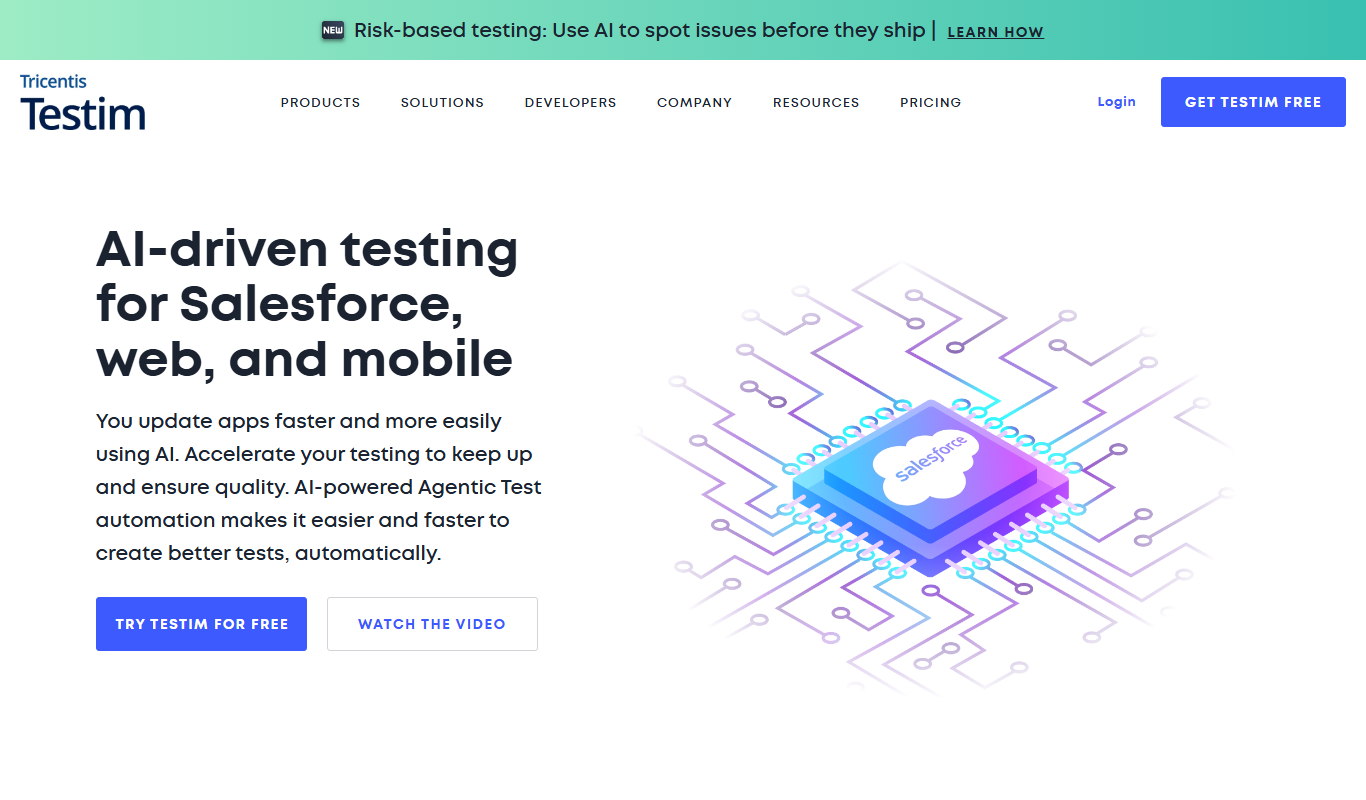
Testim
Testim is an AI-driven test automation platform that enables codeless test creation, self-healing tests, and seamless integration with CI/CD pipelines to improve software quality and reduce testing time.

Free Trial
Mabl
Mabl is an AI-driven automated testing platform that enables software teams to create, run, and maintain end-to-end tests with codeless tools and AI-powered visual validation, integrating seamlessly into CI/CD pipelines.

Enterprise
Functionize
Functionize is an AI-powered software testing platform that automates test creation, execution, and maintenance to improve software quality assurance.

Free
Any Summary
Any Summary is an AI-based web tool that condenses long text into brief summaries to help users quickly grasp key information.

Free Trial
mansaibots
Mansaibots is an AI chatbot platform that helps businesses automate customer interactions, generate leads, and provide 24/7 support through customizable chatbots without coding.
Free
Docses
Docses is an AI document generation tool that uses GPT-3 technology to help users quickly create various types of written content with customizable templates and export options.
Free
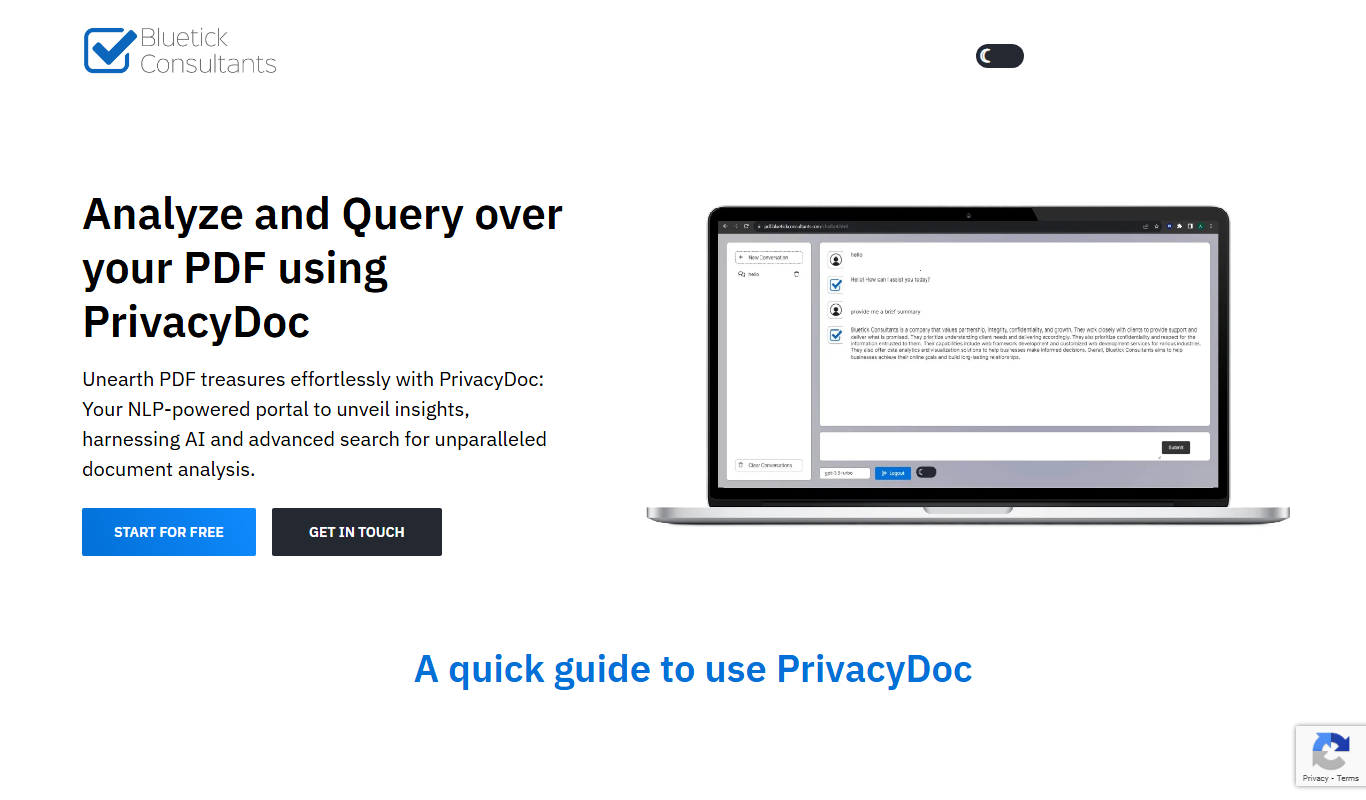
PrivacyDoc
PrivacyDoc is a free online tool that generates customizable PDF privacy policies for websites and apps, helping businesses comply with GDPR and CCPA regulations.
Free Trial
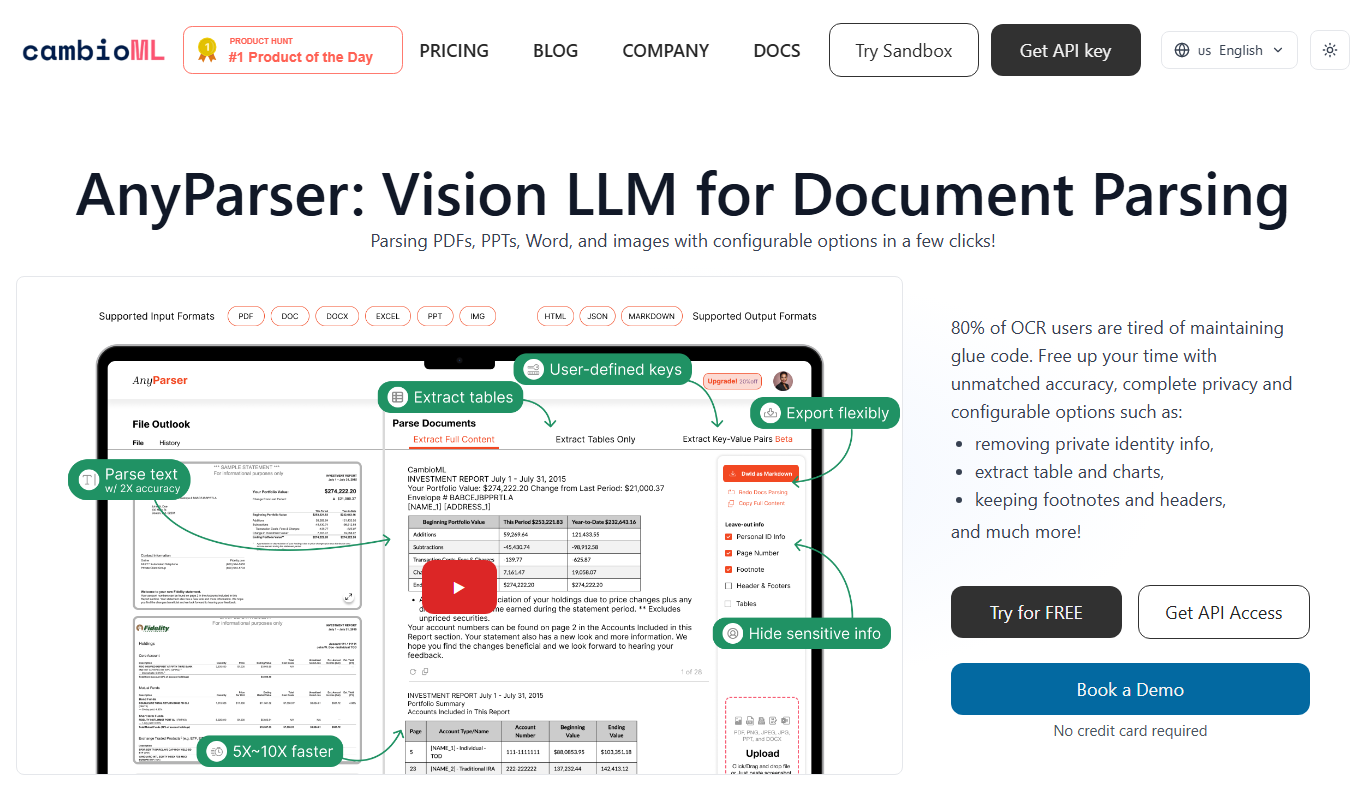
AnyParser
AnyParser is an AI-powered tool that automates extraction of structured data from unstructured documents like PDFs and emails using no-code parser training and OCR technology.
Free
Chat with PDF
Chat with PDF is a web-based AI tool that allows users to upload PDF documents and ask questions about their content in natural language, receiving instant answers extracted from the document.
Freemium
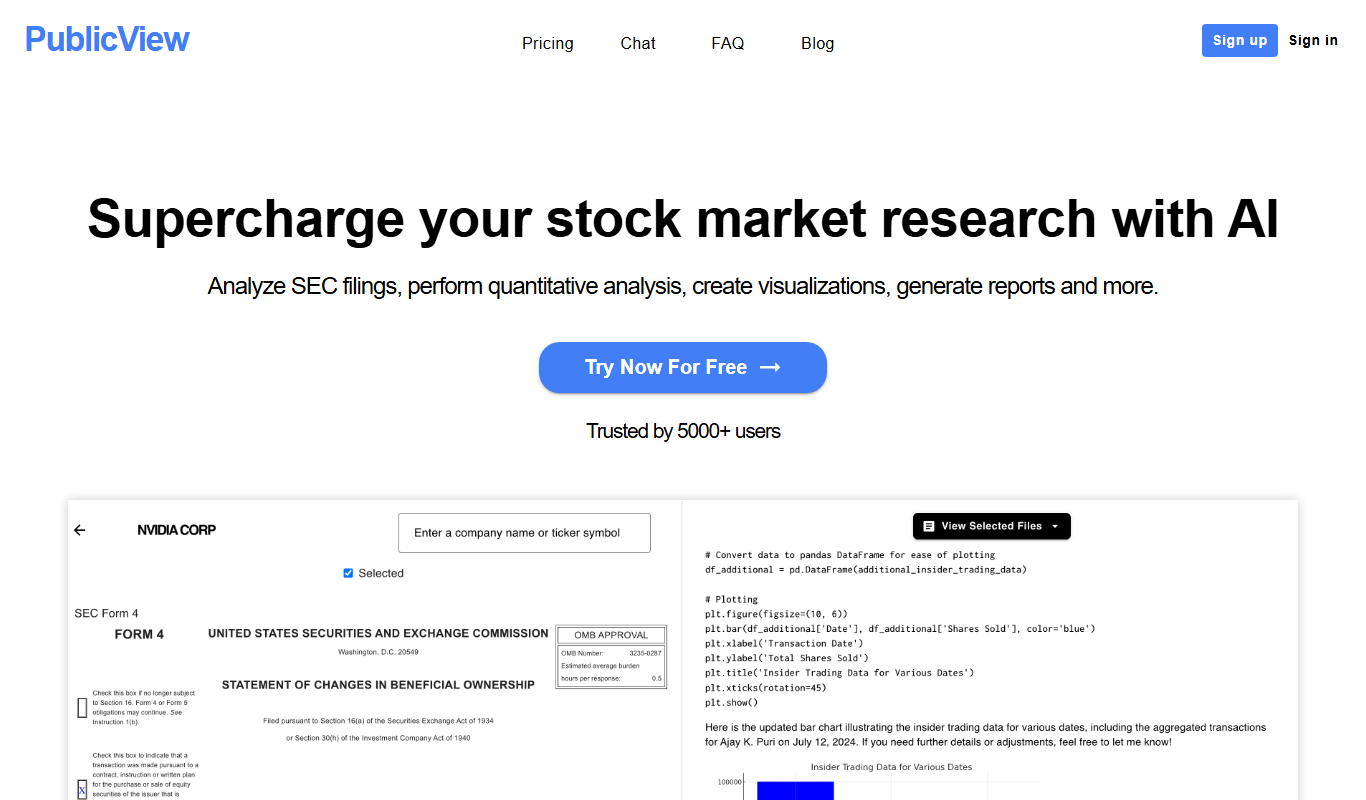
Publicview
Publicview is an AI-powered platform that provides real-time social media sentiment analysis and brand monitoring to help organizations manage reputation and detect emerging trends.

Free Trial
Extracta.ai
Extracta.ai is an AI-driven platform that automates extracting structured data from unstructured documents like invoices and contracts using OCR and machine learning.