
From my experience with Ghost Inspector, I found it excels at simplifying automated browser testing through its intuitive visual test recorder, making it accessible even for those without deep coding skills. After spending time with the platform, I can say it’s particularly well-suited for QA engineers and developers looking to integrate reliable tests into their CI/CD workflows. However, there’s a trade-off: advanced scripting capabilities require some programming knowledge, and pricing can be a consideration for smaller teams with extensive testing needs. Overall, if you need a cloud-based, scalable solution for website monitoring and regression testing, Ghost Inspector delivers solid results.
Ghost Inspector Automated Website Testing Tool for QA and Monitoring
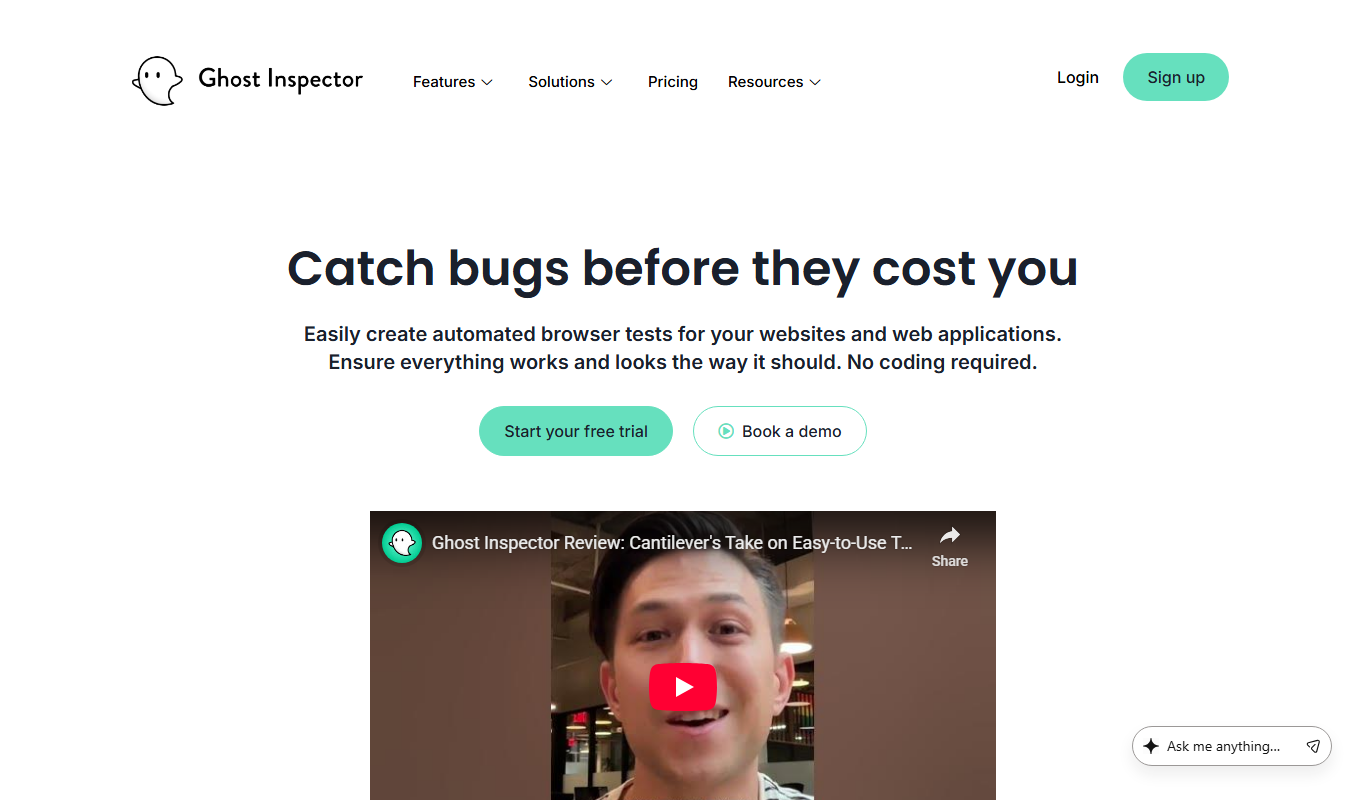
Ghost Inspector is a cloud-based tool that automates browser testing by recording user interactions or scripting tests to ensure websites function correctly and look consistent across browsers. It integrates with CI/CD pipelines and supports scheduled monitoring.
Tech Stack:
JavaScript
Node.js
Selenium WebDriver
What is Ghost Inspector?
Ghost Inspector is a cloud-based automated testing platform designed to help developers, QA teams, and product owners create, manage, and run browser tests without writing complex code. It enables users to visually record tests or write scripts that simulate user interactions on websites and web applications to ensure functionality, performance, and visual integrity remain intact over time.
Key Features of Ghost Inspector
Visual Test Recorder
Record browser interactions without coding to quickly create automated tests.
Cross-Browser Testing
Run tests on multiple browsers including Chrome, Firefox, Safari, and Edge.
Scheduled Testing
Automate test runs on a recurring schedule to monitor website health.
CI/CD Integration
Seamlessly integrate tests into continuous integration pipelines for automated validation.
Visual Regression Detection
Compare screenshots to detect unintended visual changes in the UI.
Pros and Cons of Ghost Inspector
Pros
- User-friendly visual test recorder for non-developers
- Robust integration options with CI/CD pipelines
- Supports cross-browser and visual regression testing
- Cloud-based with no infrastructure setup required
- Detailed reporting with screenshots and logs
Cons
- Pricing may be high for small teams with heavy testing needs
- Limited language support beyond English
- Some advanced scripting requires programming knowledge
Key Use Cases for Ghost Inspector
Automated Website Testing
Create and run automated browser tests to verify website functionality and catch regressions.
Continuous Integration Monitoring
Integrate tests into CI/CD pipelines to ensure code changes do not break existing features.
Visual Regression Testing
Capture screenshots during tests to detect visual changes or layout issues automatically.
User Journey Validation
Simulate user interactions like clicks, form submissions, and navigation to validate workflows.
Scheduled Website Monitoring
Run tests on a schedule to monitor uptime and performance of critical web pages.
How Ghost Inspector Works
-
1
Create Tests
Use the visual recorder or write scripts to define browser tests simulating user actions.
-
2
Run Tests
Execute tests on-demand, on a schedule, or triggered by CI/CD pipelines.
-
3
Review Results
Analyze detailed reports with logs, screenshots, and video captures to identify issues.
-
4
Integrate
Connect with tools like Jenkins, CircleCI, Slack, and others for automated workflows.
Who's Using Ghost Inspector
QA engineers
Web developers
Product managers
DevOps teams
Small to medium-sized businesses
Ghost Inspector Pricing
Free
$0/month
Limited tests and runs per month for small projects or evaluation.
Pro
$99/month
Increased test runs, team collaboration features, and priority support.
Business
Custom pricing
Advanced features, higher limits, and dedicated account management.
Frequently Asked Questions About Ghost Inspector
Yes, the visual test recorder allows users to create automated tests without writing code.
Yes, it integrates with popular CI/CD platforms like Jenkins, CircleCI, and GitHub Actions.
Ghost Inspector supports Chrome, Firefox, Safari, and Microsoft Edge browsers.
Yes, users can schedule tests to run at regular intervals for ongoing monitoring.
This tool is designed to help users accomplish its core tasks more efficiently. It is typically used by individuals or teams looking to improve productivity and workflow.
It depends on your specific needs and how you plan to use the tool. The official website and documentation are the best sources for the latest details.
Yes, it can help with that use case depending on how you configure it and what features are available. You’ll get the best results with clear inputs and a defined goal.
Integration support depends on the tool and its available connectors or API. Check the official documentation or integrations page to confirm what is supported.
Share your review
Reviews are limited to one per logged-in user and are published after moderation.
You need an account to review this tool.
0.0
★
★
★
★
★
0 reviews
5 star
0
4 star
0
3 star
0
2 star
0
1 star
0
No reviews yet
Be the first to share how this tool worked for you.
Questions from the community
Read questions and answers about this tool, or ask your own.
No questions yet
Start the conversation by asking the first question about this tool.
Is this tool helpful?
Alternative Tools
Explore similar AI tools that might fit your needs
Free Trial
Testim
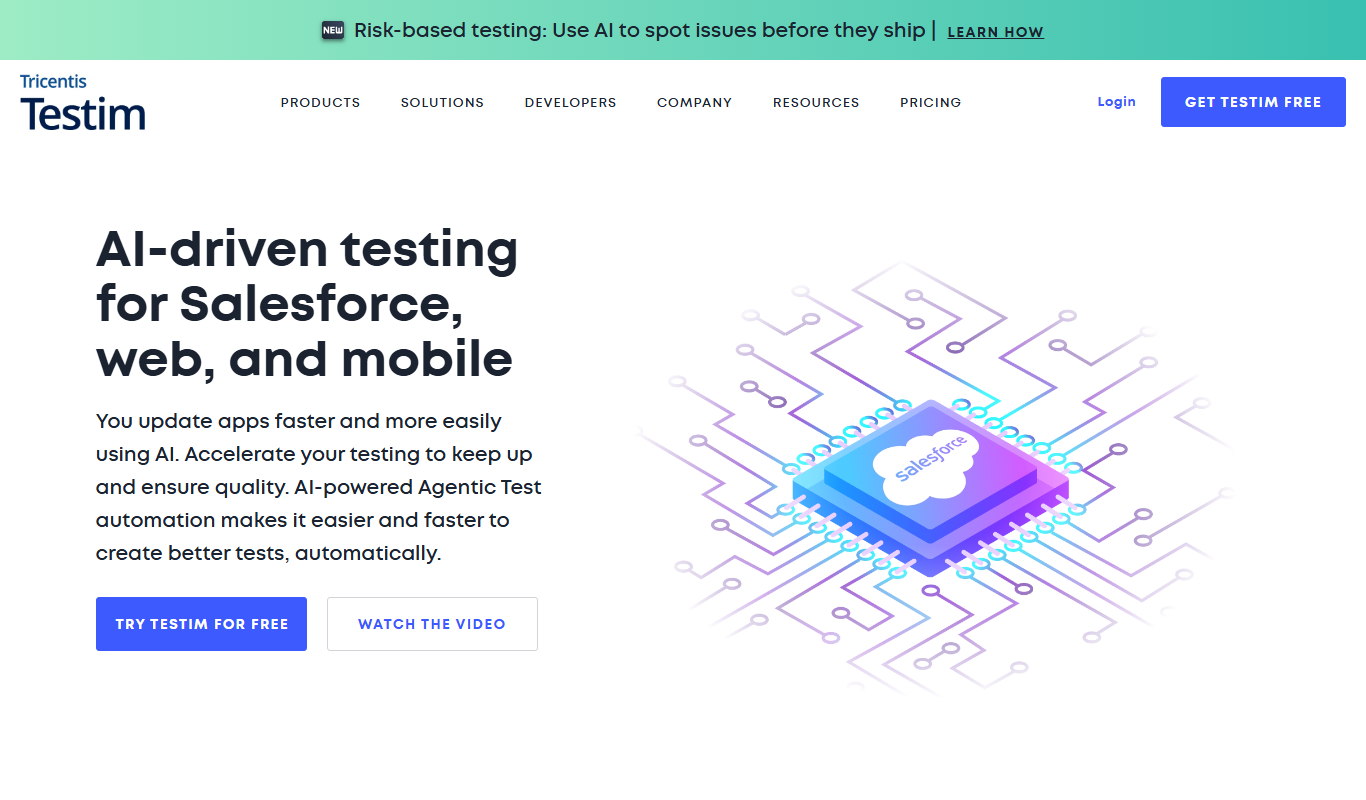
Testim is an AI-driven test automation platform that enables codeless test creation, self-healing tests, and seamless integration with CI/CD pipelines to improve software quality and reduce testing time.

Free
Selenium
Selenium is an open-source framework that automates web browsers for testing and web automation, supporting multiple languages and browsers.

Free Trial
BrowserStack
BrowserStack is a cloud testing platform that provides developers and QA teams access to real devices and browsers for manual and automated testing, supporting Selenium and Appium frameworks.

Enterprise
Botpress
Botpress is an open-source conversational AI platform that enables developers to build, deploy, and manage custom chatbots and virtual assistants with visual flow design and multi-channel integration.

Custom Pricing
Atomwise
Atomwise is an AI-powered drug discovery platform that uses deep learning to analyze molecular structures, predict binding affinities, and accelerate pharmaceutical research.

Free
Rectangle
Rectangle is an AI code assistant that generates, explains, and helps debug code using natural language inputs, designed to accelerate software development.

Free
TypeORM
TypeORM is an open-source Object-Relational Mapping library that helps TypeScript and JavaScript developers interact with SQL databases using entity models, decorators, and migrations.
Free
Create ML
Create ML is Apple’s macOS-based tool that enables developers to train custom machine learning models easily using a no-code interface or Swift APIs, optimized for integration with Apple apps via Core ML.

Custom Pricing
Diffbot
Diffbot is an AI-driven platform that automatically extracts structured data from web pages using machine learning and computer vision, providing APIs for developers to access clean, organized data for various applications.
Free
BackstopJS
BackstopJS is an open-source visual regression testing tool that automates UI screenshot comparisons to detect visual changes in web applications, supporting CI/CD integration and multiple viewports.

Free
Storybook
Storybook is an open-source tool that allows developers to build, test, and document UI components in isolation for frameworks like React, Vue, and Angular, improving frontend development workflows and UI consistency.