

RAGGENIE AI Tool for Efficient Retrieval-Augmented Generation Workflows
RAGGENIE is an open-source, low-code RAG builder (MIT license) for building conversational AI applications on your own data sources, run locally.
- Best for
- Knowledge Base Augmentation
- Key capability
- Data Ingestion and Indexing
Save RAGGENIE, follow its updates and vote on it — everything stays in your account.
Sign in or create a free account

What is RAGGENIE?
RAGGENIE is an open-source, low-code RAG builder released under the MIT license. It connects to databases, documents and websites and builds a conversational AI chat application on that data, which can be run locally or embedded in a website or app.
Key features of RAGGENIE
RAGGENIE offers an intuitive interface for managing knowledge bases, seamless integration with popular LLMs, and powerful retrieval mechanisms. Its features include document ingestion, vector search, customizable pipelines, and analytics to monitor AI performance.
Data Ingestion and Indexing
Supports multiple data formats and automatic indexing for efficient retrieval.
Integration with Large Language Models
Works seamlessly with popular LLMs to enhance AI responses with external knowledge.
Customizable Pipelines
Allows users to design tailored retrieval and generation workflows.
Analytics Dashboard
Provides insights into query performance and user interactions.
Pros and cons of RAGGENIE
Pros
- Simplifies building RAG applications
- Supports multiple data formats
- User-friendly interface
- Good integration with popular LLMs
Cons
- Currently supports only English language
- Limited mobile platform support
Key use cases for RAGGENIE
Knowledge Base Augmentation
Enhance AI models by integrating external knowledge bases for more accurate and context-aware responses.
Custom AI Chatbots
Build chatbots that leverage retrieval-augmented generation to provide precise and up-to-date answers.
Document Search and Summarization
Enable advanced search and summarization capabilities over large document collections using AI.
Enterprise Data Integration
Integrate enterprise data sources to create intelligent applications with contextual understanding.
How RAGGENIE works
- 1
Sign Up and Access Platform
Install RAGGENIE from its open-source repository and run it on your local machine.
- 2
Ingest Data
Upload or connect to your documents and data sources to build your knowledge base.
- 3
Configure Retrieval Pipelines
Set up retrieval-augmented generation workflows by linking data with language models.
- 4
Deploy and Query
Deploy your AI application and start querying it to get context-aware responses.
Who is using RAGGENIE
RAGGENIE pricing
Free Trial
$0/month
Limited access to platform features for evaluation purposes.
Pro
$49/month
Full access with higher usage limits and priority support.
Plans and prices are as published by the vendor and can change. Check the official site before you buy. Open the pricing page (opens in a new tab)
Frequently asked questions about RAGGENIE
It is a technique that combines language models with external data retrieval to improve response accuracy.
Yes, RAGGENIE supports uploading documents and connecting to various data repositories.
It depends on your specific needs and how you plan to use the tool. The official website and documentation are the best sources for the latest details.
Data handling and security practices vary by provider. Review the official privacy policy to understand how your data is stored and used.
Conclusion
Released under the MIT license, RAGGENIE is an open-source, low-code RAG builder whose repository documents how to run it on a local machine. It connects to data a team already has and builds a conversational AI chat application on top of it. Structured sources such as MySQL, PostgreSQL, BigQuery and Airtable are queried directly, while document sources load text, Word or CSV files and website content. Inference runs through providers such as OpenAI, Together.ai and Ollama.
Beyond answering questions, user-defined capabilities can trigger tasks like booking a meeting or completing a form, and agent actions can fetch data from or insert data into a database. A JavaScript chat widget embeds the result on a website or portal, and separate chatbots can be tuned for internal teams with different knowledge bases. The project calls itself early stage, and its first release asked users to supply their own inference API and vector store keys. Early users are invited to test and develop tools on top of it with support, and these seats are limited.
Sources
Sign in to review this tool.
Sign In to ReviewNo reviews yet
Be the first to share how this tool worked for you.
Ask about pricing, limits, or how it compares — or answer someone else.
Sign In to AskNo questions yet
Have a question about using or paying for this tool? Be the first to ask.
Featured on TiorAI



More AI Education & Learning Tools tools
Other tools in the same category, for when this one is not quite the fit.

History Timeline Generator
History Timeline Generator is an AI tool that turns a topic such as a person, nation, company or historical event into a customized history timeline.

Narrative Nooks
Narrative Nooks is an AI-driven learning platform for young learners, with interactive story-based lessons, badges, a homework helper and round-the-clock tutoring support.

FGenEds
FGenEds turns a PDF of your lecture slides into a cheat sheet for studying, aimed at students in gen ed classes.

knowt.com
Knowt.com is an AI-driven study tool that converts your notes or any text into interactive flashcards and summaries to enhance learning efficiency.

Terrakotta
Terrakotta is the all-in-one prospecting platform for commercial real estate brokers: source leads, make calls and deliver personalized AI voicemails.
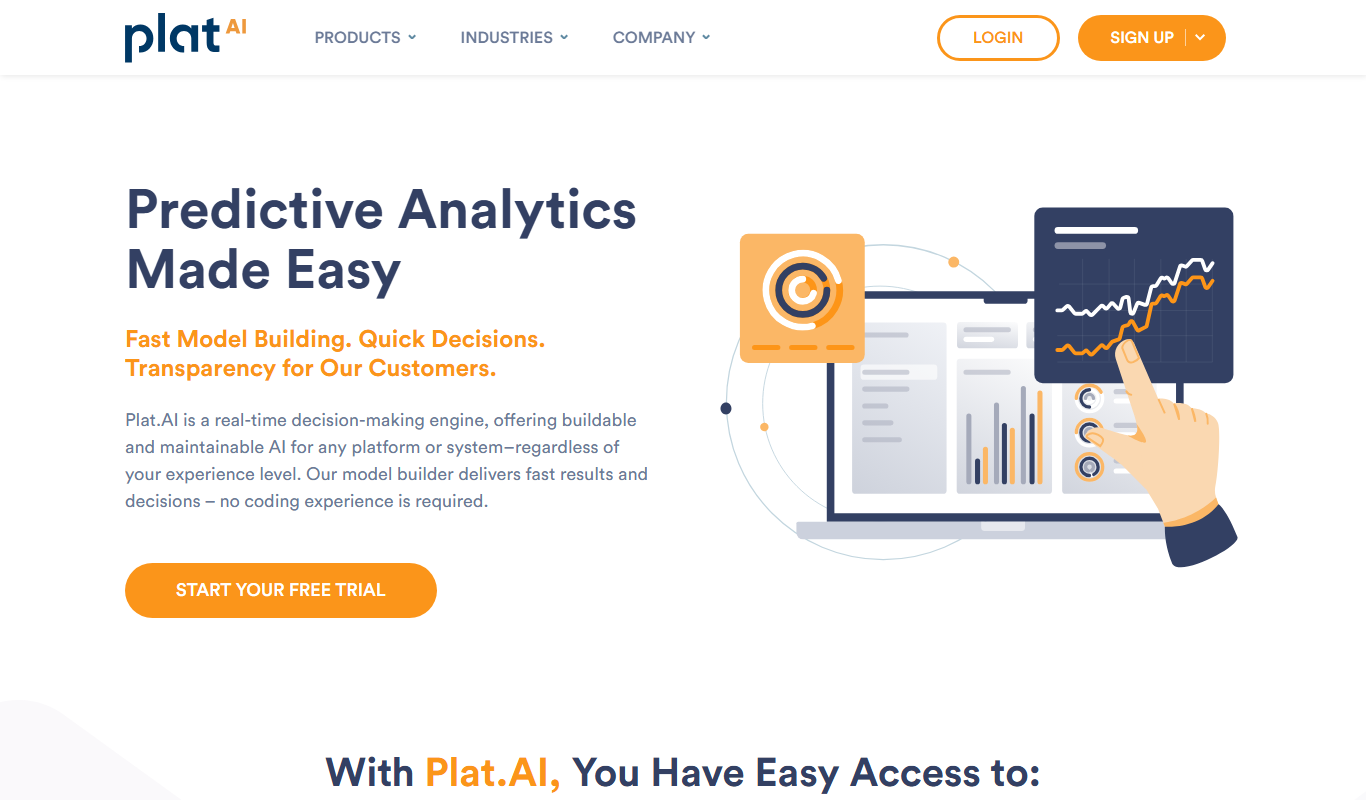
plat.ai
plat.ai is a comprehensive AI development platform that enables users to build, train, deploy, and manage custom machine learning models with scalable infrastructure and API integration.

Quino
Quino is the LMS that marks every exam: courses, lessons, online exams and diplomas, with AI that marks handwritten answers in seconds and writes tests from your notes.

MockTok
MockTok is an AI mock interview app with 50+ interactive questions, follow-up questions, job post analysis, multi-stage interviews, feedback and AI extracted cases.