

StartEngine Equity Crowdfunding Platform for Startup Investment Opportunities
StartEngine is an equity crowdfunding platform that allows startups to raise capital by selling shares to investors, providing a regulated marketplace for early-stage investment opportunities.
- Best for
- Startup Fundraising
- Key capability
- Equity Crowdfunding Marketplace
Save StartEngine, follow its updates and vote on it — everything stays in your account.
Sign in or create a free account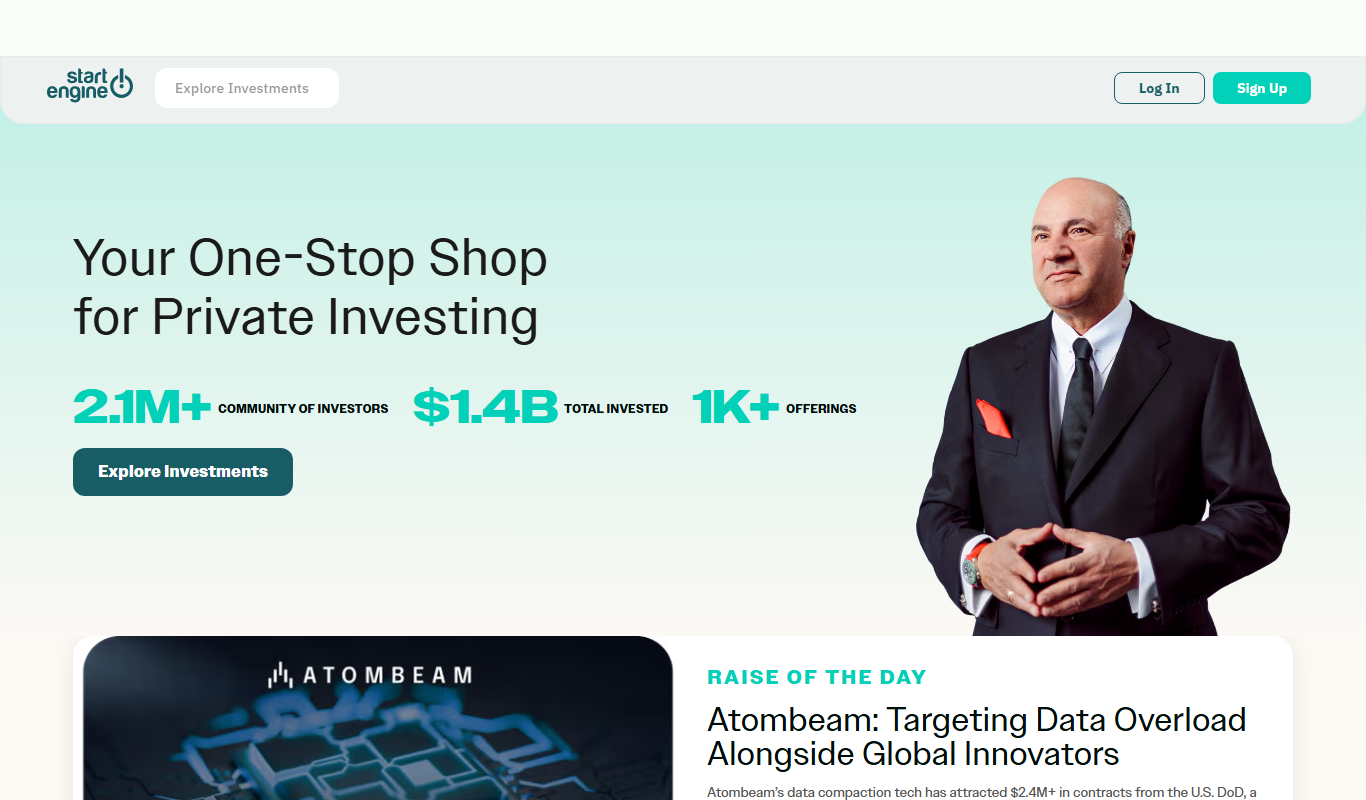
What is StartEngine?
StartEngine is an equity crowdfunding platform that connects startups seeking capital with investors looking to invest in early-stage companies. It allows companies to raise funds by selling shares to the public under SEC regulations, democratizing access to startup investment opportunities.
Key features of StartEngine
Key features include a user-friendly investment marketplace, compliance with SEC crowdfunding regulations, investor accreditation verification, campaign management tools for startups, and a secondary trading platform for liquidity.
Equity Crowdfunding Marketplace
A platform where startups list fundraising campaigns and investors can browse and invest.
Regulatory Compliance
Built-in tools to ensure fundraising complies with SEC regulations such as Reg CF and Reg A+.
Investor Verification
Automated processes to verify investor identity and accreditation status.
Secondary Trading Platform
Allows investors to buy and sell shares of startups post-funding to improve liquidity.
Campaign Management Dashboard
Startups can manage fundraising progress, investor communications, and documentation.
Pros and cons of StartEngine
Pros
- Democratizes access to startup investment opportunities
- Comprehensive compliance with SEC crowdfunding regulations
- Secondary market provides liquidity options for investors
- User-friendly platform for both investors and startups
Cons
- Investment risk is high and capital is illiquid
- Success fees can be relatively high for startups
- Limited to English language and US-based regulations
Key use cases for StartEngine
Startup Fundraising
StartEngine enables startups to raise capital by offering equity shares to a broad base of investors through an SEC-compliant crowdfunding platform.
Investor Access to Startups
Individual investors can browse, evaluate, and invest in early-stage companies, gaining access to private market opportunities.
Regulation Crowdfunding Compliance
The platform facilitates compliance with SEC regulations, including Reg CF and Reg A+, simplifying legal fundraising requirements.
Secondary Market Trading
StartEngine provides a secondary market where investors can trade shares of startups post-funding, enhancing liquidity.
Campaign Management for Startups
Startups can manage their fundraising campaigns, track investor engagement, and communicate updates through the platform.
How StartEngine works
- 1
Create an Account
Investors and startups sign up on StartEngine’s website to access the platform.
- 2
Browse or Launch Campaigns
Investors browse available startup offerings; startups submit their fundraising campaigns for approval.
- 3
Complete Verification
Investors complete identity and accreditation verification as required by regulations.
- 4
Invest or Raise Capital
Investors commit funds to startups; startups receive capital once funding goals are met.
- 5
Manage Investments
Investors track their portfolio; startups manage investor relations and campaign updates.
Who is using StartEngine
StartEngine pricing
Free to Join
$0
No cost to create an account or browse offerings.
Success Fee
Varies (typically 7-10% of funds raised)
StartEngine charges a percentage fee on successfully raised capital from startups.
Plans and prices are as published by the vendor and can change. Check the official site before you buy. Open the pricing page (opens in a new tab)
Frequently asked questions about StartEngine
Anyone over 18 can invest, subject to SEC regulations and verification requirements.
Startups and early-stage companies seeking equity financing can launch campaigns.
Investments carry risk; StartEngine does not guarantee returns and investors should perform due diligence.
StartEngine charges startups a success fee based on the amount of capital raised.
It depends on your specific needs and how you plan to use the tool. The official website and documentation are the best sources for the latest details.
It depends on your specific needs and how you plan to use the tool. The official website and documentation are the best sources for the latest details.
Yes, it can help with that use case depending on how you configure it and what features are available. You’ll get the best results with clear inputs and a defined goal.
Conclusion
Startups submit their fundraising campaigns for approval on StartEngine, and investors browse the available offerings. Companies sell shares to the public under SEC regulations such as Reg CF and Reg A+, with built-in tools meant to keep fundraising compliant. Investors complete identity and accreditation verification before committing funds, and a startup receives the capital once its funding goals are met. After funding, a secondary trading platform allows investors to buy and sell startup shares to improve liquidity.
Anyone over 18 can invest, subject to SEC regulations and verification requirements. Besides founders seeking capital and individual investors, angel investors, venture capitalists and financial advisors are also served. Creating an account and browsing offerings costs nothing, since StartEngine makes money through a success fee charged to startups based on the capital raised. Investment risk is high and capital is illiquid, so investors are expected to perform their own due diligence.
Sources
Sign in to review this tool.
Sign In to ReviewNo reviews yet
Be the first to share how this tool worked for you.
Ask about pricing, limits, or how it compares — or answer someone else.
Sign In to AskNo questions yet
Have a question about using or paying for this tool? Be the first to ask.
Featured on TiorAI



More Business Management tools
Other tools in the same category, for when this one is not quite the fit.
Polar Cloud
Polar Cloud is a cloud platform that allows users to remotely control 3D printers, manage print files, and collaborate on projects through a web interface, ideal for education and makerspaces.

PillPack
PillPack is an online pharmacy service that delivers medications in pre-sorted packets by dose and time, coordinates with insurance, and provides pharmacist support to simplify medication management.
PillRem
PillRem is a medication scanner and pill reminder app for iPhone and iPad that fills in name, dose and expiry from any pill box, with smart reminders, family profiles and iCloud sync.

Ministry Designs
Ministry Designs is a specialized website builder offering custom themes and tools tailored for churches and ministries, including sermon management and online giving integration.

edu720
edu720 is a cloud-based learning management system designed to help organizations create, deliver, and track online training and educational courses efficiently.
Interact
Interact is a web-based quiz maker that helps marketers create interactive quizzes to generate leads, engage audiences, and drive marketing funnels without coding.

ExamFX
ExamFX is an online platform offering state-specific insurance licensing exam prep courses, practice exams, and continuing education resources for insurance professionals.

Boson Exam Environment
Boson Exam Environment is a software platform offering realistic practice exams and simulations for IT certification candidates to prepare effectively by mimicking actual exam conditions and providing detailed answer explanations.