

Salt Security API Protection Platform for Advanced API Threat Detection
Salt Security is an AI-powered API security platform that detects and prevents API attacks using machine learning and behavioral analytics.
- Best for
- API Threat Detection
- Key capability
- Real-Time Threat Detection
Save Salt Security, follow its updates and vote on it — everything stays in your account.
Sign in or create a free account
What is Salt Security?
Salt Security is a comprehensive API security platform designed to protect organizations from API-based cyber threats. It leverages advanced analytics, machine learning, and behavioral analysis to detect and prevent attacks on APIs in real time. The platform provides continuous monitoring, vulnerability detection, and automated threat prevention to secure APIs throughout their lifecycle.
Key features of Salt Security
Salt Security offers real-time API threat detection, automated attack prevention, vulnerability discovery, detailed analytics, and compliance reporting. Its AI-driven engine analyzes API traffic patterns to identify anomalies and malicious activity, enabling organizations to safeguard their digital assets effectively.
Real-Time Threat Detection
Detects API attacks instantly using behavioral analytics and machine learning.
Automated Attack Prevention
Blocks malicious API traffic automatically to prevent data breaches.
Comprehensive API Visibility
Provides deep insights into API usage, vulnerabilities, and risks.
Vulnerability Discovery
Identifies security weaknesses in APIs before they can be exploited.
Compliance Reporting
Generates audit-ready reports to support regulatory compliance.
Pros and cons of Salt Security
Pros
- Advanced AI-driven API threat detection
- Automated blocking of malicious API traffic
- Comprehensive visibility into API security posture
- Supports multiple API protocols and environments
- Detailed compliance and audit reporting
Cons
- Pricing is not publicly available and requires contact
- Primarily focused on API security, limited for other cybersecurity areas
- Implementation may require technical expertise
Key use cases for Salt Security
API Threat Detection
Automatically identify and block malicious API traffic to prevent data breaches and attacks.
API Security Monitoring
Continuously monitor API traffic to detect anomalies and suspicious behavior in real time.
API Vulnerability Management
Discover and prioritize API vulnerabilities to reduce attack surface and improve security posture.
Compliance and Risk Management
Ensure APIs comply with security policies and regulatory requirements by providing detailed audit trails.
Incident Response
Enable rapid investigation and mitigation of API security incidents with actionable insights and alerts.
How Salt Security works
- 1
Deploy Sensors
Integrate Salt Security sensors into your API environment to collect traffic data without impacting performance.
- 2
Analyze API Traffic
The platform continuously analyzes API requests and responses using machine learning to detect anomalies.
- 3
Identify Threats
Salt Security identifies malicious behavior such as data exfiltration, injection attacks, and abuse of API endpoints.
- 4
Automate Protection
Automatically block or alert on detected threats to prevent API attacks and data breaches.
- 5
Report and Remediate
Provide detailed reports and actionable insights to help security teams remediate vulnerabilities and improve API security.
Who is using Salt Security
Salt Security pricing
Custom Pricing
Contact for pricing
Tailored pricing based on organization size and API security needs.
Plans and prices are as published by the vendor and can change. Check the official site before you buy. Open the pricing page (opens in a new tab)
Frequently asked questions about Salt Security
Salt Security protects REST, SOAP, GraphQL, and other API types across cloud and on-premises environments.
No, the platform uses passive sensors and efficient processing to avoid impacting API response times.
Yes, it integrates with SIEMs, SOAR platforms, and other security infrastructure for streamlined workflows.
Yes, it is designed to scale and support complex API environments in large organizations.
Data handling and security practices vary by provider. Review the official privacy policy to understand how your data is stored and used.
Pricing depends on the plan and included features. For the most accurate and up-to-date details, check the official pricing page.
Data handling and security practices vary by provider. Review the official privacy policy to understand how your data is stored and used.
Conclusion
Salt Security collects API traffic through sensors deployed in the API environment, and the page notes these passive sensors avoid impacting API response times. Machine learning continuously analyzes API requests and responses to detect anomalies and identify malicious behavior such as data exfiltration, injection attacks and abuse of API endpoints. Detected threats can be blocked automatically or raised as alerts. It protects REST, SOAP, GraphQL and other API types across cloud and on-premises environments.
Beyond live attacks, the platform discovers security weaknesses in APIs before they can be exploited and generates audit-ready reports for regulatory compliance. Detailed reports and actionable insights help security teams remediate vulnerabilities, and alerts support rapid investigation and mitigation of incidents. It integrates with SIEMs, SOAR platforms and other security infrastructure. Continuous monitoring, vulnerability detection and automated threat prevention are meant to secure APIs throughout their lifecycle. Its users range from enterprise security teams and DevSecOps professionals to API developers and compliance officers, and it is designed to scale for complex API environments in large organizations. Coverage centers on API security, with limited use for other cybersecurity areas, and pricing is tailored to organization size and requires contact.
Sources
Sign in to review this tool.
Sign In to ReviewNo reviews yet
Be the first to share how this tool worked for you.
Ask about pricing, limits, or how it compares — or answer someone else.
Sign In to AskNo questions yet
Have a question about using or paying for this tool? Be the first to ask.
Featured on TiorAI



More AI Analytics Assistant tools
Other tools in the same category, for when this one is not quite the fit.

Octolens AI
Octolens is an AI social listening tool that tracks brand mentions across Reddit, X, LinkedIn and 10+ platforms, with API, MCP and webhooks on every plan.

Insight7
Insight7 analyzes customer calls, scores every conversation, coaches reps and deploys AI voice and chat agents for customer teams.

neuronsinc.com
Neurons is a neuromarketing AI that predicts attention, engagement and memorability of ad creatives before they go live, with heatmaps and behavioral scores.
LangWatch
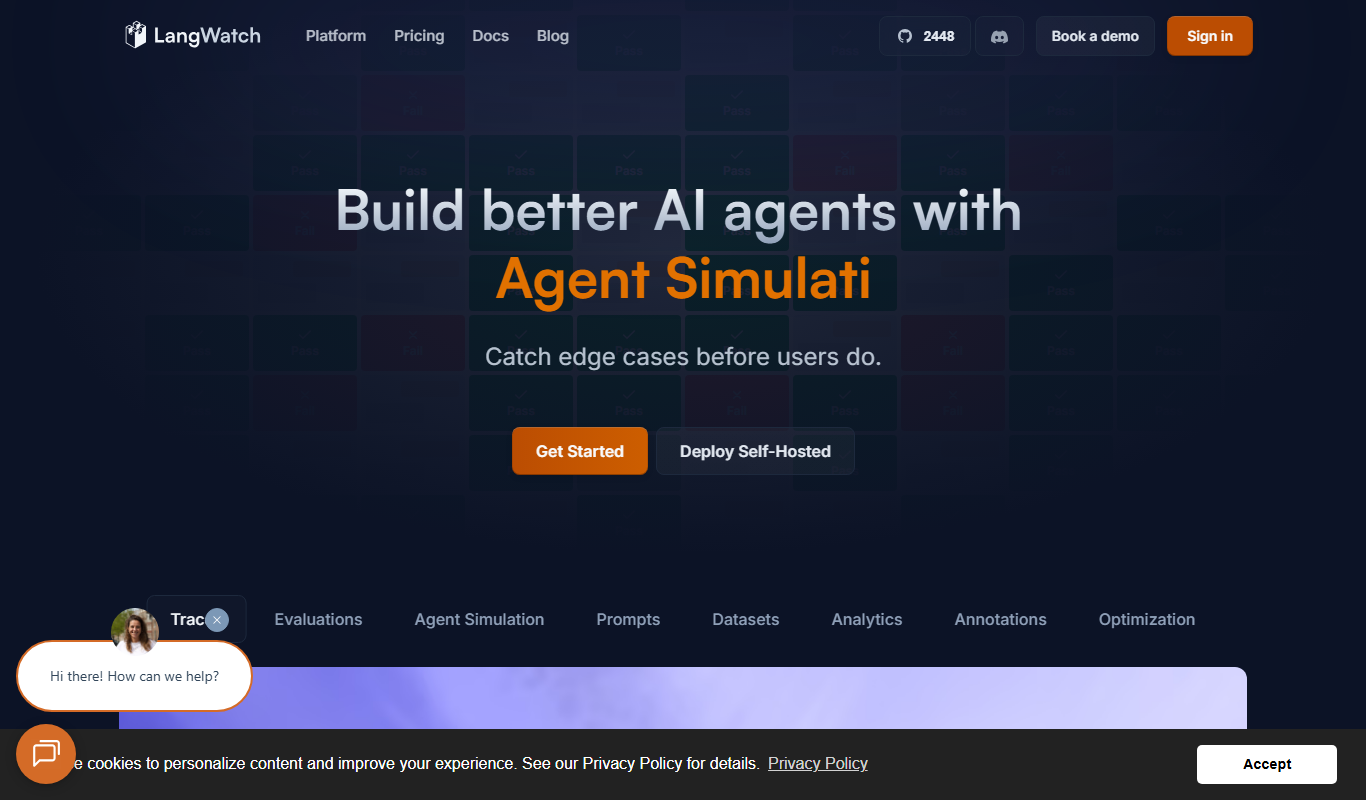
LangWatch is an AI agent testing and evaluation platform with simulations, evals, observability and prompt management, available in the cloud or self-hosted.

5-Out
5-Out helps restaurants boost profits with AI-powered sales forecasting, automated scheduling and purchasing based on predicted demand.

MUSICDATAK
MusicDatak is a music research platform that helps radio stations and brands track music trends, optimize playlists and grow radio audience share with tools like StationRadar.

ReviewHawk
ReviewHawk analyzes app store reviews with AI to show why users leave and what they want, so app makers can reduce churn.

StrongArm Technologies PPE AI
StrongArm Technologies offers the SafeWork Sensor, a wearable device that provides real-time haptic feedback and collects movement data, and SafeWork Training, a personalized safety training program.