

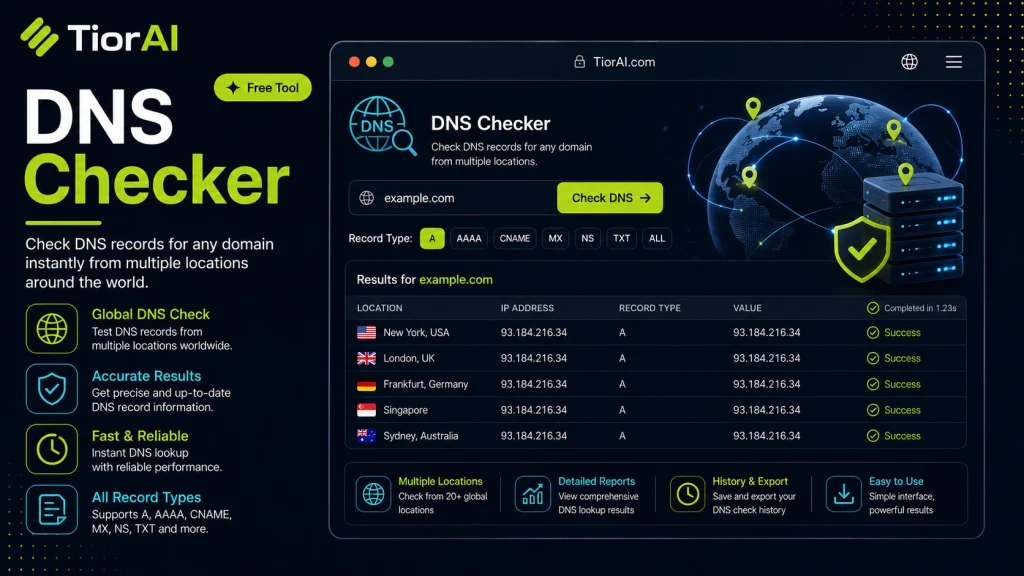
What Each Record Type Does
- A
- IPv4 address the name points to.
- AAAA
- IPv6 address the name points to.
- CNAME
- Alias pointing this name at another name.
- MX
- Mail servers that accept email for the domain, lowest priority first.
- NS
- Authoritative name servers for the zone.
- TXT
- Free-form text records — SPF, DMARC, and domain-verification strings.
- SOA
- Start of authority: the zone master, its contact, and the cache timers.
- SRV
- Host and port for a named service.
- CAA
- Certificate authorities allowed to issue certificates for the domain.
TTL is how long resolvers may cache a record. After you change DNS, expect the old value to keep answering for up to one TTL.
How to use it
- Enter Domain or IP Enter the domain name, IP address, or URL into the Dns Checker to start the lookup or analysis.
- Run the Check Click the check button to query the relevant databases. Results are retrieved and displayed in seconds.
- Analyze the Results Review the detailed results including status, records, and diagnostics to troubleshoot or verify your query.
Tip Use the Dns Checker to verify DNS propagation after making changes — it can take up to 48 hours for full propagation.
Understanding DNS and Its Role on the Internet
The Domain Name System (DNS) is like the phonebook of the internet. It translates human-friendly domain names (like example.com) into IP addresses that computers use to identify each other on the network. Without DNS, you would need to remember numerical IP addresses to visit websites.
DNS records store important information about a domain, such as its IP address (A record), mail server (MX record), or security settings (TXT records). These records are distributed across multiple DNS servers worldwide.
A DNS checker tool queries these DNS servers to verify the current state of DNS records for a domain. It helps confirm if DNS changes have propagated correctly or if there are configuration issues. This is essential because DNS changes can take time to update globally, and incorrect DNS settings can cause website downtime or email delivery problems.
Common situations where DNS checkers are used include troubleshooting website accessibility, verifying domain ownership, and ensuring email servers are correctly set up. By checking DNS records from multiple locations, these tools provide a comprehensive view of how DNS is resolving worldwide.
What is DNS and Why It Matters
The Domain Name System (DNS) translates domain names into IP addresses, enabling browsers to load websites. DNS records hold essential data like server IPs and mail routing information. Because DNS is distributed globally, changes can take time to propagate.
When to Use a DNS Checker
- After updating DNS records to confirm changes have propagated worldwide
- When troubleshooting website or email delivery problems
- To verify domain ownership through DNS TXT records
- Before launching new domains or services to ensure DNS is set up correctly
Common Mistakes to Avoid
- Expecting DNS changes to be immediate without considering propagation delays
- Checking DNS from only one location, missing regional differences
- Confusing DNS record types and checking irrelevant records
Using a DNS checker helps you verify that your domain resolves correctly across the internet. It provides insight into DNS propagation status and helps identify configuration issues that could affect website access or email functionality.
Frequently asked questions
A (IPv4 address), AAAA (IPv6 address), MX (mail exchange), CNAME (alias), TXT (text information), and NS (name server) records.Reviews and questions
Whether this tool gave people the answer they needed, and what they asked about it.
Sign in to review this tool.
Sign In to ReviewNo reviews yet
Be the first to say whether this tool gave you what you needed.
Ask how to read the result, or what the tool does with an edge case — or answer someone else.
Sign In to AskNo questions yet
Not sure how to read a result? Be the first to ask.
AI tools related to this topic
Tools from the TiorAI directory that work on the same kind of job.

Action Network
Action Network is a free digital organizing platform designed for progressive activists and nonprofits to manage petitions, fundraising, email and SMS outreach, and events.

Layla Network AI
Layla Network AI is an AI-driven platform that automates network monitoring, anomaly detection, and troubleshooting to improve network reliability and operational efficiency.