

From my experience researching Viz.ai, it stands out for its ability to rapidly analyze medical images and detect strokes with AI, which is crucial for timely treatment. The platform’s integration of real-time alerts and communication tools makes it highly effective for care coordination among specialists. While it requires hospital IT integration and pricing is custom, its focus on improving neurological emergency workflows is clear. For hospitals and stroke care teams aiming to reduce treatment delays and improve outcomes, Viz.ai offers a robust, clinically validated solution.
Viz.ai AI Medical Imaging Platform for Stroke Detection and Care Coordination
Viz.ai is an AI-driven medical imaging platform that detects strokes from CT and MRI scans, sending real-time alerts to care teams to accelerate treatment.
- Best for
- Stroke Detection
- Key capability
- Automated Stroke Detection

What is Viz.ai?
Viz.ai is an AI-powered medical imaging platform designed to detect acute neurological conditions such as stroke. It uses advanced deep learning algorithms to analyze CT and MRI scans in real time, automatically identifying critical findings and notifying care teams to expedite treatment. The platform integrates with hospital systems to streamline workflows and improve communication among specialists, ultimately aiming to reduce time to intervention and improve patient outcomes.
Key features of Viz.ai
Key features include automated stroke detection, real-time alerts, integrated communication tools for care coordination, and workflow automation to prioritize urgent cases. Viz.ai supports remote collaboration and telemedicine, enhancing access to expert neurological care.
Automated Stroke Detection
Deep learning models identify ischemic and hemorrhagic strokes from imaging scans with high accuracy.
Real-Time Alerts
Instant notifications to neurologists and radiologists accelerate patient triage and intervention.
Integrated Communication Tools
Built-in messaging and case sharing streamline collaboration among multidisciplinary teams.
Workflow Automation
Prioritizes critical cases and manages case queues to optimize hospital resource allocation.
Telemedicine Enablement
Supports remote case review and consultation to extend expert care beyond hospital walls.
Pros and cons of Viz.ai
Pros
- Speeds up stroke diagnosis with automated AI analysis
- Enhances communication between care teams
- Supports remote consultation and telemedicine
- Integrates smoothly with hospital IT infrastructure
- Improves workflow efficiency and patient outcomes
Cons
- Pricing details are not publicly available
- Requires hospital IT integration which may take time
- Focused primarily on neurological emergencies, limited scope
Key use cases for Viz.ai
Stroke Detection
Automatically analyzes CT and MRI scans to detect signs of stroke and alert specialists promptly.
Care Coordination
Facilitates real-time communication and workflow management between radiologists, neurologists, and care teams.
Telemedicine Support
Enables remote review and consultation for urgent neurological cases to accelerate treatment decisions.
Workflow Automation
Automates triage and prioritization of critical cases to improve hospital efficiency and patient outcomes.
How Viz.ai works
-
1
Image Acquisition
Medical imaging scans such as CT or MRI are uploaded or integrated directly from hospital PACS.
-
2
AI Analysis
The AI algorithms analyze images instantly to detect signs of stroke or other neurological emergencies.
-
3
Alert Generation
If critical findings are detected, the system sends real-time alerts to relevant specialists and care teams.
-
4
Care Coordination
Specialists communicate and collaborate through the platform to make rapid treatment decisions.
Who is using Viz.ai
Hospitals and healthcare providers
Neurologists and radiologists
Stroke care teams
Telemedicine providers
Healthcare IT administrators
Viz.ai pricing
Custom Enterprise Pricing
Contact for pricing
Pricing tailored based on hospital size, usage, and integration requirements.
Plans and prices are as published by the vendor and can change. Check the official site before you buy. Open the pricing page (opens in a new tab)
Frequently asked questions about Viz.ai
Viz.ai can detect both ischemic and hemorrhagic strokes using CT and MRI imaging.
Yes, Viz.ai integrates with common hospital PACS and electronic health record systems.
No special hardware is required; the platform operates via cloud and mobile/web applications.
By accelerating detection and care coordination, Viz.ai reduces time to treatment, which is critical for stroke recovery.
It depends on your specific needs and how you plan to use the tool. The official website and documentation are the best sources for the latest details.
Integration support depends on the tool and its available connectors or API. Check the official documentation or integrations page to confirm what is supported.
It depends on your specific needs and how you plan to use the tool. The official website and documentation are the best sources for the latest details.
Sign in to review this tool.
Sign In to ReviewNo reviews yet
Be the first to share how this tool worked for you.
Ask about pricing, limits, or how it compares — or answer someone else.
Sign In to AskNo questions yet
Have a question about using or paying for this tool? Be the first to ask.
Featured on TiorAI



Alternative Tools
Explore similar AI tools that might fit your needs
Custom Pricing
Aidoc
Aidoc is an AI-driven medical imaging software that helps radiologists detect abnormalities in CT and MRI scans, prioritize urgent cases, and improve diagnostic workflows.

Custom Pricing
Qure.ai
Qure.ai is an AI-driven medical imaging software that automates the detection of abnormalities in chest X-rays and head CT scans, helping radiologists diagnose faster and more accurately.
More AI Workflow tools
Other tools in the same category, for when this one is not quite the fit.

Free
Furkot
Furkot is a web-based trip planner that helps users create multi-stop routes, optimize travel paths, schedule accommodations and activities, and share itineraries for efficient road trip planning.

Free
EcoCart
EcoCart is a plugin that integrates with e-commerce platforms to calculate and offset the carbon footprint of online purchases, allowing customers to contribute to verified climate projects during checkout.

Contact for pricing
Trials.ai
Trials.ai is an AI-driven platform that helps medical researchers design optimized clinical trial protocols, improve patient recruitment, and ensure regulatory compliance to accelerate trial success.

Free
ZipBooks
ZipBooks is a cloud-based accounting software designed for small businesses and freelancers to manage invoicing, expenses, payments, and financial reporting with ease.

Free Trial
Lookeen
Lookeen is a Windows desktop search software that enables fast and comprehensive searching of emails, files, and documents, integrating deeply with Microsoft Outlook and supporting network drives.
Custom Pricing
Ataccama
Ataccama is an AI-driven data management platform that integrates data governance, master data management, and data quality automation to help enterprises manage and improve their data assets efficiently.
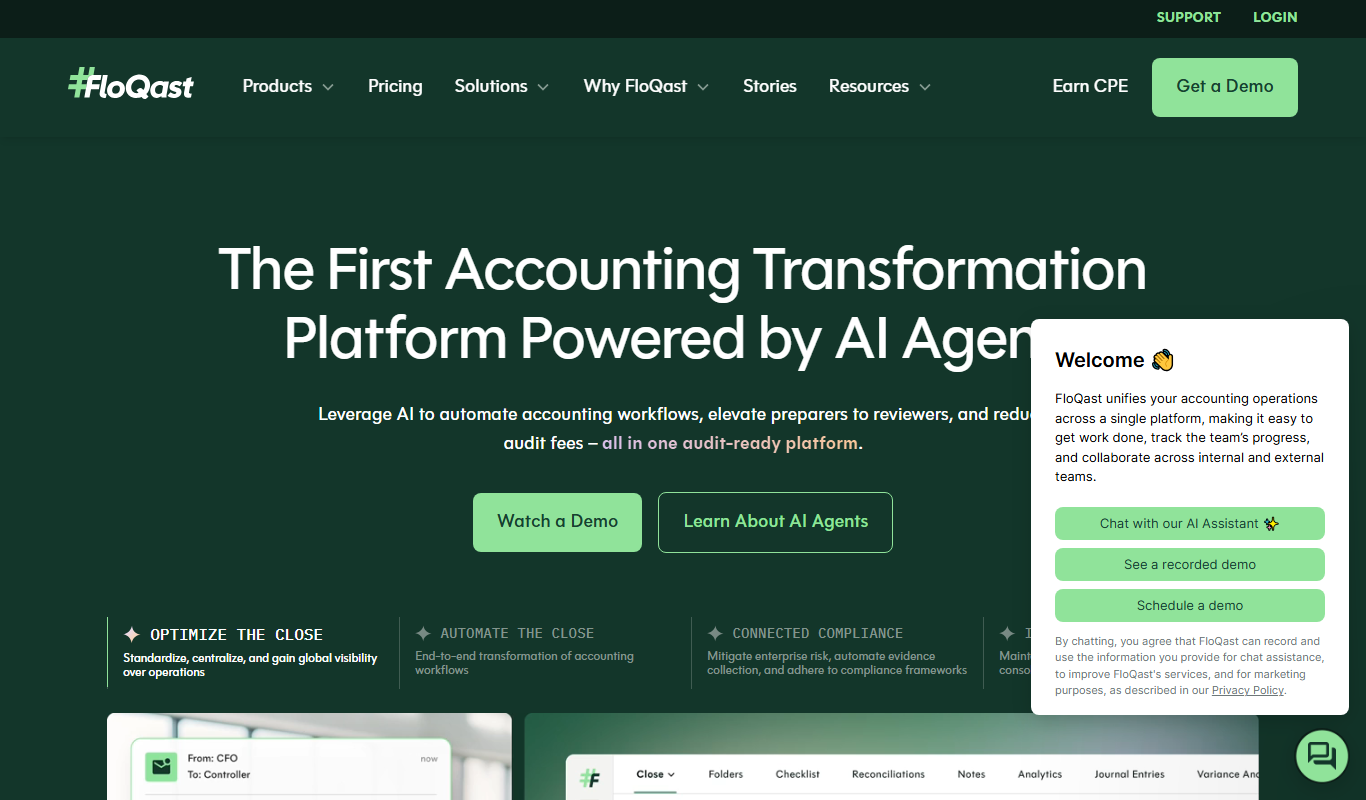
Enterprise
FloQast
FloQast is a cloud software designed to streamline and automate the accounting month-end close process, improving accuracy and collaboration for finance teams.

Custom Pricing
Talentsoft
Talentsoft is a cloud-based talent management software that integrates recruitment, learning, performance management, and succession planning to help organizations manage their workforce effectively.