
From my experience with RideAI, I found it excels at providing a full-stack autonomous driving software combined with robust fleet management capabilities. The platform’s real-time monitoring and simulation tools offer practical advantages for safely deploying self-driving fleets. After spending time reviewing the platform, I can say it’s particularly well-suited for enterprises aiming to launch robotaxi services or autonomous delivery fleets. However, the lack of publicly available pricing and the need for compatible vehicle hardware can be barriers for smaller companies. Overall, if you need an integrated solution for managing autonomous vehicle fleets, RideAI delivers a comprehensive and scalable platform.
RideAI Autonomous Vehicle Platform for Self-Driving Fleet Management
RideAI is an autonomous vehicle software platform that enables companies to deploy and manage self-driving car fleets with AI-based perception, planning, and fleet management tools.
Tech Stack:
C++
Machine Learning
Python
ROS
What is RideAI?
RideAI is an autonomous vehicle software platform designed to enable companies to deploy and manage fleets of self-driving cars. It integrates AI-based perception, planning, and control systems to operate vehicles safely without human intervention. The platform supports real-time fleet management, vehicle diagnostics, and remote monitoring, making it suitable for robotaxi services, delivery fleets, and other autonomous mobility solutions.
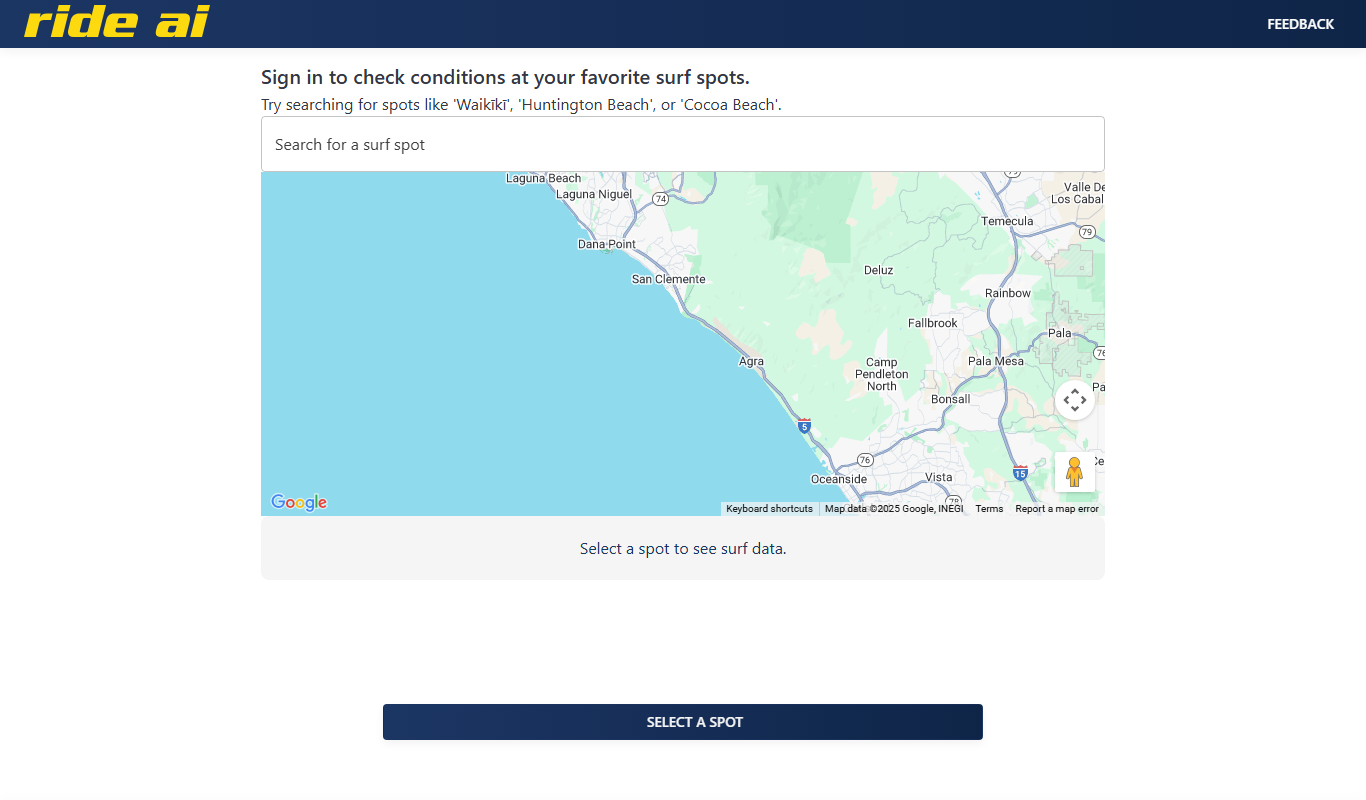
Key Features of RideAI
Full-stack Autonomous Driving Software
Includes perception, localization, planning, and control modules for self-driving cars.
Fleet Management Dashboard
Centralized platform to monitor, manage, and optimize autonomous vehicle fleets.
Real-time Vehicle Monitoring
Track vehicle health, location, and performance metrics in real time.
Simulation Environment
Test and validate autonomous driving scenarios before live deployment.
API Access
APIs for integrating with third-party services and customizing fleet operations.
Pros and Cons of RideAI
Pros
- Comprehensive autonomous driving stack
- Robust fleet management tools
- Real-time monitoring and diagnostics
- Supports simulation for safe testing
- API for customization and integration
Cons
- Pricing details not publicly available
- Requires compatible vehicle hardware
- Primarily targeted at enterprise customers
Key Use Cases for RideAI
Autonomous Fleet Deployment
Manage and deploy fleets of self-driving vehicles for ride-hailing and logistics.
Robotaxi Services
Operate autonomous taxi services with AI-powered vehicle control and fleet coordination.
Last-Mile Delivery
Use autonomous vehicles to handle last-mile delivery efficiently and safely.
Vehicle Data Analytics
Analyze vehicle sensor data to optimize routes, safety, and operational efficiency.
Simulation and Testing
Simulate autonomous driving scenarios for testing and validation before deployment.
How RideAI Works
-
1
Vehicle Integration
Integrate RideAI software with compatible vehicle hardware and sensors.
-
2
AI Perception and Planning
The AI system processes sensor data to perceive the environment and plan safe driving paths.
-
3
Fleet Management
Use the web-based dashboard to monitor vehicle status, assign rides, and optimize routes.
-
4
Deployment and Operation
Deploy autonomous vehicles in real-world environments with continuous remote monitoring.
Who's Using RideAI
Autonomous vehicle startups
Ride-hailing companies
Logistics and delivery firms
Fleet operators
Automotive OEMs
RideAI Pricing
Enterprise
Contact for Pricing
Custom pricing based on fleet size and deployment requirements.
Frequently Asked Questions About RideAI
RideAI supports integration with various vehicle platforms equipped with necessary sensors and computing hardware.
RideAI primarily offers autonomous driving software and fleet management solutions; hardware integration is supported but hardware is typically sourced separately.
Yes, RideAI is designed to operate safely in complex urban settings including traffic and pedestrian-rich areas.
RideAI uses advanced AI algorithms, real-time monitoring, and extensive simulation testing to maintain high safety standards.
This tool is designed to help users accomplish its core tasks more efficiently. It is typically used by individuals or teams looking to improve productivity and workflow.
It depends on your specific needs and how you plan to use the tool. The official website and documentation are the best sources for the latest details.
Integration support depends on the tool and its available connectors or API. Check the official documentation or integrations page to confirm what is supported.
It depends on your specific needs and how you plan to use the tool. The official website and documentation are the best sources for the latest details.
Share your review
Reviews are limited to one per logged-in user and are published after moderation.
You need an account to review this tool.
0.0
★
★
★
★
★
0 reviews
5 star
0
4 star
0
3 star
0
2 star
0
1 star
0
No reviews yet
Be the first to share how this tool worked for you.
Questions from the community
Read questions and answers about this tool, or ask your own.
No questions yet
Start the conversation by asking the first question about this tool.
Is this tool helpful?
Alternative Tools
Explore similar AI tools that might fit your needs

N/A
Waymo
Waymo is a leading company that develops and operates fully autonomous vehicles using AI, lidar, and sensor fusion technology for ride-hailing and logistics.
Free Trial
Cruise
Cruise is an AI-powered writing assistant that helps users generate, edit, and optimize written content efficiently, primarily supporting English language content creation.